Socialist Anthropocene in the Visual Arts (SAVA)
SAVA is a visual arts led interdisciplinary research project that challenges the West-centric discourses of the Anthropocene by asserting the constitutive role of the environmental histories of Socialism in the formation of new geological times.
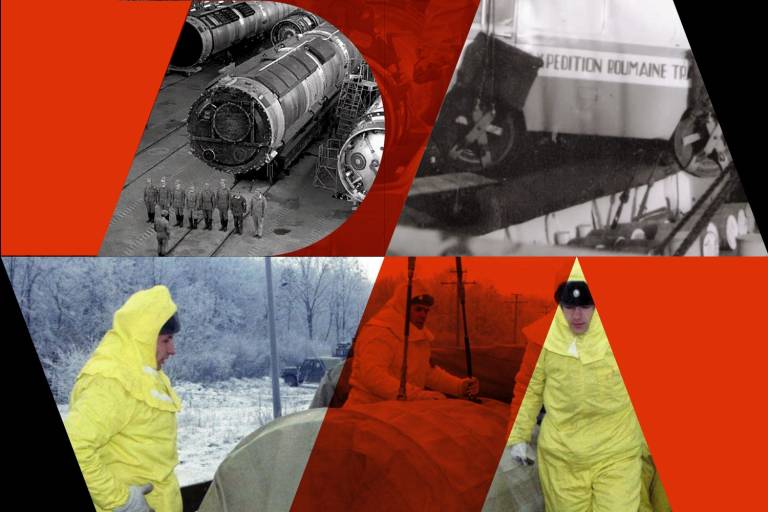
SAVA is the first large-scale interdisciplinary research project that institutes the Socialist Anthropocene as a new field of study within the critical corpus concerned with challenging and decentring the West-centric discourses of the Anthropocene. Led by Principal Investigator Dr. Maja Fowkes and running at the School of History and Art History, University of East Anglia, the project was selected for a Consolidator Grant by the European Research Council (ERC) and is funded by UK Research and Innovation (UKRI).
The SAVA research is organised around five thematic streams through which the distinctiveness, epistemologies, relationalities and potentialities of the Socialist Anthropocene will be analysed, namely: the socialist praxis of extractivism, infrastructures of the socialist system, transformation of the countryside, species under socialism and cultures of the Socialist Anthropocene.
The groundbreaking approach of the project is to reconstruct the histories of the Socialist Anthropocene through visual arts led interdisciplinary research, which entails analysing historical artworks and engaging with contemporary art practices that act as a catalyst to integrate the insights of multiple disciplines and as a critical agent to pose ambitious and expansive questions, challenging assumptions and engendering new cross-disciplinary paradigms to illuminate the specificities of the Socialist Anthropocene.
SAVA incorporates the insights of environmental history, the history of science and beyond-human anthropology, fields that are highly generative of critical reassessments of the Anthropocene, while drawing on global studies of historical socialisms to go beyond regionalism and formulate the Socialist Anthropocene as a globally relevant concept.
The project involves twice-yearly SAVA Research Weeks with roundtable discussions and public events, annual research trips to global sites of the socialist Anthropocene, and a series of conferences, publications and the podcast Left to Be Desired.
The SAVA research team, led by Dr. Maja Fowkes (University of East Anglia), is made up of SAVA Creative Fellows and SAVA Research Fellows from the fields of art history, environmental history, the history of science, anthropology and the history of global socialisms.
Contact details:
School of History and Art History, University of East Anglia, Norwich Research Park, Norwich, United Kingdom
Five Year Plan
Year 1 Ideologies of Extraction
The first thematic stream under the heading Ideologies of Extraction investigates socialist practices of extractivism as material evidence of the processes at stake in the transformation of terrestrial matter. Through analysis of artworks and their contextualisation, it looks at questions of mining and heavy industry, mineral extraction and oil infrastructures, as well as projects of extractivist expansion under socialism, while also considering the post-extractive aftermaths of sacrifice zones.
Year 2 Infrastructures of Progress
The second stream examines socialist infrastructures under the heading Infrastructures of Progress (T2), from military industrial complexes, chemical industry and plastics to technocratic control of the natural environment and is also concerned with artist practices that experimented with procedures to de-toxify the environment. The focus in this part of the project is on inquiry into the magnitude of technological, scientific and military interventions in the biogeochemical processes of the Earth that have shaped the Socialist Anthropocene.
Year 3 Fertile Lands
The third stream deals with the transformations of the countryside under the heading Fertile Lands (T3), from the collectivisation of farms and environmental effects of monocultural agriculture to terraforming projects, while paying attention to attitudes to botanical worlds and alternatives to the industrialized countryside.
Year 4 Animal Communism
The fourth theme deals with species under Socialism under the heading Animal Communism (T4), and considers biodiversity and extinction, attitudes to hunting, overfishing and factory farming, the treatment of animals, as well as the potential within socialist ideology to recognise them as non-human proletarians.
Year 5: People’s Planet
The final recapitulative year of the research will centre around the cultures of the Socialist Anthropocene under the heading People’s Planet (T5) and addresses the question of official, dissident and traditional approaches to the natural world, including indigenous positions. It will also examine potential new narratives that could emerge from the complex environmental legacy of socialist system and considers artistic practices that envision eco-socialist futures.