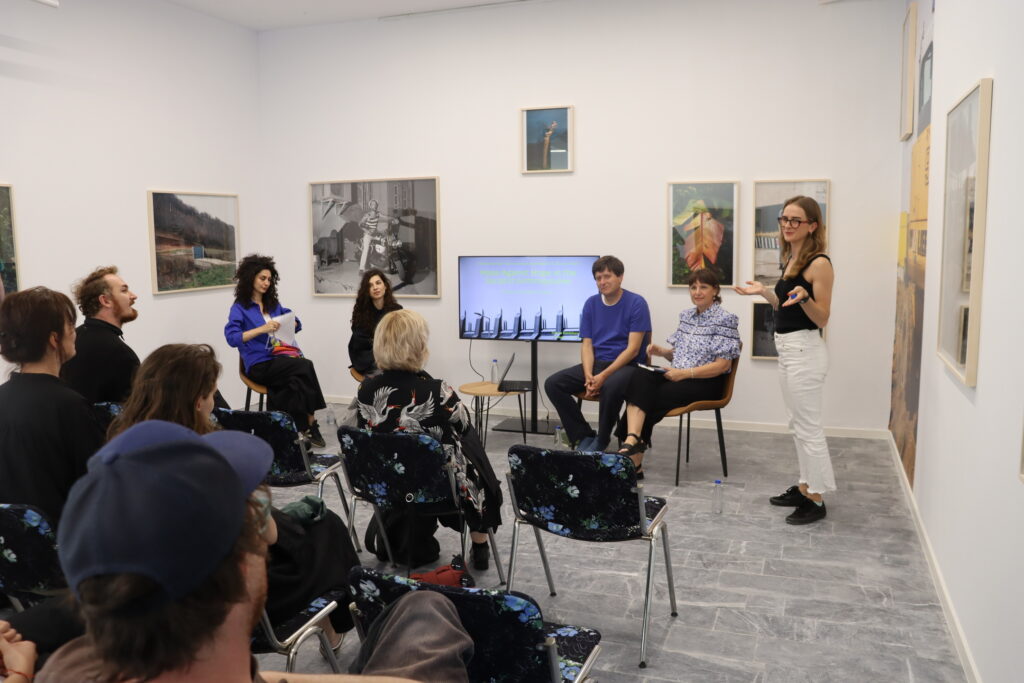
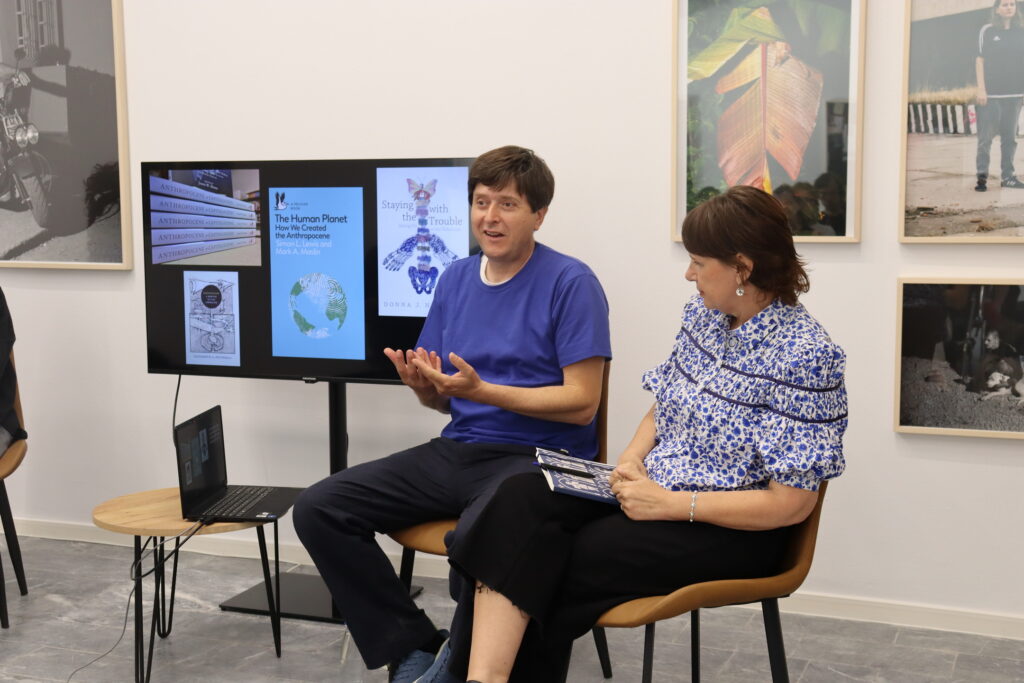
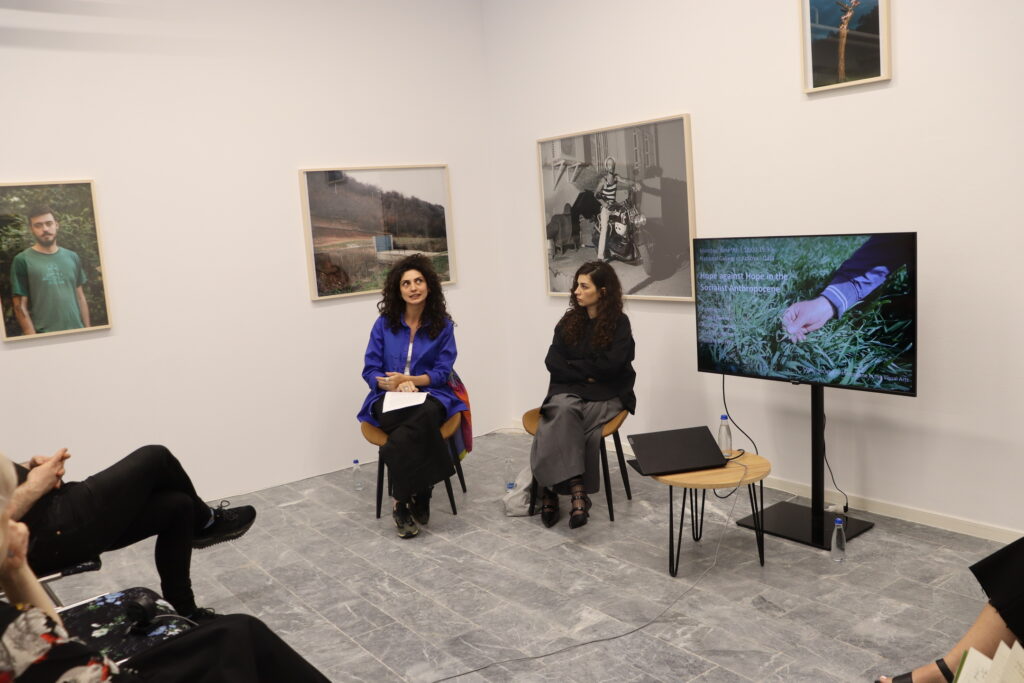
The SAVA Panel Discussion: Hope against Hope in the Socialist Anthropocene at the National Gallery of Kosovo explores longings, dreams, and prospects for social and ecological renewal in the shifting agricultural and industrial landscapes of post-socialist Kosovo, with social anthropologist Rozafa Berisha and architect Erzë Dinarama, introduced by Maja and Reuben Fowkes (University College London).
Programme
Extractivist hopes after Trepça mine’s decline
Rozafa Berisha
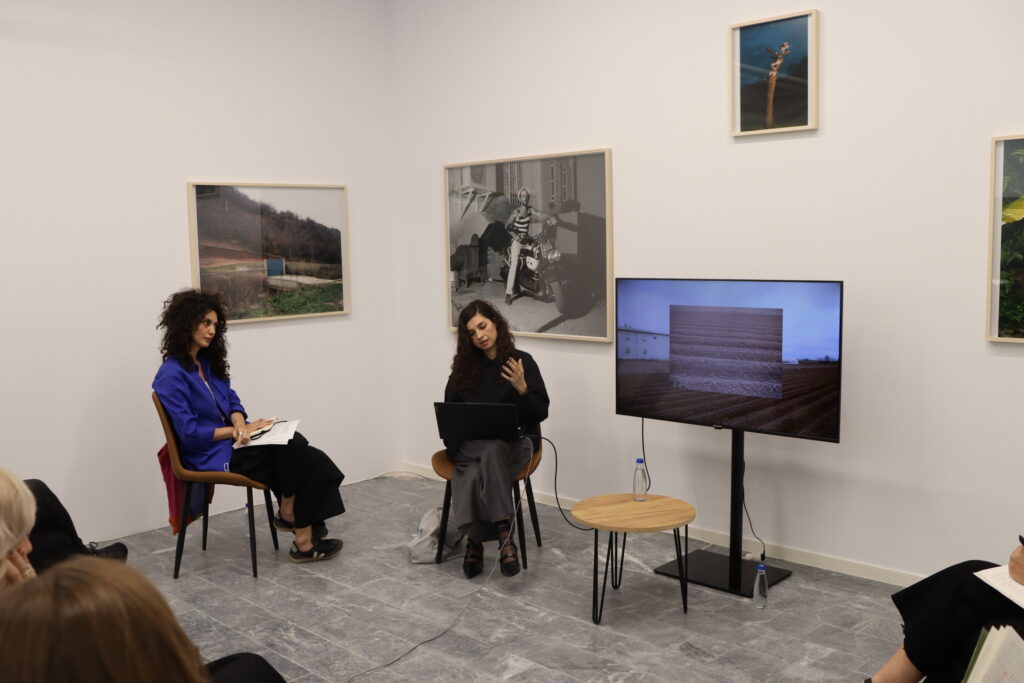
Why do people maintain affective attachments to extractive industries that have been sources of ecological destruction? This presentation takes up this question to discuss how, for young people in the deindustrializing city of Southern Mitrovica (Kosovo), the inactive Trepça mine conjures hopes for the future revival of the city. These are reluctant hopes invested both in resource extraction and in the repurposing of Trepça’s ruins. Citizens’ multiple attachments to the mine speak of the lingering promise of modernity induced during socialism as well as the profound uncertainties triggered by postsocialism, the war and its aftermath, and deindustrialisation.
Sensing the Land Otherwise
Erzë Dinarama
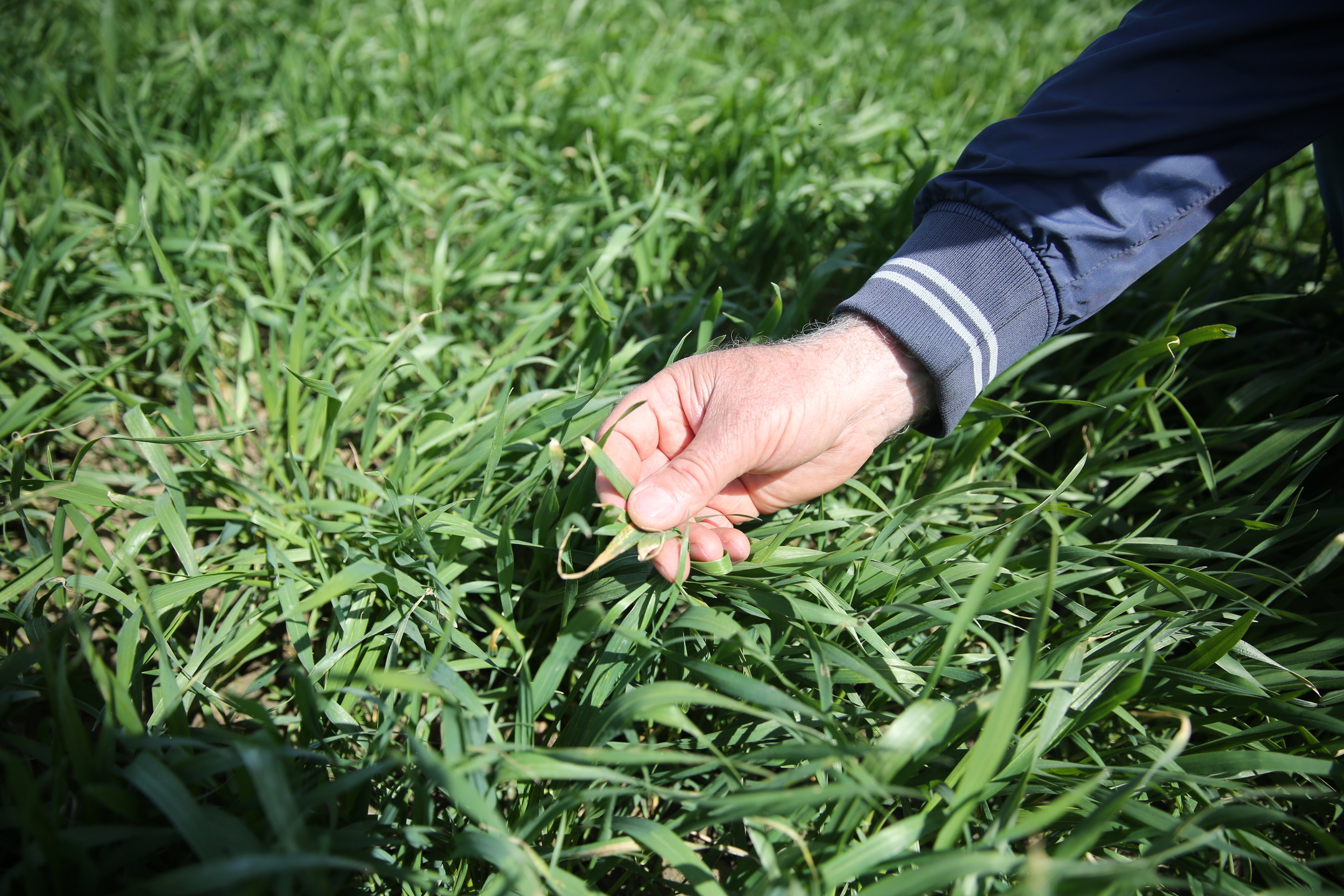
The presentation introduces Lulebora nuk çel më. Emerging Assemblages, the project currently representing Kosovo at the Venice Architecture Biennale 2025. It explores how ecological change—such as the non-resilience of traditional crops or disrupted seasonal rhythms—is experienced and sensed through everyday interactions with the land. Based on fieldwork with farmers in Kosovo, the project reflects on a landscape in transition, where familiar environmental cues no longer hold. Rather than relying solely on fixed calendars or scientific forecasts, it foregrounds sensory attunement and embodied knowledge as tools for navigating uncertainty—where knowing the land becomes a process of making sense through relational and affective engagement.
Speaker biographies
Rozafa Berisha is a social anthropologist with an interest on the affective, gendered and social dimensions of the state. Her doctoral research, completed at the University of Manchester, explored how young women imagine and negotiate their futures, amid disenchantment with the Kosovo state-building project. Her previous publications have addressed themes of social memory, and more recently the gendered politics of state-building and affective afterlife of extractive industries. She has held visiting fellowships at the University of Illinois Urbana-Champaign (US), the Institute for East and Southeast European Studies in Regensburg (Germany), and currently teaches at the University of Prishtina in Kosovo.
Erzë Dinarama is an architect, interdisciplinary designer, and researcher integrating urbanism, landscape, and ecology to address environmental challenges through science and design. She has taught at Politecnico di Milano, ETH Zurich, Politecnico di Torino, and Domus Academy. She has been involved in and collaborated with Carlo Ratti Associati, Studio Olafur Eliasson, and the Manifesta Foundation. Erzë is currently an artist-in-residence in the S+T+ARTS4WaterII project within the EU STARTS program, and she is also the exhibitor and curator representing Kosovo at the 19th International Architecture Exhibition – La Biennale di Venezia.
Maja and Reuben Fowkes are art historians, curators and directors of the Postsocialist Art Centre (PACT) at the Institute of Advanced Studies, University College London. They work on the twentieth-century art history of socialism from Eastern Europe to Central Asia and contemporary artistic engagements with ecology, climate and the Anthropocene. Their publications include Art and Climate Change (Thames & Hudson, 2022), Central and East European Art Since 1950 (Thames & Hudson, 2020), a special issue of Third Text guest-edited by Reuben on the “Actually Existing Artworlds of Socialism” (2018) and Maja’s monograph The Green Bloc: Neo-avant-garde Art and Ecology under Socialism (CEU Press, 2015). Maja is Principal Investigator of the European Research Council (ERC) and UK Research and Innovation (UKRI) Consolidator Grant project on the Socialist Anthropocene in the Visual Arts (SAVA) (2022-27). Their curated exhibitions include “Colliding Epistemes” at Bozar Brussels (2022) and “Potential Agrarianisms” at Kunsthalle Bratislava (2021), and they led the Getty Foundation project Confrontations: Sessions in East European Art History (2018-22). They publish extensively in peer-reviewed journals, edited books, exhibition catalogues and on contemporary art platforms including Art Monthly, Texte zur Kunst and Springerin, and they co-host the SAVA podcast Left to be Desired.
Documentation
Rozafa Berisha.