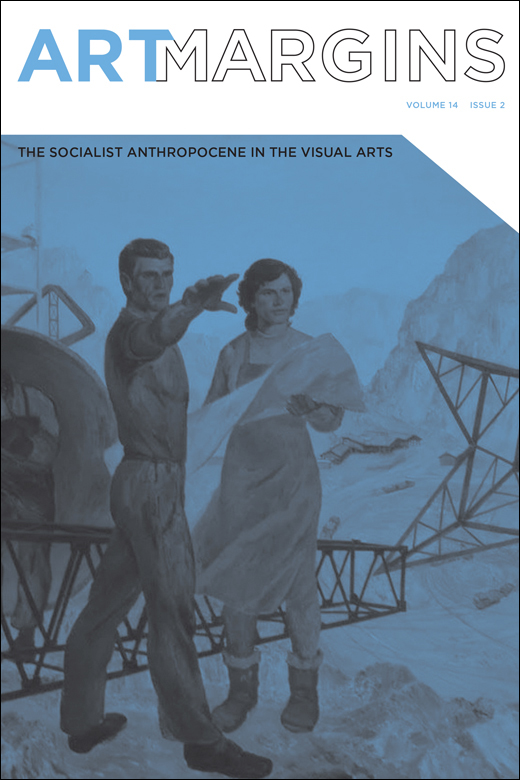
Maja and Reuben Fowkes edited a special double issue of ARTMargins, titled The Socialist Anthropocene in the Visual Arts.
The contributions assembled in the print issue examine how artistic practices have articulated, documented, and critically reflected on the extraction of natural resources in the former socialist bloc. They explore themes such as the exploitation of hydropower, the circulation of minerals and goods along the infrastructural corridors of planned economies, and the transformation of rural landscapes in the service of industrialization. Additionally, the issue illuminates the often-overlooked frictions within the expanding socialist system, including conflicted relationships with nature and the clash of modernizing, Indigenous, geological, and atomic temporalities in the unfolding of the Socialist Anthropocene.
The full print issue can be accessed here.
Alongside the print issue, an online issue has been published, featuring essays and artist-centred dialogues that critically investigate how artists present and past engage with socialism’s environmental histories and their reverberations in today’s climate crisis.
The online issue can be access on artmargins.com.
Contents of the special print issue
Contents of the special online issue
Contributors
Contents of the special print issue
The Socialist Anthropocene in the Visual Arts
Introduction by Maja and Reuben Fowkes
The artful analogy of socialist metabolism was deployed to justify extraction and rationalize the extension of infrastructural networks with a dual function as economic connectors and conduits of centralizing control. Missing from the metaphor, however, was the environmental component of these metabolic exchanges and their impact on ecosystems through interference with the biogeochemical processes of Earth. Consideration of these complex mechanisms of accelerated economic expansion in relation to the altering of the natural environment, through the critical framework of the Socialist Anthropocene, and the ways that artists reflected on these developments, is at the heart of this special issue of ARTMargins.
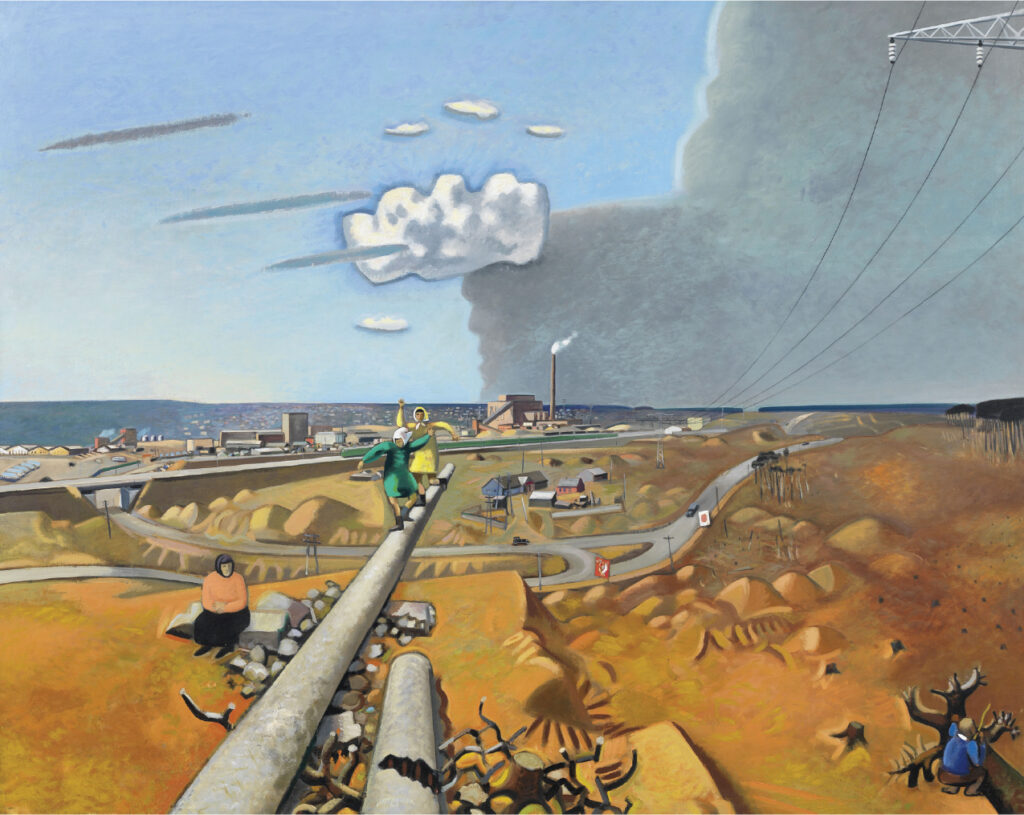
Mega-Dams in the Hydrologics of the Socialist Anthropocene
Maja and Reuben Fowkes
This article considers artworks that recorded the construction of four mega dams in Ukraine, the Caucasus, Central Asia and Siberia between the 1930s and 1960s, which as exemplary hydroforming projects trailblazed the expansion of the socialist developmentalist model to the non-Russian territories of the Soviet Union. As centrepieces of the planned economy, mega dams performed as engines of the expansion of heavy industry, as infrastructural hubs for resource extraction, as drivers of social mobilization, and as markers of the enlisting of nature in the building of the socialist system. State commissioned representations of dam building by Gustavs Klucis, Issak Brodsky, Mikayil Abdullayev, Ural Tansykbayev and Wolfgang Mattheuer are approached through the concept of the Socialist Anthropocene to reveal the geological scale of socialist interventions in hydraulic systems, the goals of social transformation with which they were entwined, and changing environmental policies, practices and attitudes. At issue is the extent to which socialist realism was a vehicle not just for the celebration of the hero projects of Soviet industrialization, but could also bring an implicit environmental critique of their social and ecological impacts.
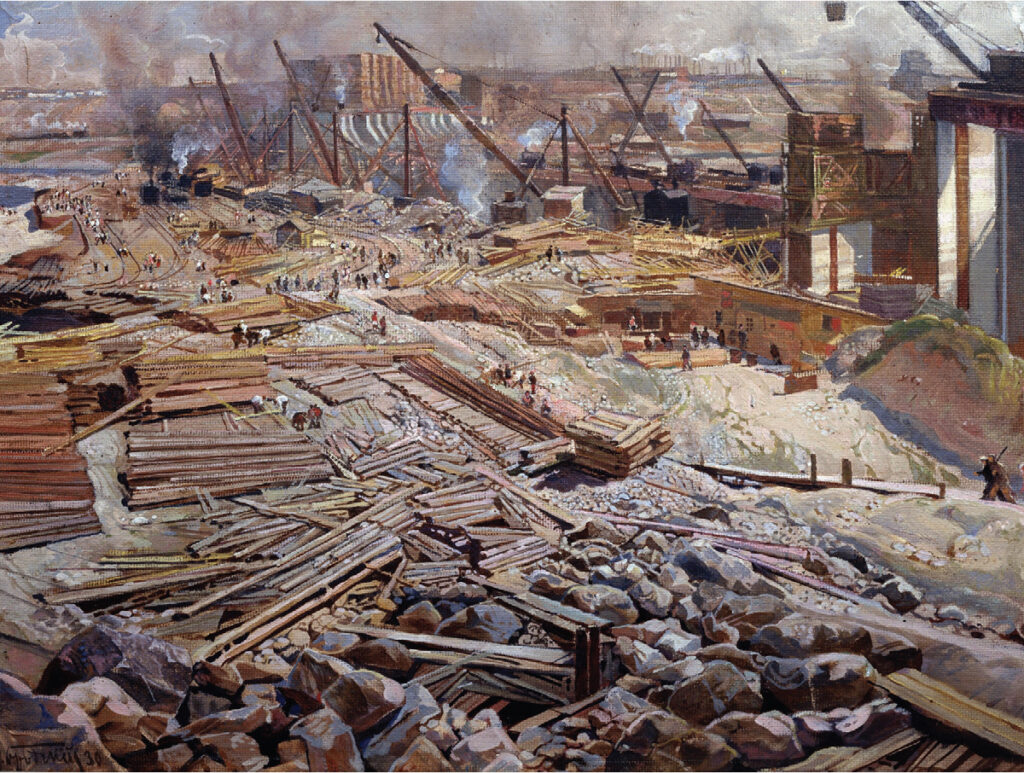
“Turksib Was Not Just a Railroad for Me”: Visualizing the Anthropocene as a Transit
Anel Rakhimzhanova
This article examines the Turkestan-Siberia Railroad (Turksib) through its visual culture, exploring how film, painting, and print media portrayed its role in reshaping the Kazakh steppe. Analyzing Victor Turin’s Turksib (1929), American maps, Soviet periodicals, and paintings by Victor Ufimtsev and Abilkhan Kasteyev, it investigates how these works framed perceptions of infrastructure and environmental transformation. Situating Turksib within global infrastructural imaginaries and Soviet kolonizatsiya politics, the article interrogates its relation to forced modernization, nomadic sedentarization, and environmental degradation. It argues that Turksib’s visual history aestheticized industrial expansion while desensitizing audiences to its human and ecological costs, solidifying the railroad’s status as a symbol of Soviet modernity.
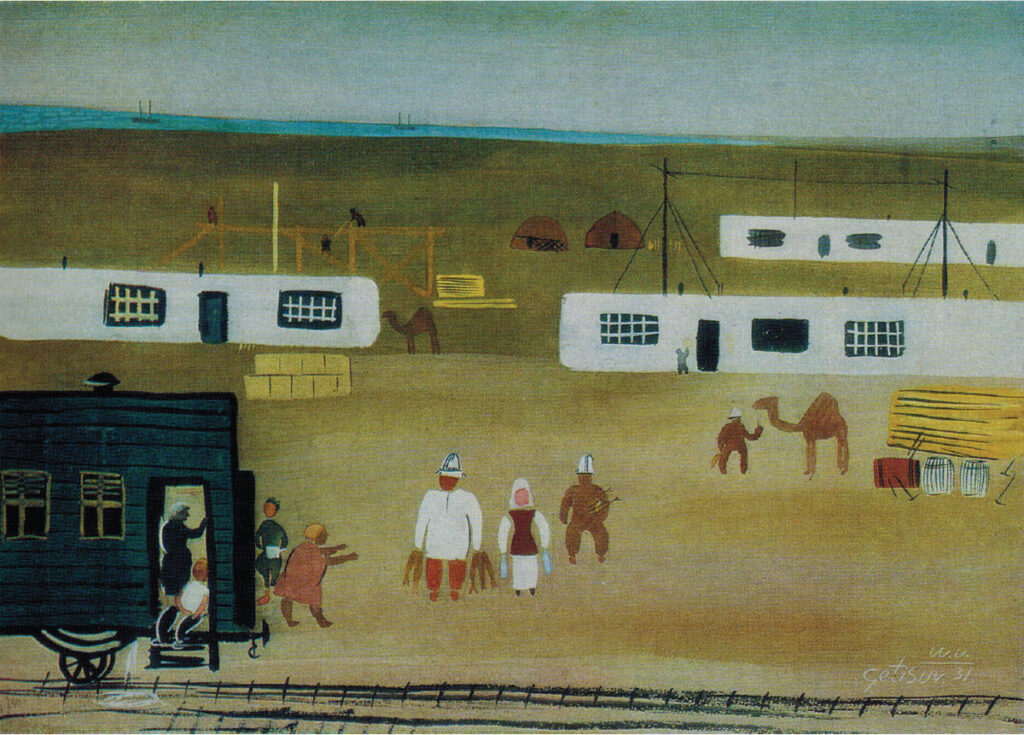
The Avant-Garde of Socialism in the Prehistoric Jungle: The Temporalities of Coal Mining in 1950s Upper Silesia
Jakub Gawkowski
This article examines the temporal narratives embedded in the artistic representations of coal mining in post-war Poland, specifically focusing on the 1950s Upper Silesian region. By analyzing artworks from the period, including heroic socialist-realist representations of miners and practices of non-professional artists, supplemented by the insights from press, popular literature and documentary film, this article highlights how different cultural expressions engaged with both the prehistoric past of coal formation and the envisioned future fueled by its continuous extraction. The discussed visual sources not only recorded the extractive labor of miners but also shaped ideological narratives of socialist progress, negotiating between geological deep time, the rhythms of industrial work, and political visions of the future. The article situates those practices within the broader framework of political and geological transformations, examining how the aesthetic strategies and their ideological framing mediated experiences of time, labor and natural environment. By exploring the timescapes embedded in cultural production—from geological deep-time to the immediate, destabilizing impacts of coal mining—this article bridges art history of socialist Poland and history of temporality for a broader understanding of the paradoxes within temporal politics related to fossil-fueled socialist modernity.
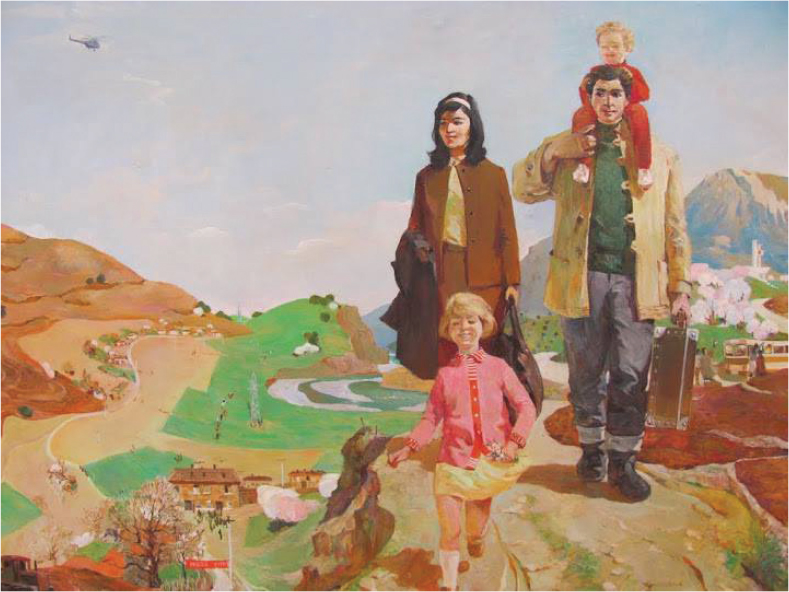
Chimneys and Electric Wires Conquering the Sky: The Great Transformation of Nature in Socialist Albania
Dimitra Gkitsa
This article examines how socialist realist paintings in Albania depict the transformation of nature during the country’s path to industrialization, revealing both the ideological aspirations and the material realities of socialist modernity. Moving beyond a simplistic reading of these artworks as mere propaganda, the study explores the variation in representations of nature—sometimes tamed, sometimes coexisting, and at times resisting transformation. It argues that these paintings, in their diversity of style and representation, serve as crucial visual records of Albania’s socialist Anthropocene, capturing the ways in which environmental interventions were conceptualized, justified, and emotionally framed within the socialist project. By situating Albania’s case within the broader context of socialist industrialization, this study demonstrates that socialist modernization was not a homogenous project but an uneven, negotiated relationship between humans and the environment. In doing so, it underscores the importance of visual culture in understanding historical environmental transformations and rethinking the role of art in narrating the Anthropocene within a socialist framework.
Decolonial and Anthropocene Discourses in Contemporary Art of Former Socialist Contexts
Review by Dilda Ramazan
This review essay focuses on recent publications that examine the art of former Soviet territories – the book Beginning in the Middle: Conversations on the Post-Soviet (2022), the reader As Though We Hid the Sun in a Sea of Stories: Fragments for a Geopoetics of North Eurasia (2023), and the catalog Art in the Age of the Anthropocene (2023) of the eponymous exhibition –, aiming to understand how the three engage with postcolonial and the Anthropocene discourses. While Art in the Age of the Anthropocene offers an exemplary methodological approach by intertwining both perspectives through a thorough historical examination of Estonian art, Beginning in the Middle and As Though We Hid the Sun in a Sea of Storiesexpand on these discourses. However, in doing so, the two continue to group various post-Soviet countries and their artists together, erasing distinctions between them, and thereby reinforcing the traditional conceptual divide between East and West.
The Missing Mountain
Artist Project by Anca Benera and Arnold Estefán
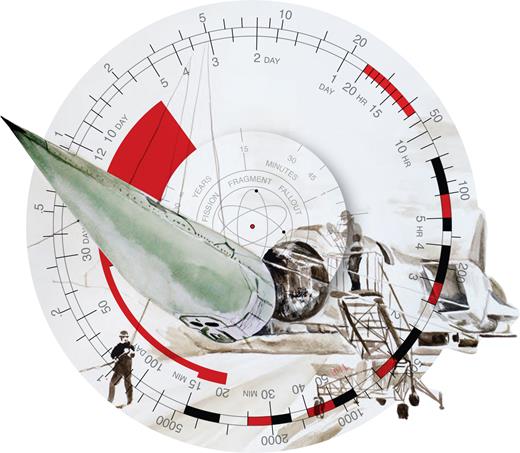
An entire mountain vanished in the 1950s in the Western Carpathians of Romania. Its uranium-rich rocks were transported by train to be processed into nuclear fuel in Sillamäe, in the former Soviet Union, now Estonia. Some were converted into nuclear warheads. Following the breakup of the Soviet Union in the 1990s, those warheads were decommissioned and dismantled. Since 1995, the Megatons to Megawatts economic deal between Russia and the United States has transformed nuclear weapons into electricity, illuminating American homes with energy derived from Soviet warheads.
This project traces a shared history of extraction, linking distant places and pasts through the voice of a confused uranium isotope, caught between being energy that is both vital and destructive at the same time. It explores uranium’s path as both a mineral and a time traveler, transferring isotopes across geographies, industries, and time scales.
Sublimating Socialist Construction Through Ink: Introduction to “When Thoughts Change, Brush and Ink Cannot Remain Unchanged”
Document introduction by Mia Yu
“When Thoughts Change, Brush and Ink Cannot Remain Unchanged” is an open letter by renowned ink painter Fu Baoshi after his 1960 sketching tour organized by the Jiangsu Chinese Painting Academy. This tour was a pivotal event in integrating traditional ink painting with Socialist cultural production, a response to the ideological demands of the Socialist state following the establishment of the People’s Republic of China. The article highlights the challenges faced by ink artists in adapting to new themes, particularly the depiction of industrial and agricultural subjects, as they navigated the tension between tradition and modernity. It also reveals the nuanced ways in which artists engaged with state-sponsored initiatives. Rather than merely conforming to propaganda, Fu Baoshi and his contemporaries utilized these experiences to experiment creatively, ultimately contributing to the establishment of a new artistic category: the Socialist landscape. This exploration underscores the dynamic relationship between art, ideology, and the evolving cultural landscape of modern China.
When Thoughts Change, Brush and Ink Cannot Remain Unchanged
Fu Baoshi
Originally published in Chinese by Fu Baoshi, “思想变了,笔墨就不能不变,” People’s Daily, February 26, 1961. It was reprinted in other newspapers, including the Xinhua Daily and Wenhui Daily. It was later included in the first volume of Selected Literary and Art Reviews, published by the People’s Daily Publishing House in 1962.
Contents of the special online issue
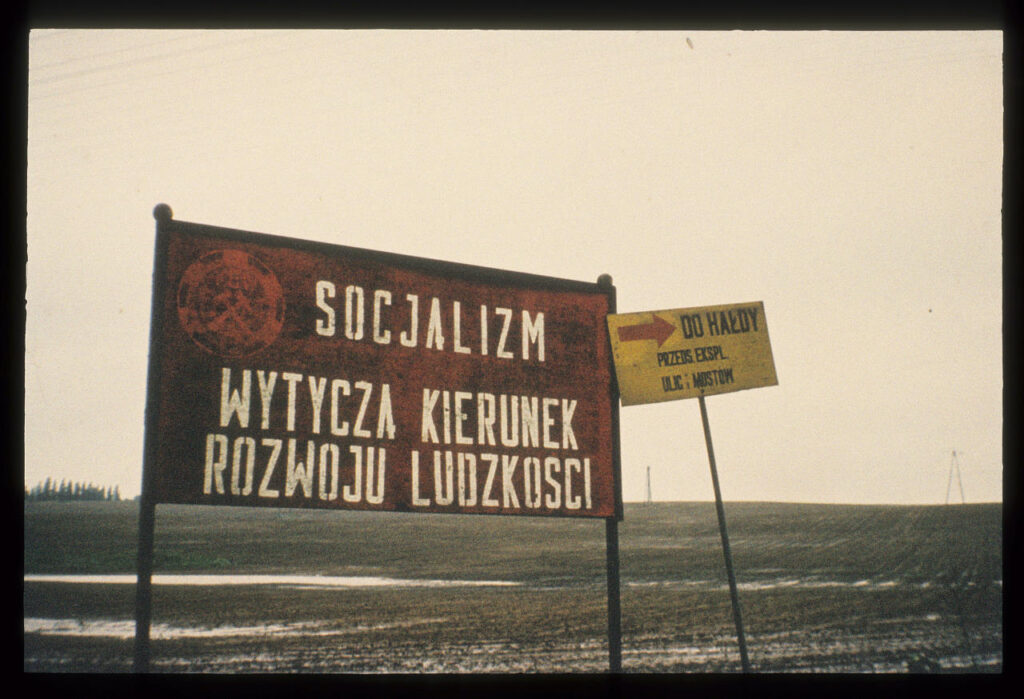
Earth, Matter, Rhythm: Władysław Hasior and the Socialist Anthropocene
Karolina Kolenda
This article investigates the neo-avant-garde artist’s ecological critique of the anthropogenic transformation of the countryside in socialist Poland. Analyzing images from his photographic archive, sculptural works, and a tree-burning performance, Kolenda charts Hasior’s rising “ecological alarm” at the devastation of the natural world.
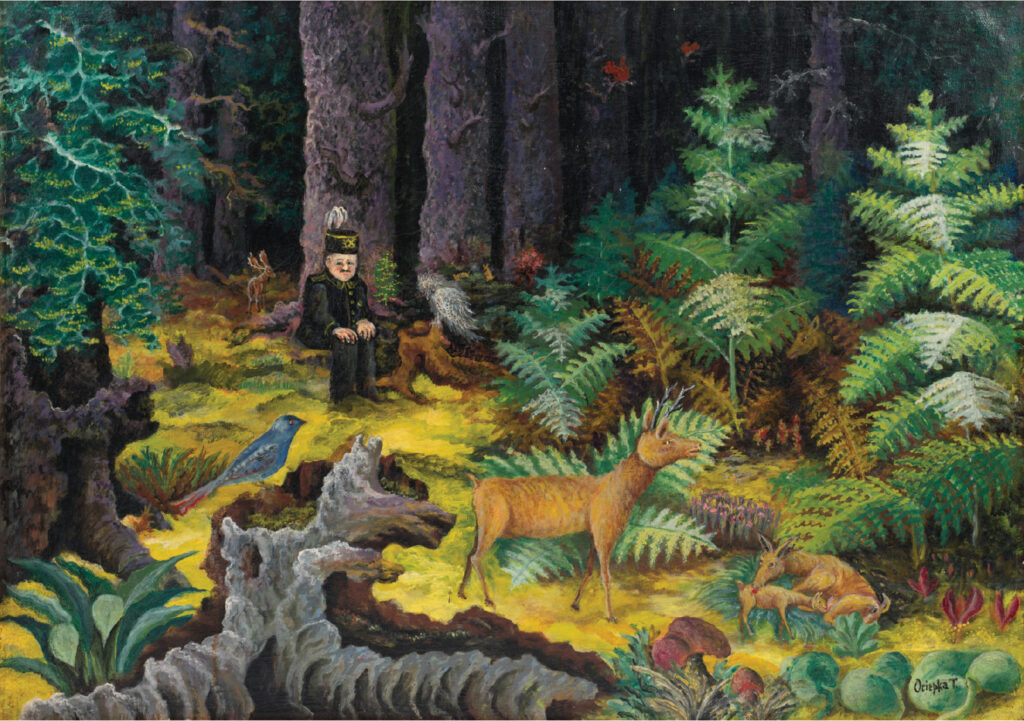
Christa Jeitner’s Visions of Trees
Marie Meyerding
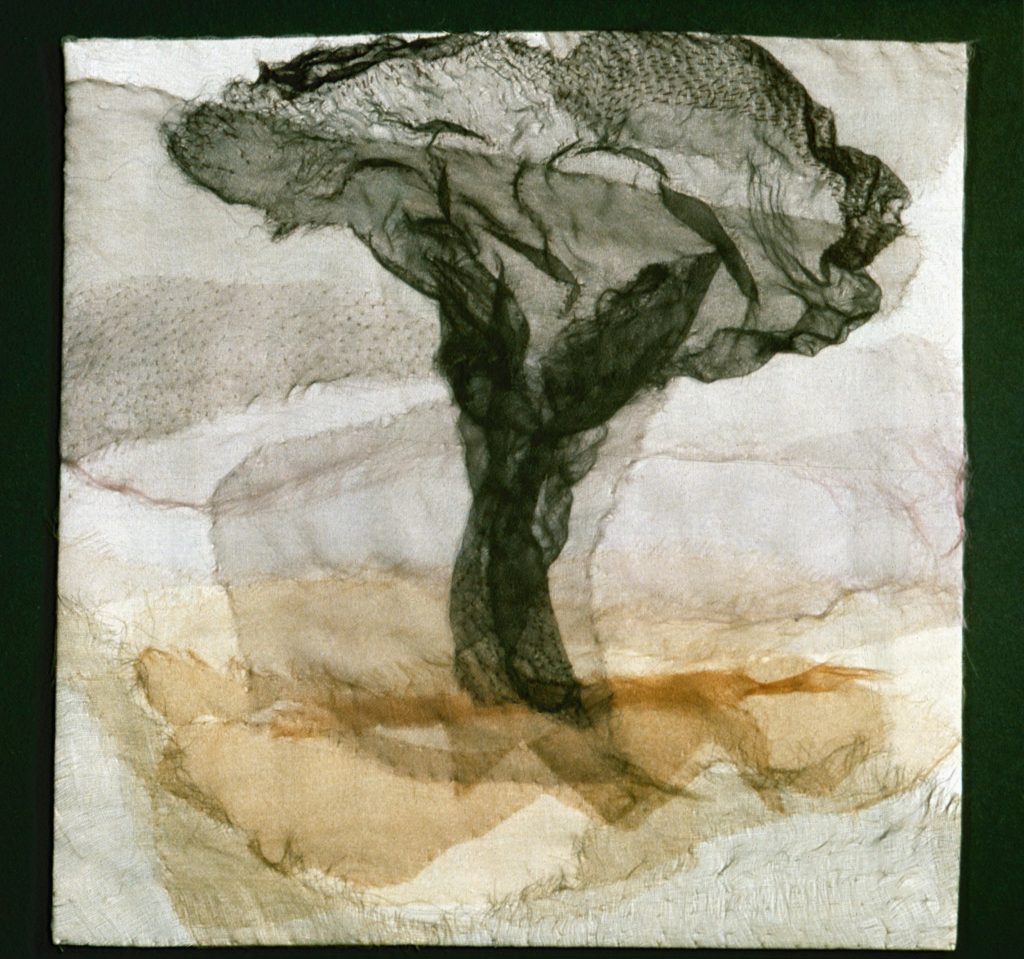
In the art historical text “Christa Jeitner’s Visions of Trees,” Marie Meyerding argues that it was growing awareness of the finitude of natural resources and fears about the chemical pollution emanating from extractive industries that compelled East German artists of late socialism to address environmental issues in their work. Meyerding’s discussion of the practice of textile artist Christa Jeitner underlines how abstract compositions could also serve as vehicles for the articulation of ecological positions in socialist art. These forays into East European art history exemplify the potential of the Socialist Anthropocene as an interpretative framework for the analysis of environmental art under socialism.
Dispose, discard, discare: Environmental, political and emotional wastelands in the German Democratic Republic
Anna Zett
Amongst the contemporary research-informed art practices featured in the online issue, artist Anna Zett interweaves textual and visual elements to illuminate the political, personal, and ecological ramifications of the Cold War waste trade, which saw household refuse and hazardous materials from West Germany disposed of in East German landfills in exchange for hard currency. Titled “Dispose, Discard, Discare,” this artistic project interrogates the deployment of waste disposal as a political metaphor and cross-border operation, counterposing western deprecation of East Germany as a toxic wasteland with actual environmental histories of socialist recycling and anti-consumerism.
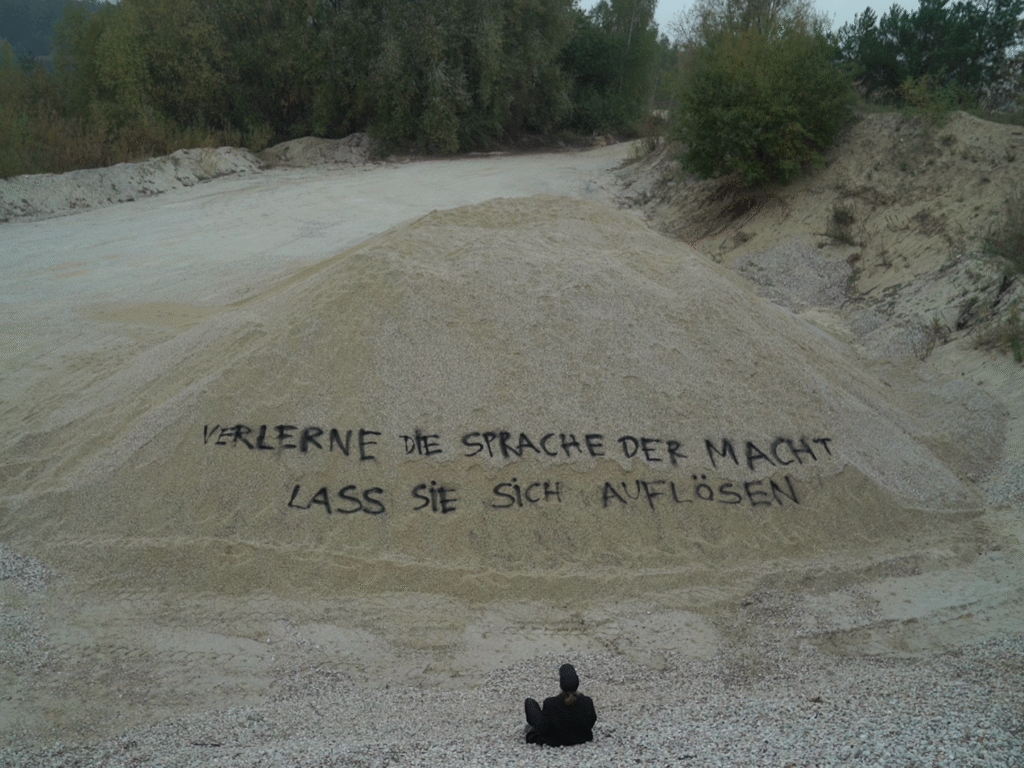
This still shows the next-to-last scene of the video performance I recorded during my archival work in 2018. Sitting on a heap of gravel I look down onto a smaller heap of gravel showing my own temporary graffiti that reads: UNLEARN THE LANGUAGE OF POWER, LET IT DISSOLVE.
Weather Spectres of the Socialist Anthropocene
Interview with Rita Süveges by Maja and Reuben Fowkes
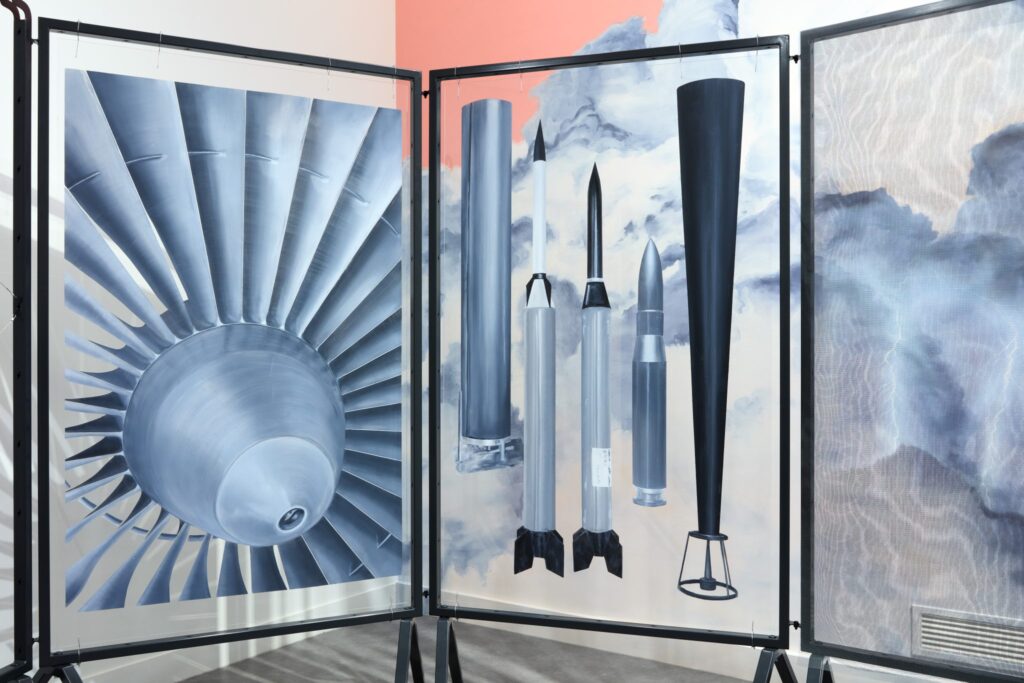
In an interview with the editors, Hungarian artist Rita Süveges discusses her artistic research into the phenomenon of weather manipulation. In Weather Spectres, the artist uncovers the origins of weather modification techniques such as cloud seeding in the experimental science of socialism, positing that the geoengineers’ belief in their ability to control the weather is a form of techno-scientific mythology that is equivalent to superstitions of medieval rainmakers.
Visualizing the Transformation of Nature in Central Asia: Socialist Anthropocene in the Visual Arts (SAVA) Roundtable
Maja Fowkes, Aïda Adilbek, Aziza Kadyri, Aigerim Kapar, Anel Rakhimzhanova and Saodat Ismailova
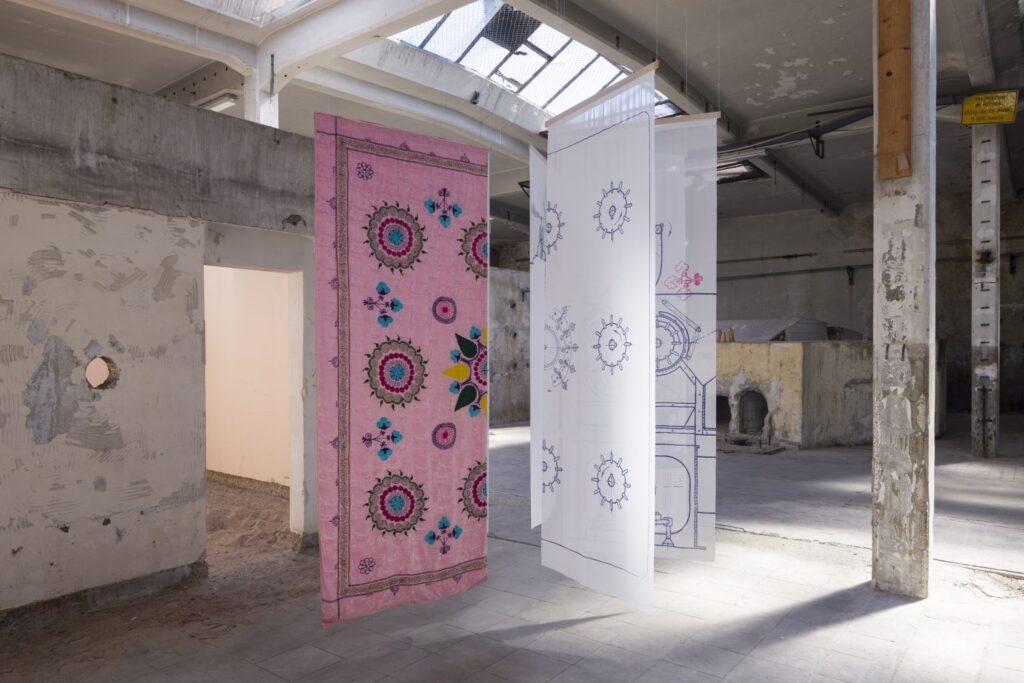
Incorporating the beyond-east-Eurocentric epistemologies of the Socialist Anthropocene, the Roundtable on the Transformation of Nature in Central Asia brings together leading women artists, curators, and activists from the region to discuss its entangled ecological challenges and geopolitical predicaments. The conversation is conducted by SAVA Principal Investigator Maja Fowkes with artists Aïda Adilbek and Aziza Kadyri, curator Aigerim Kapar, researcher Anel Rakhimzhanova, and SAVA Creative Fellow Saodat Ismailova. Their exchanges point to the confluence of infrastructural, developmental, modernizing, imperialist and extractivist agendas, which in Central Asia are densely entwined with the legacies of Soviet intervention into natural and cultural domains. Combining personal stories, decolonial activism, and ecocritical research, the participants of the Roundtable share artistic perspectives on reparative procedures, collective approaches, and companionship with the natural entities of the region.
Contributors
Anca Benera and Arnold Estefán have collaborated as an artist duo since 2012, working between Bucharest and Vienna. Their practice spans multimedia installation, sculpture, and drawing, exploring how the military imagination shapes landscapes, climates, and communities, including its connections to extractive industries. Their work has been exhibited at Manifesta 15, Barcelona (2024), Whitechapel Gallery, London (2023), n.b.k., Berlin (solo, 2023), Museum Tinguely, Basel (2022), and the Migros Museum, Zurich (2021).
Maja and Reuben Fowkes are art historians, curators, and directors of the Postsocialist Art Centre (PACT) at University College London. Their publications include Art and Climate Change (2022), Central and East European Art Since 1950 (2020), a special issue of Third Text on the “Actually Existing Artworlds of Socialism” (Reuben Fowkes, ed., 2018), and Maja Fowkes’s monograph The Green Bloc: Neo-avant-garde Art and Ecology under Socialism (2015).
Jakub Gawkowski is a graduate student in the History Department at Central European University, Vienna, and curator at Muzeum Sztuki in Łódź. His recent curatorial projects include Records of Waiting: On Time and Ornament (with Monika Rosińska and Maciej Siuda, London Design Biennale, 2025); Pursuing the Whole: The Katarzyna Kobro Award (with Maria Morzuch, Muzeum Sztuki, 2024); Wacław Szpakowski: Riga Notebooks (with Inga Lāce and Daniel Muzyczuk, Latvian National Museum of Art, 2023); and Erna Rosenstein, Aubrey Williams: The Earth Will Open Its Mouth (Muzeum Sztuki, 2022). Together with Marysia Lewandowska, he coedited a volume of Ewa Mikina’s critical writings (1991-2012). His essays and interviews have appeared in e-flux and various exhibition catalogues. He serves on the program councils of QueerMuzeum Warszawa.
Dimitra Gkitsa teaches at the Winchester School of Art at the University of Southampton. She works at the intersection of memory studies, affect, contemporary art, curatorial practices, and post-socialist visual cultures. Gkitsa was previously the Alexander Nash Research Fellow in Albanian Studies at the School of Slavonic and East European Studies, University College London (2021-23). Her articles have appeared in Performance Research, Creative Industries Journal, and the Art Studies Journal of the Centre for Art Studies at the Academy of Sciences of Albania.
Anel Rakhimzhanova is a PhD candidate in Performance Studies at NYU, researching the performance of modernity and mobilities in Central Asia. She is the editor of the forthcoming monograph Almagul Menlibayeva: I Understand Everything and a contributor to Soviet Materialities (2025).
Dilda Ramazan is a curator and PhD candidate at the Sorbonne. Her research explores the contemporary art scenes of Kazakhstan, Uzbekistan, and Kyrgyzstan, aiming to offer a comparative analysis of the artistic developments in these Central Asian countries. Her recent curatorial projects include the group show YOU ARE HERE. Central Asia (October 2024-April 2025), co-curated with Aida Sulova at Fondazione Elpis, Milan, as well as a screening session entitled Vidéos d’Asie centraleat the Centre Pompidou in Paris (2023).
Mia Yu is a curator, art historian, and artist-filmmaker. Her research-based practice examines the relationship between extractive landscape, infrastructure, and eco-politics. Her films include Eme Cosmos (2024), Amber (2024), Let Me Tell You a Future Story About Sediment (2024), and Pan Yuliang: A Journey From Silence (2017). She has worked on the following curatorial projects: Fossil Sunlight, Sedimentary Bodies (Goethe-Institut Beijing); A Darkness Shimmering in the Light (Tang Contemporary Art); Counterpoints: Focus China (SKD: Staatliche Kunstsammlungen Dresden); 2021 OCAT Biennale: Resonances of One Hundred Things (OCAT Shenzhen); Ecological Entanglements from Northeast China (Pro Helvetia); and From Vladivostok to Xishuangbanna (Jimei x Arles International Photo Festival). She has published in Afterall, Artforum, Art Monthly, Art Review, and LEAP.
Karolina Kolenda, PhD, is an art historian and literary scholar based in Krakow, Poland. She works as assistant professor at the University of the National Education Commission in Krakow. She has published books and articles about contemporary British art and literature, landscape photography, and Polish art after 1945. Among her current research interests are environmental history of postwar art in East-Central Europe, landscape studies, and blue posthumanities.
Marie Meyerding is an art historian and postdoctoral researcher holding a Walter Benjamin Position (DFG) at TU Dresden. Her current project ‘Landscapes of Surveillance: Environmental Art and the Stasi in the Global GDR’ explores art and ecology under socialism. She is the author of Women and Photography in Apartheid South Africa (Routledge, 2025) and Sights of Struggle (Lecturis, 2023). Her writing has appeared in African Arts, Third Text, Critical Arts, Safundi, kritische berichte, sehepunkte and Camera Austria. In 2023, she curated the Open Call-winning exhibition Defiant Visions at apexart, New York. Her work has been supported by the DAAD, the Krupp Foundation and the Smithsonian National Museum of African Art, among other institutions. She holds a PhD (summa cum laude) in African Art History from Freie Universität Berlin.
Anna Zett is a Leipzig-born, Berlin-based artist and writer. Rooted in dissident and queer perspectives, trained in theory (MA Anthropology, Philosophy, Gender Studies) and informed by filmmaking, dance and group analysis, Zett’s creative practice challenges structures of repression, and invites the live formation of encounters with the unknown. This work results in pulsating videos, vocal audio works, tangible installations, analytical texts and participatory live formats. Since their first film release in 2014, Zett’s work is being presented in international contexts of art, film, research, and performance, at diy spaces as well as museums, theaters, festivals, and conferences. Zett’s publications include two experimental radio plays for the German public broadcast and the literary text collection Artificial Gut Feeling (2019). Zett teaches media art (performance) at Academy of Fine Arts/HGB Leipzig.
Rita Süveges is a visual artist based in Budapest. Her interdisciplinary, research-based practice is twofold: she outlines a feminist critique of technoscientific imagination through both community-based knowledge-sharing projects and painting installations exhibited in more traditional art spaces. She was awarded the TÓTalJOY Prize in 2023, the Smohay Prize in 2020, and the Audience Prize of the Esterházy Art Award in 2024. Previously, she was a Derkovits Scholarship recipient and was nominated for both the Strabag and Esterházy Art Awards. She has exhibited nationally and internationally, and participated in numerous international residency programs, such as the Cité Internationale des Arts in Paris, ISCP in New York, MeetFactory in Prague, and MQ AIR in Vienna. Her latest solo exhibition, entitled Weather Spectre: From Magic to Geoengineering, was held at the Hungarian National Gallery in 2024. She is a co-founder of the xtro realm artist group and editor and contributor to extrodæsia and the Climate Imaginary Reader.
Aïda Adilbek is a multidisciplinary artist and curator based in Almaty, Kazakhstan. She graduated her BA in Art History at Kazakh National Art Academy in 2016 in Almaty and her MFA in Fine Art at Goldsmiths, University of London in 2020 in London. After returning to Kazakhstan she and her colleagues co-founded Almaty-based artist collective MATA in December of 2020. In 2023 she co-founded Bölme, multidisciplinary school for creative practitioners. Aida’s works and films were presented at festivals like documenta fifteen at the public programme of DAVRA research group (2022), goEast23 Film Festival (2023), Qara Film Festival (2023), The Jean Rouch International Film Festival (2024), “Janub Shamoli” women’s film festival (2024). In 2023 she became a laureate of Sound Art Residency at Musée du Quai Branly in Paris and won the Prince Claus Fund’s Seed Award. Her main mediums are performance, photography and film. She currently combines curatorial, artistic and research practices.
Aziza Kadyri a London-based interdisciplinary artist working with textiles, installation, performance, and creative technology, and the co-founder of Qizlar, a collective of artists and activists from Uzbekistan and its diaspora. Her practice explores how handcraft, Central Asian identities, and global digital cultures intersect, using textiles and interactive installations to tell speculative stories, preserve memory, and resist erasure – contributing to wider conversations on decolonial aesthetics and feminist tech. Kadyri represented Uzbekistan alongside Qizlar Collective at the 2024 Venice Biennale. Presently, she is a Creative Technologies Fellow at Somerset House Studios in collaboration with the UAL Creative Computing Institute.
Aigerim Kapar is an interdependent curator and researcher from Kazakhstan whose work lies at the intersection of art, ecology, climate, and decolonial practice. She is the co-founder of Artcom Platform, a women-led collective of artists and researchers, and the co-founder of Care for Lake Balkhash, a long-term initiative dedicated to safeguarding one of Central Asia’s largest and most endangered lakes. With a background in history, cultural, and environmental studies, she explores how memory, ecology, and Indigenous knowledge can inform new curatorial methodologies. Her practice is rooted in community-based organizing, centering collective memory, ecosystems, and practices of repair—while also envisioning sustainable and just futures through collective action, artistic co-creation, and ecological care.
Anel Rakhimzhanova is a PhD candidate in Performance Studies at NYU, researching the performance of modernity and mobilities in Central Asia. She is the editor of the forthcoming monograph Almagul Menlibayeva: I Understand Everything and a contributor to Soviet Materialities (2025).
Saodat Ismailova is an Uzbek filmmaker and artist who came of age in the post-Soviet era. Interweaving rituals, myths and dreams within the tapestry of everyday life, her films investigate the historically complex and layered culture of Central Asia. Frequently based around oral stories in which women are the lead protagonists, and exploring systems of knowledge suppressed by globalized modernity, her works hover between visible and invisible worlds. Graduated from Tashkent State Art Institute and Le Fresnoy, National Studio of Contemporary Arts, France she has established artistic lives between Paris and Tashkent. In 2021 she initiated Davra research collective to develop Central Asian art scene. In 2022 Saodat Ismailova participated both in 59th Biennale of Venice and documenta fifteen. In 2022, she received The Eye Art & Film Prize, Amsterdam, in 2025 Foundation Pernod Ricard’s Nouveau Programme and Medallist of Art Basel 2025. In 2024-5 she was Creative Fellow in the research project on the Socialist Anthropocene in the Visual Arts (SAVA).