SAVA Research Week I: Socialist Anthropocene in the Visual Arts

The first SAVA Research Week (RW1) brought together artists, theorists, art historians and environmental historians to debate the Socialist Anthropocene. It consisted of closed roundtable sessions with invited participants and two public events held at UCL Institute of Advanced Studies.
Programme
Documentation
Programme
Public events
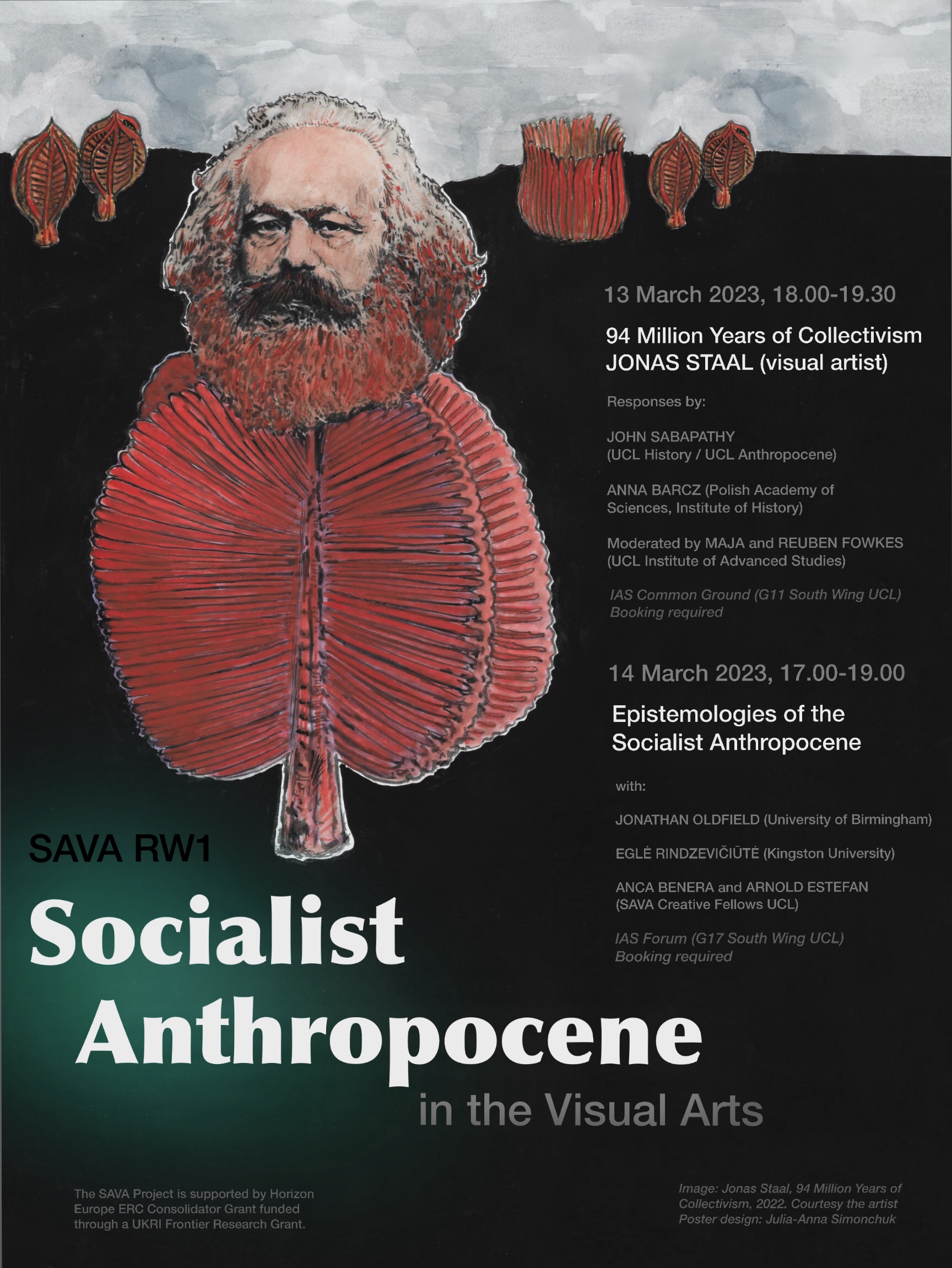
Monday 13 March 2023
18.00-19.30
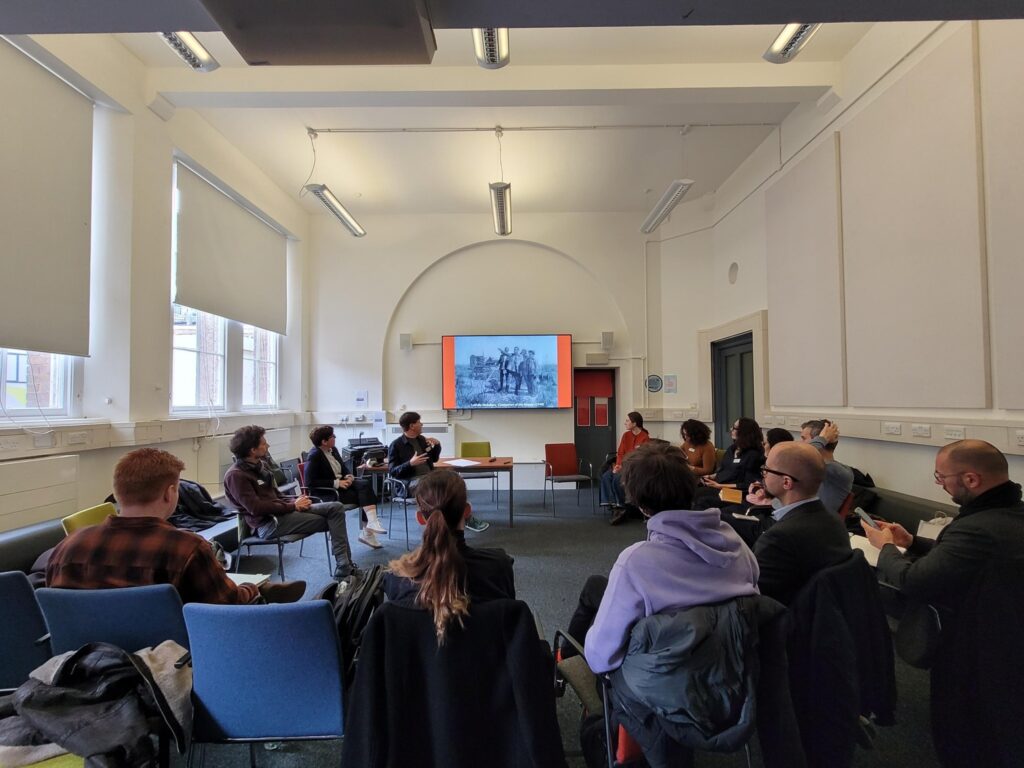
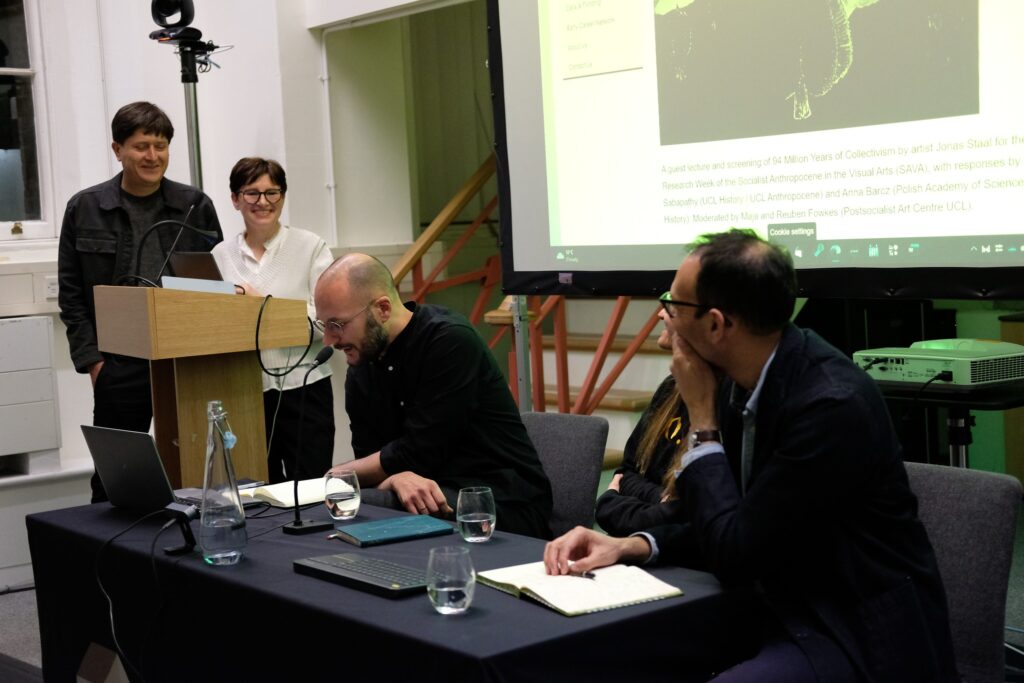
Jonas Staal: 94 Million Years of Collectivism
Responses by John Sabapathy (UCL History / UCL Anthropocene) and Anna Barcz (Polish
Academy of Sciences, Institute of History), moderated by Maja and Reuben Fowkes (UCL IAS)
IAS Common Ground (G11 South Wing)
Booking required.
94 Million Years of Collectivism centres on the geological period known as the Ediacaran. The Ediacaran spans 94 million years (from 635 million years to 541 million years ago), and precedes the Cambrian period, which for a long time was credited to be the era that birthed complex lifeforms. It was only in the mid-twentieth century that Ediacaran fossils were discovered and identified as possibly belonging to a geological time frame of its own, a fact that was finally recognized in 2004. While the Cambrian period is characterised by an explosive diversification of species with predation being the primary modus operandi, the Ediacaran constituted an interdependent non-predatory ecology. The current conditions of global capitalism are often naturalised through Neo-Darwinian narratives that uphold extractivist predation as the primal evolutionary drive. But the Ediacaran faces us with a fundamentally different collectivist ecology. Is it possible that in imagining more egalitarian forms of life, we simultaneously dream the Ediacaran?
Tuesday 14 March
17.00-19.30
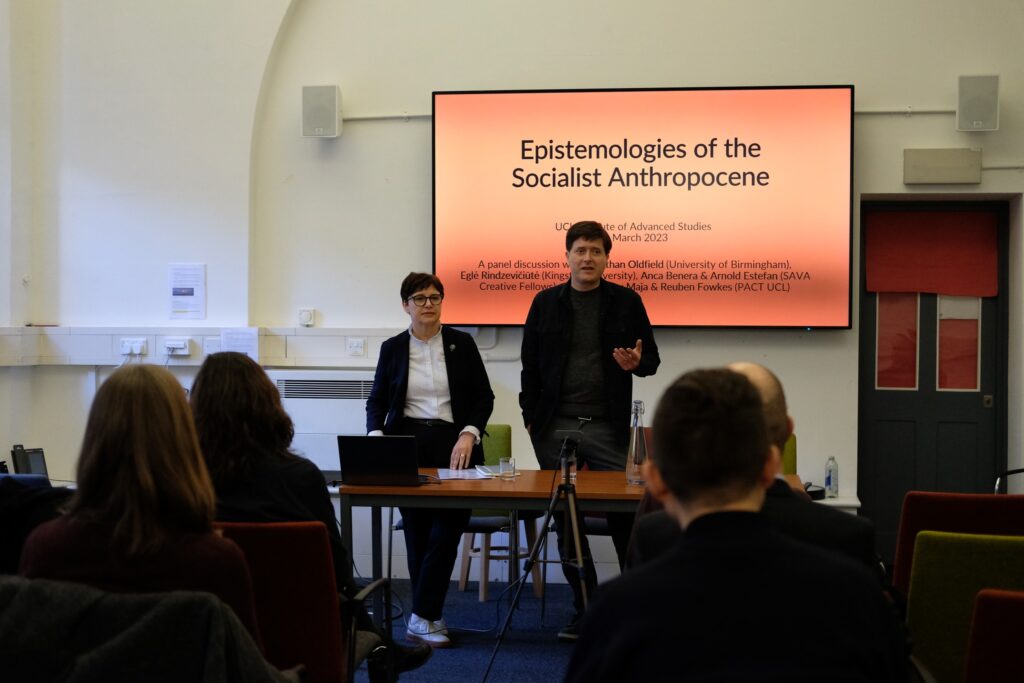
Epistemologies of the Socialist Anthropocene
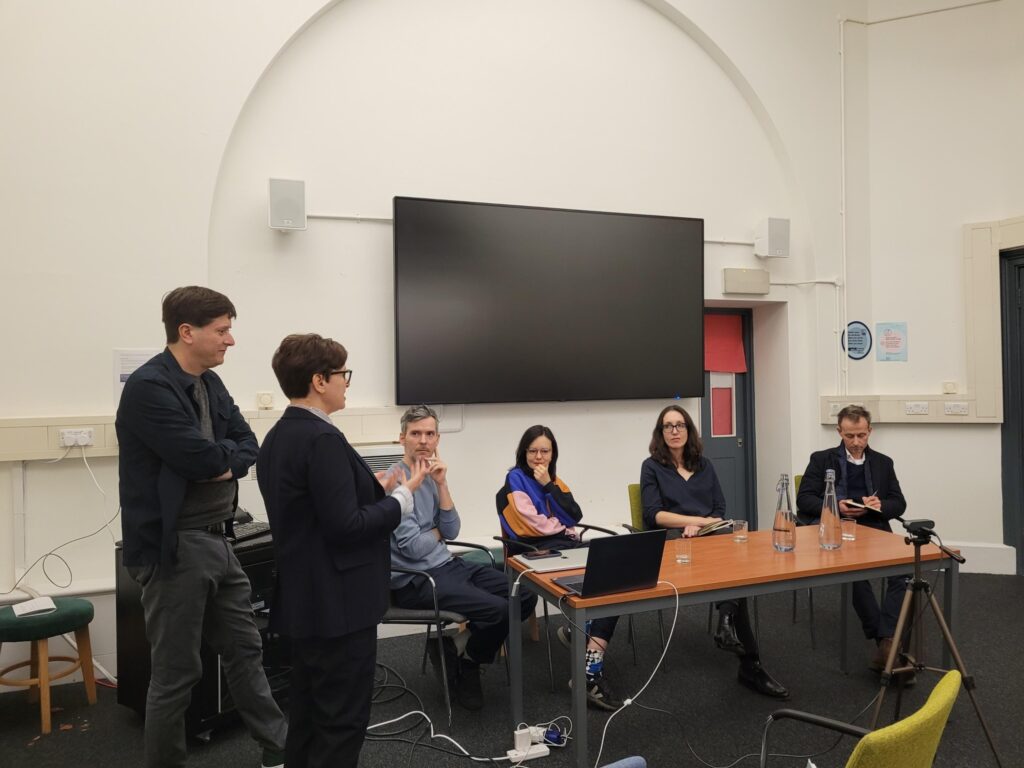
A panel discussion with Jonathan Oldfield (University of Birmingham), Eglė Rindzevičiūtė (Kingston University) and artists Anca Benera and Arnold Estefan (SAVA Creative Fellows UCL). Moderated by Maja and Reuben Fowkes (UCL IAS).
IAS Forum (G17 South Wing)
Booking required.
This discussion explores attitudes and approaches to the natural world under socialism, focusing on the divergent histories of Soviet science, the corrosive legacies of nuclear culture and planetary impacts of militarism. It will address the distinctive forms of knowledge production under socialism as manifest in the development of Soviet scientific thought. What was specific about the version of technological progress and development modelled by scientists and planners in socialist states and what were its environmental implications? What was the contribution of Soviet science to the emergent understanding of the Earth as an interconnected ecological system? The panel will also consider the extent to which scientific inquiry in socialist states was shaped by the demands of Cold War competition, the influence of the military-industrial complex and the prospect of nuclear catastrophe. In his presentation of Jonathan Oldfield (University of Birmingham) will discuss Soviet scientist Vladimir Vernadsky’s understanding of the biosphere and related concept of the noösphere as the sphere of human thought. Eglė Rindzevičiūtė (Kingston University) will consider the ways in which the Soviet nuclear military-industrial complex is materially preserved, critically reassessed and mythologised as cultural heritage. Artists Anca Benera and Arnold Estefan (SAVA Creative Fellows) will present their project on the Debrisphere, a term they coined to denote the layer of the planet that is transformed by military intervention into aquatic and terrestrial landscapes.
Roundtables
Tuesday 14 March
10.00-11.00
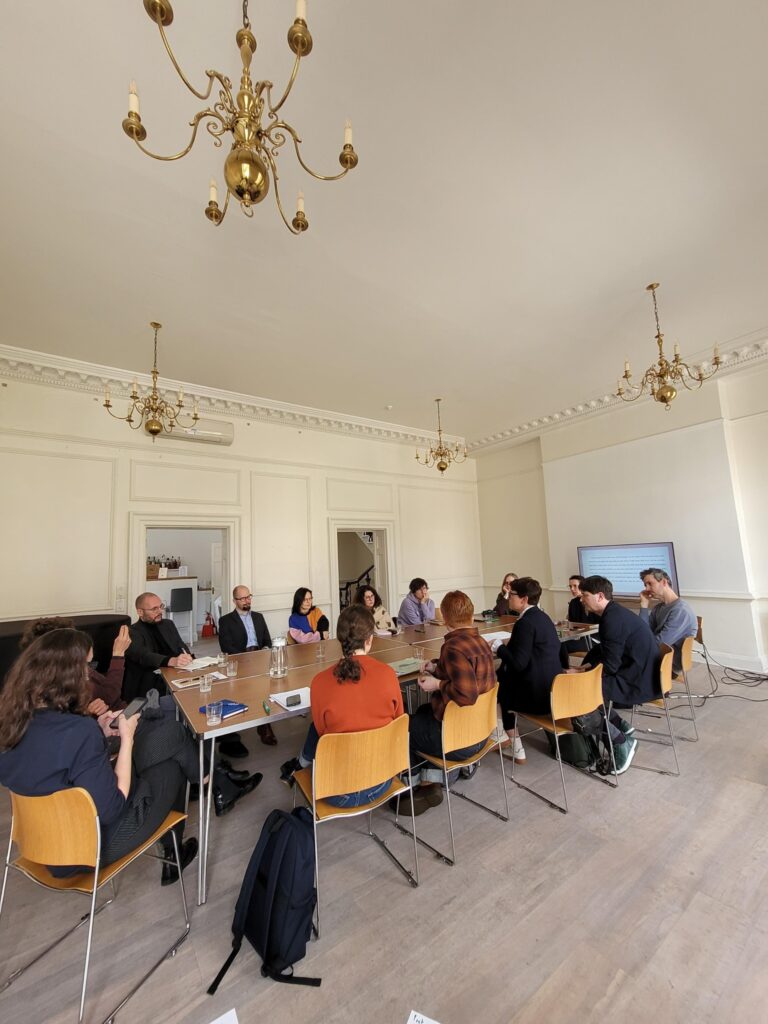
The Case for the Socialist Anthropocene with Maja and Reuben Fowkes (UCL IAS)
IAS Forum (G17 South Wing)
11.00 Roundtable #1 with Anna Barcz (Polish Academy of Sciences, Institute of History)
Drach from Silesia or the Return of Earthly Dragons in More-Than-Human Memory on the monstruous, terracentric imaginary of the Silesian, post-extractivist underworld, represented by the figure of (a dragon) Drach, and the function of such non-human imagined voice of the Earth; asking about the social world of Silesian miners who are seen from beneath, from the bowels of the animated Earth.
12.15 Introduction and film by artist Ruth Maclennan
A Forest Tale
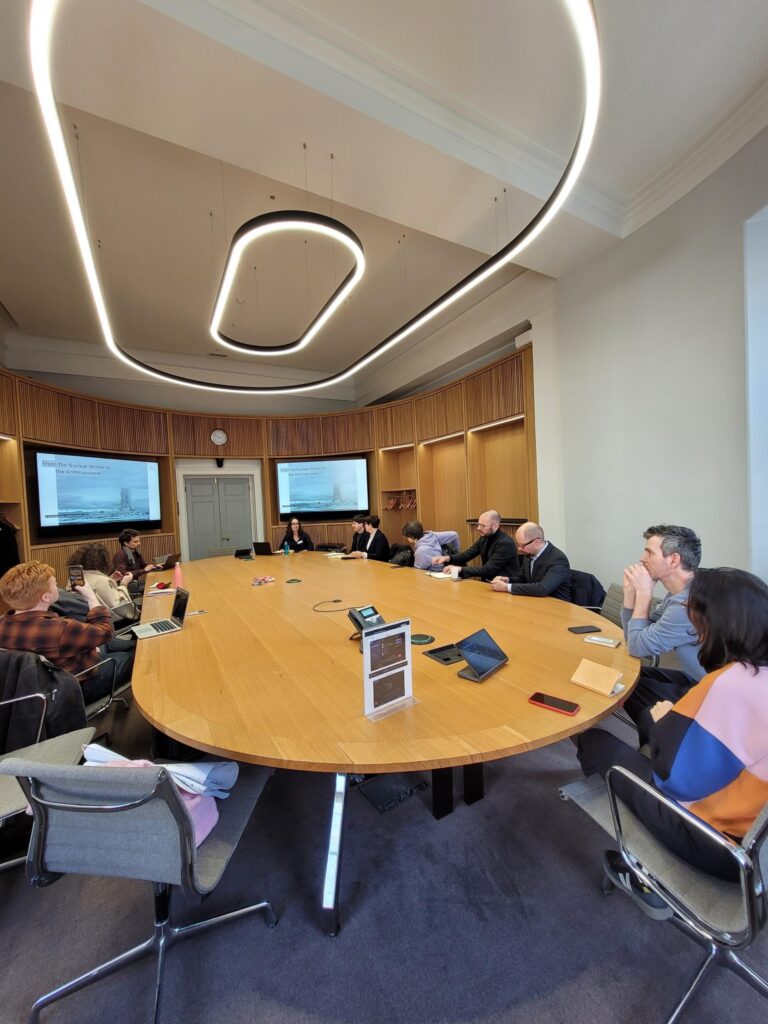
14.30 Roundtable #2 with Eglė Rindzevičiūtė (University of Kingston)
Author of The Power of Systems: How Policy Sciences Opened Up the Cold War World
“From the nuclear winter to the Anthropocene” on computer modelling of the environmental effects of nuclear war and its implications for the global ecological governmentality.
(UCL Council Room, G12 South Wing)
Documentation