SAVA Research Week II: Ideologies of Extraction

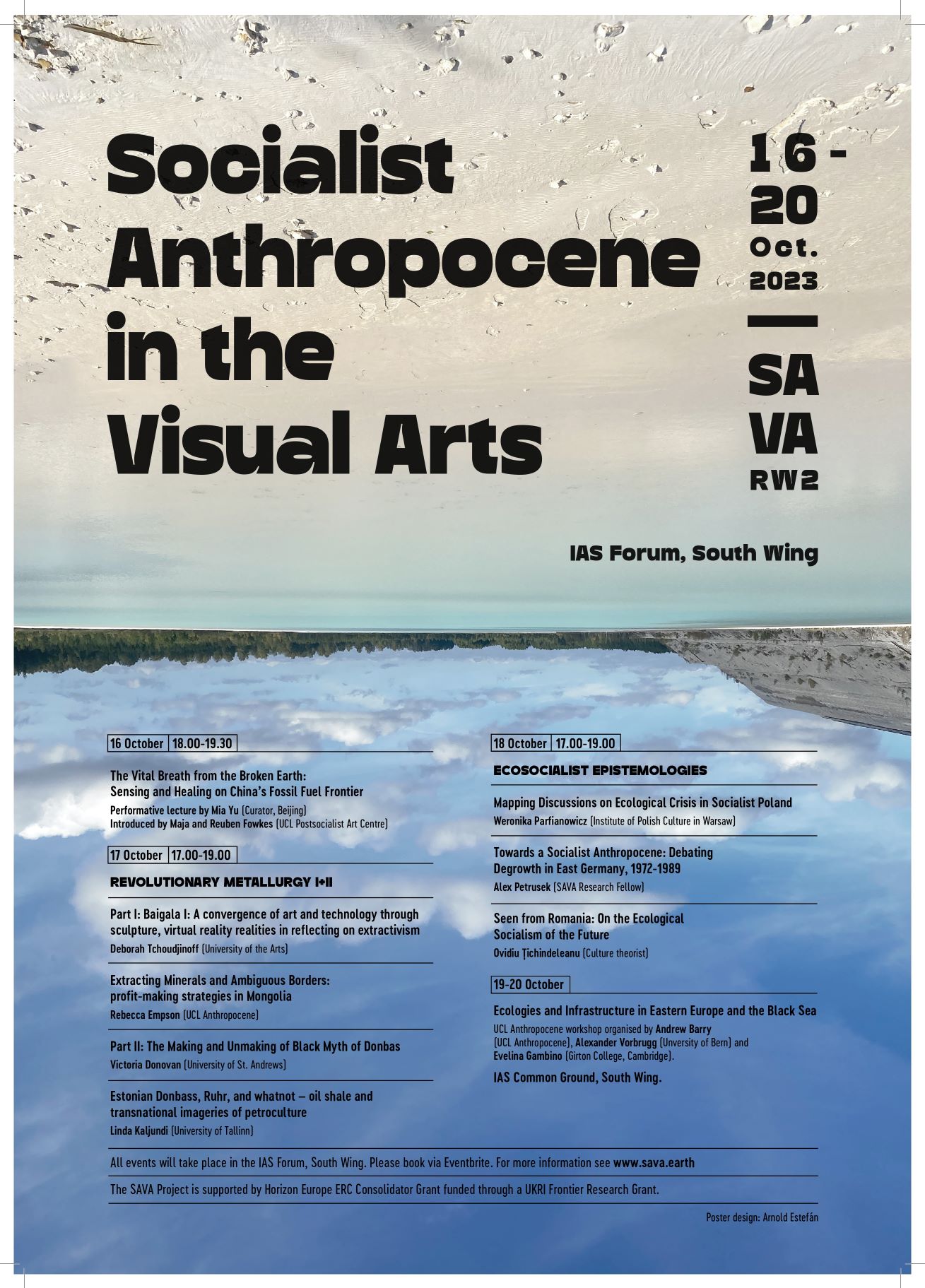
The second SAVA Research Week (RW2) consisted of public lectures, panel discussions and closed workshops delving deeper into debates over the socialist environmental and art histories of the Anthropocene. with a particular focus on the broadly conceived topic of extractivism.
It opened with a performative lecture by Beijing based curator and art historian Mia Yu on the project Anthropocene X North. Two panel discussions around Revolutionary Metallurgy focussed on the extractivist histories of Mongolia and the social and environmental issues of mining in eastern Estonia and eastern Ukraine during the Soviet period, with presentations by Deborah Tchoudjinoff (UAL: University of the Arts London), Rebecca Empson (UCL Anthropology), Victoria Donovan (University of St Andrews) and Linda Kaljundi (University of Tallinn). A public event on Ecosocialist Epistemologies was based around presentations by Weronika Parfianowicz (University of Warsaw), Alex Petrusek (SAVA Research Fellow at UCL Institute of Advanced Studies) , and Ovidiu Ţichindeleanu (philosopher, translator and culture theorist).
Public events
Roundtables
Speaker biographies
Documentation
Programme
Public events
Monday 16 October 2023
6-7.30pm
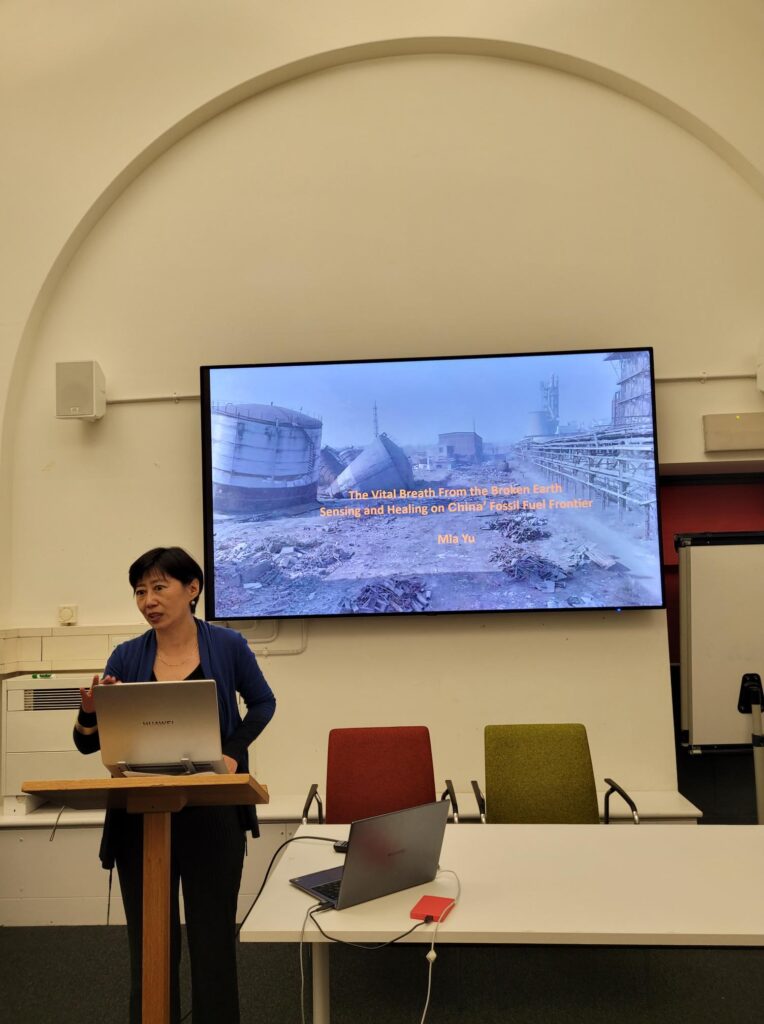
The Vital Breath from the Broken Earth: Sensing and Healing on China’s Fossil Fuel Frontier
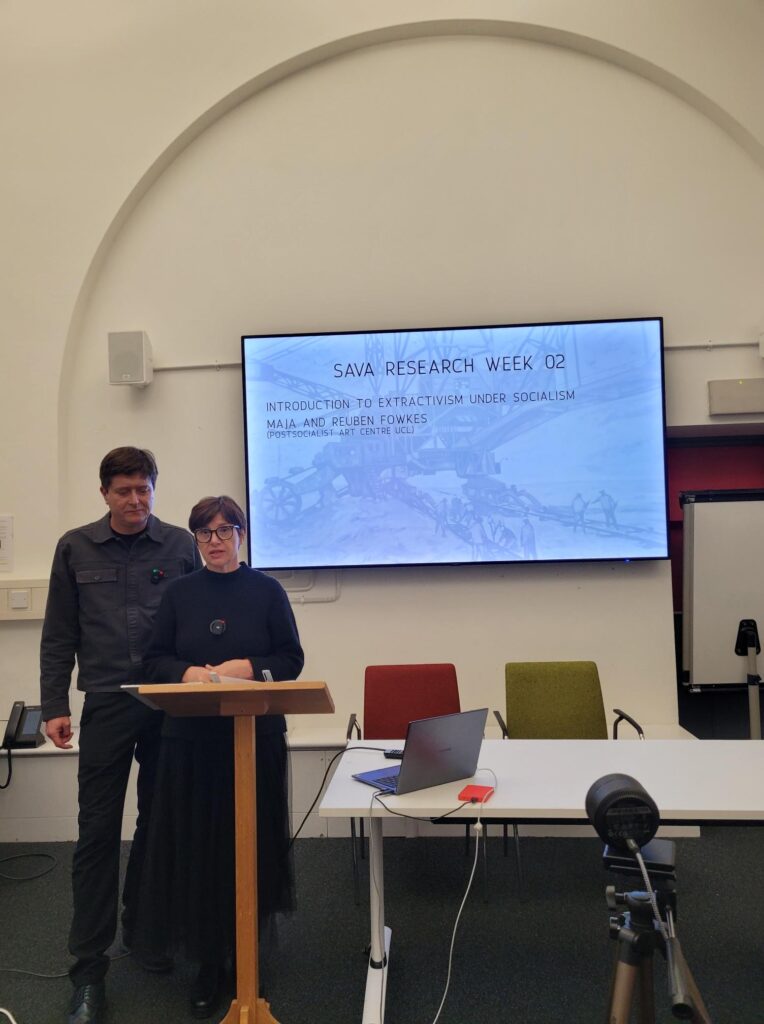
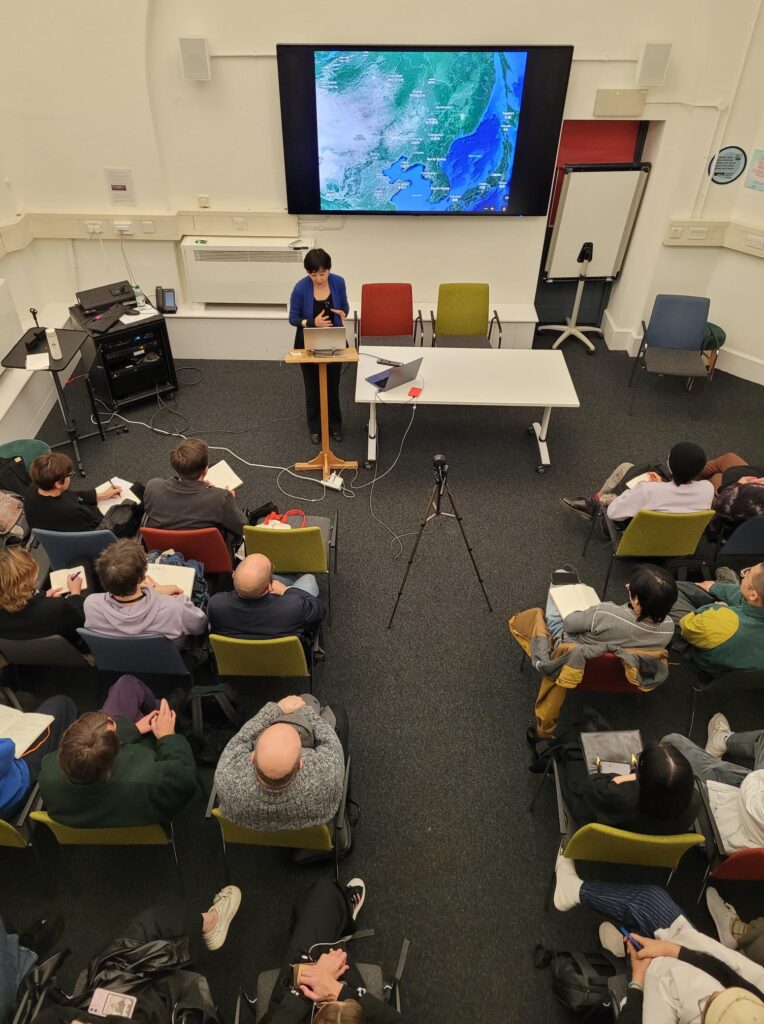
Performative lecture by Mia Yu (Beijing-based art historian, curator and educator) introduced by Maja and Reuben Fowkes (SAVA / UCL Postsocialist Art Centre).
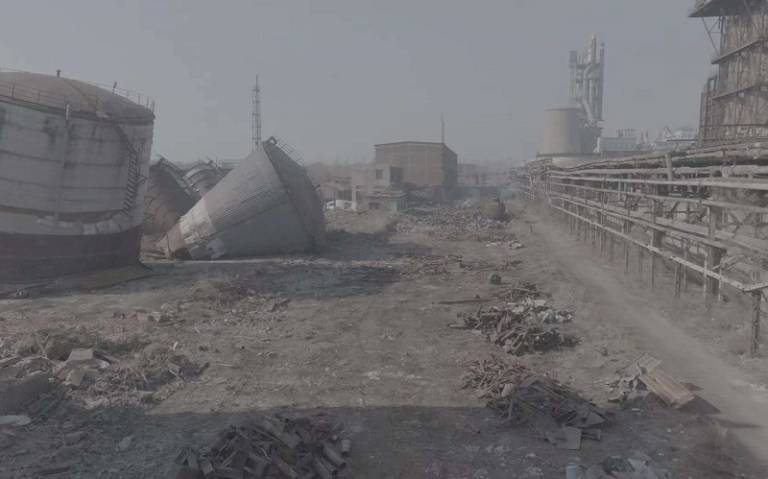
In this performance lecture, Mia Yu re-imagines the anthropogenic landscape of Fushun colliery—Asia’s largest open-pit mine—as a cultural-material construction of modernity, where Chinese cosmology, colonial violence, Socialist industrialization, hybrid forms of shamanism and personal memories converged and agglomerated throughout the 20th century. Approaching the gigantic mine pit, the heaps of mining waste, the depleted rivers and the latest renewable energy projects as “strati-fictions”, Mia Yu narrates the non-linear stories of Fushun with rich historical materials, found archives, film footage and field recordings. Through a variety of mediums and technologies, Mia Yu and local artists set out to activate the “vital breath” from the geologically-and-chemically-altered earth while exploring an ethics of healing and care on the fossil fuel frontier of Northeast China.
Tuesday 17 October
5-7pm
Revolutionary Metallurgy I
Deborah Tchoudjinoff (University of the Arts)
Baigala I: A convergence of art and technology through sculpture, virtual reality realities in reflecting on extractivism
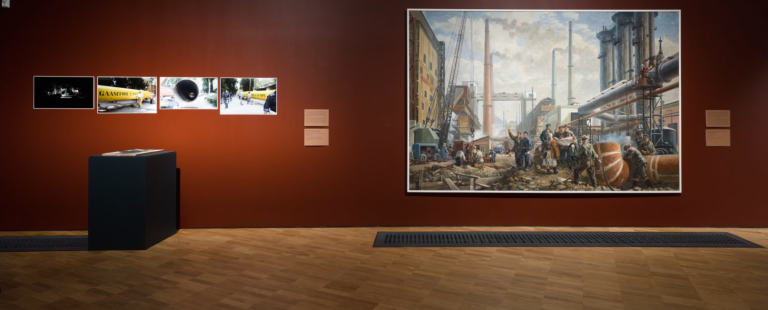
This presentation will share the thinking and process behind the artwork produced for Five Heads (Tavan Tolgoi): Art, Anthropology, and Mongol Futurism in 2018, a group exhibition featuring 5 anthropologists specialising in Mongolia, and 5 artists responding to the research. Working closely with Dr. Lauren Bonilla, Baigala I developed through following her extensive research on extractive atmospheres into western Mongolia. The sculptures were made to reference horse saddles as a poignant reminder of what is at stake. The virtual reality component bring viewers into significant terrains and landscapes of western Mongolia. Merging physical artistry with a digital experience, Baigala I asks that a deeper understanding of the delicate balance between change and resilience is needed.
Rebecca Empson (UCL Anthropocene)
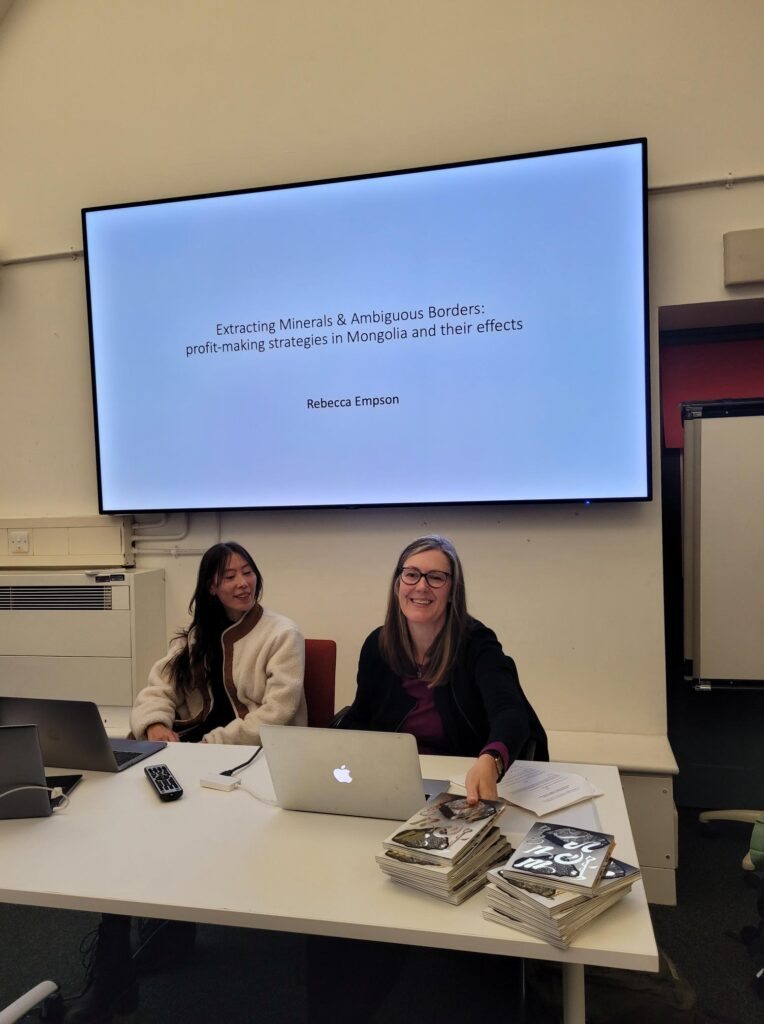
Extracting Minerals and Ambiguous Borders: profit-making strategies in Mongolia
When coal is mined in Mongolia by state-owned companies and sold to China for a profit, it is often viewed as good for the Nation and something everyone can benefit from. People were given shares in the company as a portion of anticipated gains, but over the years scandals have surrounded this extractive industry. In one case the border between Mongolia and China was deliberately made opaque to allow for coal to be sold at two different prices, generating a share for those who ran the company. In this and many other instances, resource to cash schemes abound as a way for politicians to appease the electorate and do business with each other.
Revolutionary Metallurgy II: Victoria Donovan (University of St. Andrews)
The Making and Unmaking of Black Myth of Donbas
In the first part of this talk she will engage Asia Bazdyrieva’s idea of the “resourcification of Ukraine” to examine how the Ukrainian East, also known as Donbas, was reduced in the colonial visual imaginary – through maps, corporate advertising, and industrial photography – to a space of extraction and economic exploitation. In the second part, she will examine how creative and curatorial practice from the region in the post-2014 period has challenged these visual politics. Drawing on decolonial thinking, she asks how those with situated knowledge of the region’s multiple realities have broken with resourcifying epistemic practices, “thinking and doing differently.”
Linda Kaljundi (University of Tallinn)
Estonian Donbass, Ruhr, and whatnot – oil shale and transnational imageries of petroculture
The expansion of the Estonian oil shale industry and mining is closely linked to the totalitarian regimes of the 20th century. During the 1930s, the oil shale industry was booming largely thanks to the commissions coming from Nazi Germany. In the 1940s, the Soviets invested heavily in Estonian oil shale in order to produce gas for war-torn Leningrad. Although often represented as Estonian own super technology, the economically vulnerable oil shale industry is heavily dependent on global flows and the availability of fossil fuels. Cultural imaginaries of the oil shale industry and the infrastructures around it have been equally transnational. Influenced by the Western European, North American, and Soviet visions of industry and extractivism, they reveal well the intense cultural transfers shaping the face of global industrial modernity. This talk will primarily focus on visual representations of the oil shale from the Soviet period and their wider context in the Soviet visual culture, but it also touches upon the impact of transnational and interwar period imaginaries.
Wednesday 18 October 2023
5-7pm
Ecosocialist Epistemologies
Weronika Parfianowicz (Institute of Polish Culture in Warsaw)
Mapping discussions on ecological crisis in socialist Poland
The discussion on the global ecological crisis in Poland challenges the stereotype of socialist states’ public sphere as a monolith where only non-substantial conflicts could be displayed. Beginning with the 1970’s environmental problems on global and regional scale became an important topic of debates among experts milieus as well as the lay audience. Different approaches and perspectives on environmental issues were circulating and competing in public discourse, influencing public opinion and states’ environmental policies. In my presentation I’ll focus on some of the most interesting examples of this debate: works of scientists collaborating with The Committee of Research and Prognosis “Poland 2000” and popular science magazine “Aura”.
Alex Petrusek (SAVA Research Fellow)
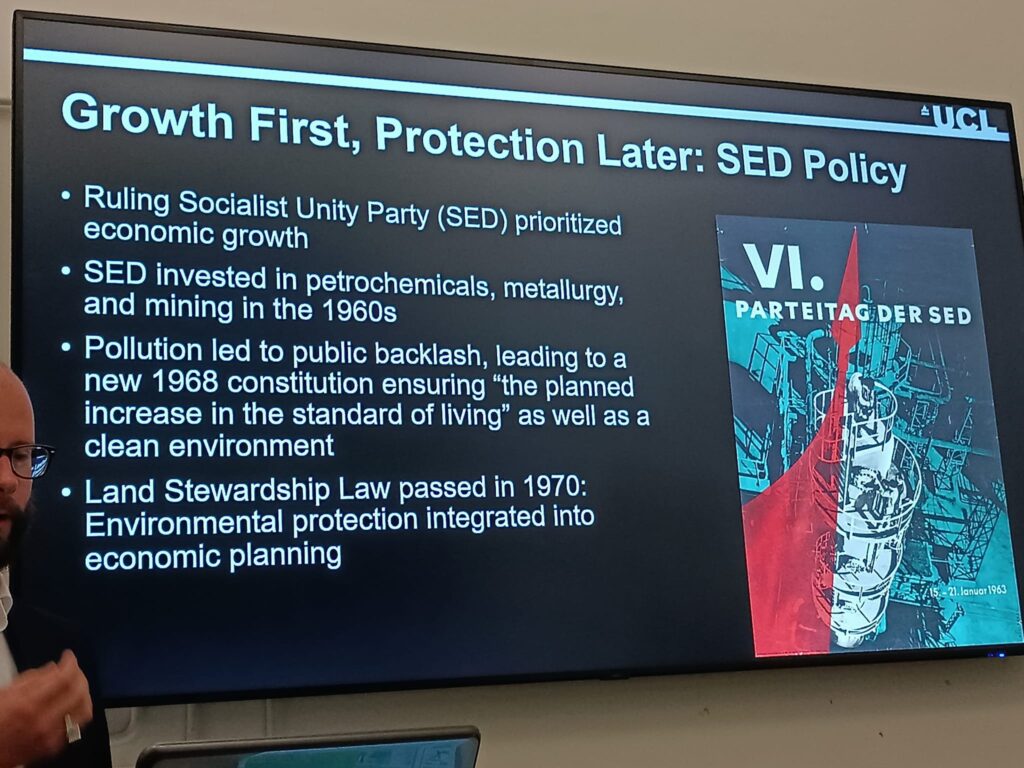
Towards a Socialist Anthropocene: Debating Degrowth in East Germany, 1972-1989
Contemporary scholarship often emphasizes degrowth’s capitalism-based intellectual genealogy, omitting significant contributions from activists from socialist societies. Following the publication of The Limits to Growth in 1972, East German ecosocialists and Christians debated slow-, zero-, and degrowth concepts and practices throughout the 1970s and 1980s, presenting alternatives to growth from within socialism. Ecosocialists like Wolfgang Harich and Rudolf Bahro published systemic theories of slow- or zero-growth to address the ecological crisis, with Bahro emphasizing spiritual rather than economic growth as key to humanity’s future. Simultaneously, researchers based in the Ecclesiastical Research Center in Wittenburg, funded by the East German Protestant Church, turned to voluntary simplicity based in Christian ethics, and petitioned the party-state to reverse its growth-first policies. Together, these ecosocialist and eco-Christian perspectives offer unique criticisms of, and solutions to, the most destructive practices driving the Anthropocene.
Ovidiu Ţichindeleanu (philosopher, translator and culture theorist)
Seen from Romania: On the Ecological Socialism of the Future
A common tenet of anticommunist historiography that has been adopted by large segments of Western critical theory holds that “no significant contributions to Marxism” and no theories and practices that might be relevant to our present have been developed in the experience of East European real socialism, and in particular during Romania’s totalitarian regime. My research shows that such assumptions are more ideological than factual, owing more to the biases of the coloniality of knowledge and to the influence of the post-socialist colonization than to the truth. Already from the mid-1960s, the Socialist Bloc was having intense debates on the future of socialism and on the possible socialist future of the planet. Several proposals for systemic alternatives have been advanced. The paths were different, but the consensus was that the socialism of the future had to be ecological. In Romania, major steps have been taken also in practice to prepare for the change towards an ecological socialism, which implied the transformation of the entire socioeconomy (not only of the “mode of production”). Meanwhile, the internal transfer of generations taking place in the 1970s gave a pervading ecological dimension to the entire cultural sphere. Drawing from research into the unjustly forgotten Romanian socialist library, as well as from an autoethnography of my upbringing in an experimental workers neighborhood from the city of Cluj, I will bring to evidence a few important elements from the historical development of ecological socialism, the outlines of the projected socialist river-based economy in Romania, and its contemporary relevance and obstacles.
Roundtables
Tuesday 17 October
10-11.30
Who “scalped” the Earth and how to tell the story of planetary crisis?
Led by Weronika Parfianowicz (Institute of Polish Culture in Warsaw)
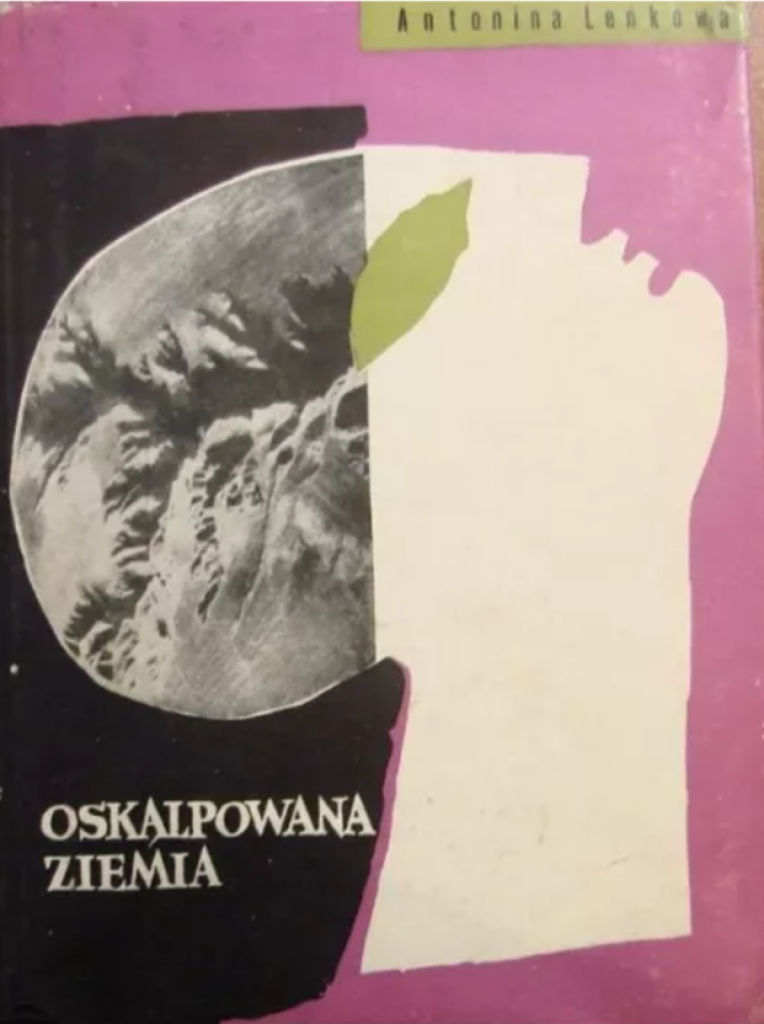
During the workshop we’ll take a look at the excerpts from “The Scalped Earth” by Polish natural scientist Antonina Leńkowa, a bestseller book on the environmental crisis that was first published in 1961. It will allow us to answer questions, such as, to what extent female perspective, institutional background or policies and economy of socialist state influenced the narrative on ecological challenges.
1.45-12.15
Everywhere is Here: From Dongbei (Northeast China) to Dongde (East Germany)
Workshop led Mia Yu (Beijing-based art historian, curator and educator)
Non-official discussions about pollution and environmental justice are somewhat taboos in China. These are regarded as jarring noises disrespectful of China’s recent environmental clean-up under Xi Jinping’s vision of “Socialist ecological civilization”. In the Chinese academia, environmental history is still at a nascent stage. Without existing scholarly research and consult with, I often feel frustrated in my research about Fushun. Instead, I look for inspirations elsewhere, especially the former GDR, a formerly Socialist state with large mining fields and
environmental problems. In this workshop, I’d like to share my experiences of visiting Bitterfled-Wolfen in East Germany this summer. In my attempt to compare Fushun and Bitterfeld-Wolfen as two extractive frontiers, I partner with Berlin-based researcher Caroline Ektander. Together, we seek out creative strategies to approach “toxic commons” as a comparative, relational epistemology that are grounded in the historical experiences of these two places.
Wednesday 18 October
11-12.30
Workshop on the Tallinn Declaration (1983)
Led by Linda Kaljundi (University of Tallinn)
We will read and discuss the Tallinn Declaration made by the East European committee of the International Union for the Conservation of Nature in 1983 under the motto ‘Unity of Nature and Art for the Sake of Peace in the World.’
15-16.30
Activist Burnout Socialist Style: The Extraction of Intellectual and Activist Labour in Post-War Poland
Led by Jan Burek (SAVA Research Fellow)
Speaker biographies
Victoria Donovan is Professor in the School of Modern Languages at the University of St. Andrew’s. Her current research is on the industrial history and heritage of the Ukrainian East, also known as Donbas, questions of heritage management and manipulation and the role of the industrial past in forming community identities and politics. She has led several collaborative research projects with partners in Ukraine, including “Donbas in Focus: Visions of Industry from the Ukrainian East” (Arts and Humanities Research Council, 2021-23). She is currently joint PI on the “Ostroh Academy/University of St Andrews Partnership for Advancing the Public Humanities” funded by UUKi. She is co-author with Darya Tsymbalyuk of Limits of Collaboration: Art, Ethics and Donbas (Rosa Luxemburg Stiftung, 2022), and her monograph Monotown: Tales of Resistance from the Ukrainian East is forthcoming with Daunt Books Publishing in 2024.
Rebecca Empson is a Professor of Anthropology at the Department of Anthropology, University College London. Her research has focused on personhood, ownership, memory and material culture (Harnessing Fortune, 2011), and forms of temporary possession in the global economy (Cultural Anthropology, 2019). She has held a European Research Council (ERC) Consolidatory Grant tracking the ‘emerging subjects’ of Mongolia’s rapidly changing mineral economy. She is Series Editor for UCL Press book series, Economic Exposures in Asia, a judge for the Bayly Prize, and an Advisory Board Member for ‘Energy Assemblages’, at the University of Lausanne on the lithium Industry. Her book ‘Subjective Lives and Economic Transformations in Mongolia’ was published in 2020.
Linda Kaljundi is a professor of cultural history at the Estonian Academy of Arts and a senior research fellow at Tallinn University. Specializing in Baltic history, historiography, and cultural memory, as well as in environmental history, she is first and foremost interested in finding new, transnational, and entangled perspectives on the region’s history and heritage. Kaljundi has published and edited collections on history and history writing, historical fiction, and images. At the Kumu Art Museum, Tallinn, she co-curated the exhibitions History in Image—Image in History: The National and Transnational Past in Estonian Art (2018), The Conqueror’s Eye: Lisa Reihana’s In Pursuit of Venus (2019–20), and the new permanent exhibition Landscapes of Identity: Estonian Art, 1700–1945 (2021).
Weronika Parfianowicz, PhD, works at Institute of Polish Culture, University of Warsaw. Her research interests include Central European urban culture, contemporary Czech culture, housing policies, degrowth and ecosocialism. She’s author of the monograph Europa Środkowa w tekstach i działaniach. Polskie i czeskie dyskusje [Central Europe in texts and actions. Polish and Czech discussions, Warszawa 2016] and co-editor of collective monograph Awangarda/underground. Idee, historie, praktyki w kulturze polskiej i czeskiej [Avant-garde/Underground. Ideas, histories, practices in Polish and Czech culture, Kraków 2018]. Currently she’s working on a project devoted to environmental challenges in socialist Poland and Czechoslovakia.
Alexander Petrusek is a historian of modern Germany, the environment, and the global Cold War. He completed his PhD in History at Rutgers University in January 2022, and holds a BA in History and a BA in Political Science from Arizona State University. His work draws upon methodologies in history, sociology, and social psychology to engage more deeply with the ideals that drove socialist activism, and this activism’s role in shaping our contemporary world. At the IAS, Alexander will work with the Socialist Anthropocene in the Visual Arts (SAVA) team in presenting distinctly socialist contributions to hitherto West- and capitalist-centric understandings of the Anthropocene. Through the Socialist Anthropocene framework, Alexander will explore East German socialists’ contributions to degrowth theory and activism in the 1970s and 1980s, specifically in utilizing the planned economy to equitably distribute increasingly scarce resources.
Deborah Tchoudjinoff is a Lecturer on BA (Hons) Graphic and Media Design at London College of Communication. Deborah is a London based artist intrigued by human-landscape entanglements and how the term Anthropocene brings about new forms of social, cultural, and spiritual practice. She uses multimedia and sculpture to create installations that explore different narratives of our relationship to notions of wilderness. Her work has been shown as part of Five Heads (Tavan Tolgoi): Art, Anthropology and Mongol Futurism at Greengrassi gallery (2018), Victoria & Albert Museum (2019), Space Studios (2017).
Ovidiu Ţichindeleanu is a Romanian philosopher, translator and culture theorist, writing on critical social theory, decolonial thought, alternative epistemologies, histories of senses and cultural history. He is editor of the journal of contemporary art and critical theory IDEA arts + society and co-founder of the Comittee for Resurrection, a fluid curatorial collective created with Raluca Voinea and Igor Mocanu in 2017, and of the African-Balkan-Caribbean Society in 2018. Fellow of the Max Planck Institute for Social Anthropology (2022). He has translated into Romanian books by Jean Casimir, Gilles Deleuze, Arturo Escobar, Silvia Federici, Lewis Gordon, Jason Hickel, Sylvia Marcos, Walter Mignolo, Immanuel Wallerstein, Ivan Illich, Peter Sloterdijk and Rolando Vázquez. Recent articles include “Intimate Colonization” in Ana Vilenica (ed), Lexicon of Decoloniality in Eastern Europe (2023) and “A Specter Is Not Haunting Europe”, in Ciprian Mureşan, Communism Never Happened, IDEA & Galeria Plan B, Cluj, 2022.
Mia Yu is a Beijing-based art historian, curator and educator. She is the initiator of Anthropocene x Extractive Frontier, a research platform that uses Northeast China (a.k.a. Manchuria) as a point of departure to explore the divergent narratives of the Anthropocene by engaging eco-imageries, alternative cosmologies, colonial histories, Socialist experiences and embodied eco-poetics. Under this framework, Mia Yu has curated “Liu Yujia: A Darkness Shimmering in the Light” (Tang Contemporary Art Beijing), “Counterpoints: Focus China” (Staatliche Kunstsammlungen Dresden), “Resonances of One Hundred Things” (OCAT Biennale 2021), “Ecological Entanglements From Northeast China” (Pro Helvetia), “Local Knowledge and Ecological Sensibilities (Goethe Institut Beijing), “In Your Distant Embrace” (Fushun No. 1 Petrochemical Plant), and “From Vladivostok to Xishuangbanna” (Jimei x Arles International Photo Festival 2020). Mia Yu’s essay films have been exhibited at Kunstmuseum Wolfsburg, Times Art Center Berlin, Guangdong Times Museum, Villa Vassilieff and Asia Society. She has lectured about her work in art institutions and universities in China and worldwide.
Documentation