Anca Benera and Arnold Estefan, The Missing Mountain (2023):
Benera and Estefan’s contribution to the Socialist Anthropocene is an investigation into the extractive zones of Socialist Romania. Their research resulted in a film titled The Missing Mountain (2023), which investigates uranium’s path as both a mineral and time traveller, transferring isotopes across geographies, industries, and time scales.
An entire mountain vanished in the 1950s, in Baita Plai, Romania. Uranium rocks were made into nuclear fuel in Sillamäe, in the former Soviet Union, today’s Estonia. Some were converted into nuclear warheads. Following the breakup of the Soviet Union in the 1990s, those warheads kept on Ukrainian territory were decommissioned and disassembled. Since 1993, the Megatons to Megawatts economic deal between Russia and the United States has transformed nuclear weapons into electricity, illuminating American homes with the energy derived from Soviet warheads.
In the film, a shared history of extraction unfolds, connecting disparate geographies and histories, narrated via the voices of uranium rocks sitting on a museum exhibit shelf, gazing through the glass at visitors, prospecting and speculating on the planet’s future.
7 images, with captions:
The photomontage was created during the SAVA research trip to Sillamäe, Estonia, in September 2023.
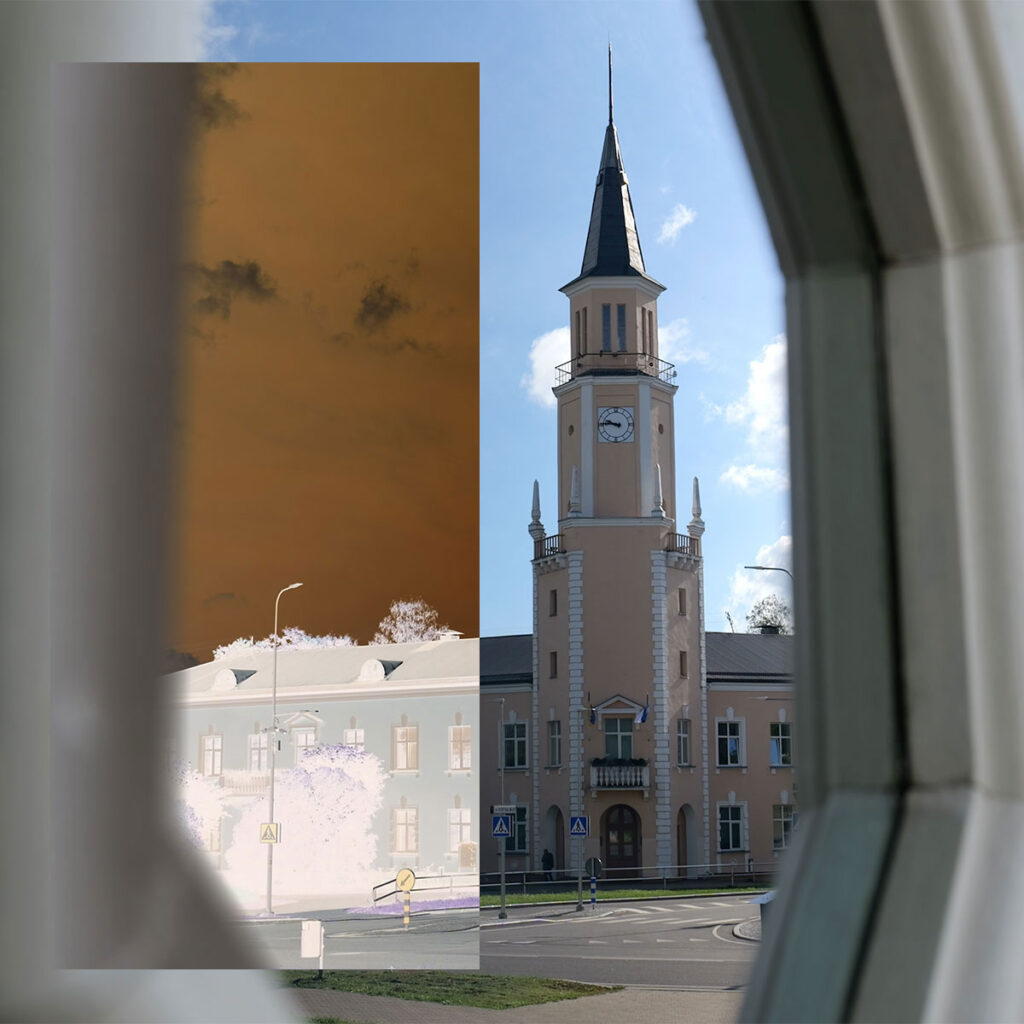
Image 1 – Town Hall disguised as Lutheran Church
Founded in 1947, Sillamäe was a secret town, associated with the Soviet nuclear industry; removed from maps, closed off, and only referred to by codenames. Simply mentioning the city’s existence could get one into trouble. The town hall was disguised as a Lutheran church—a camouflage that ensured nothing would appear suspicious to a potential foreign eye.
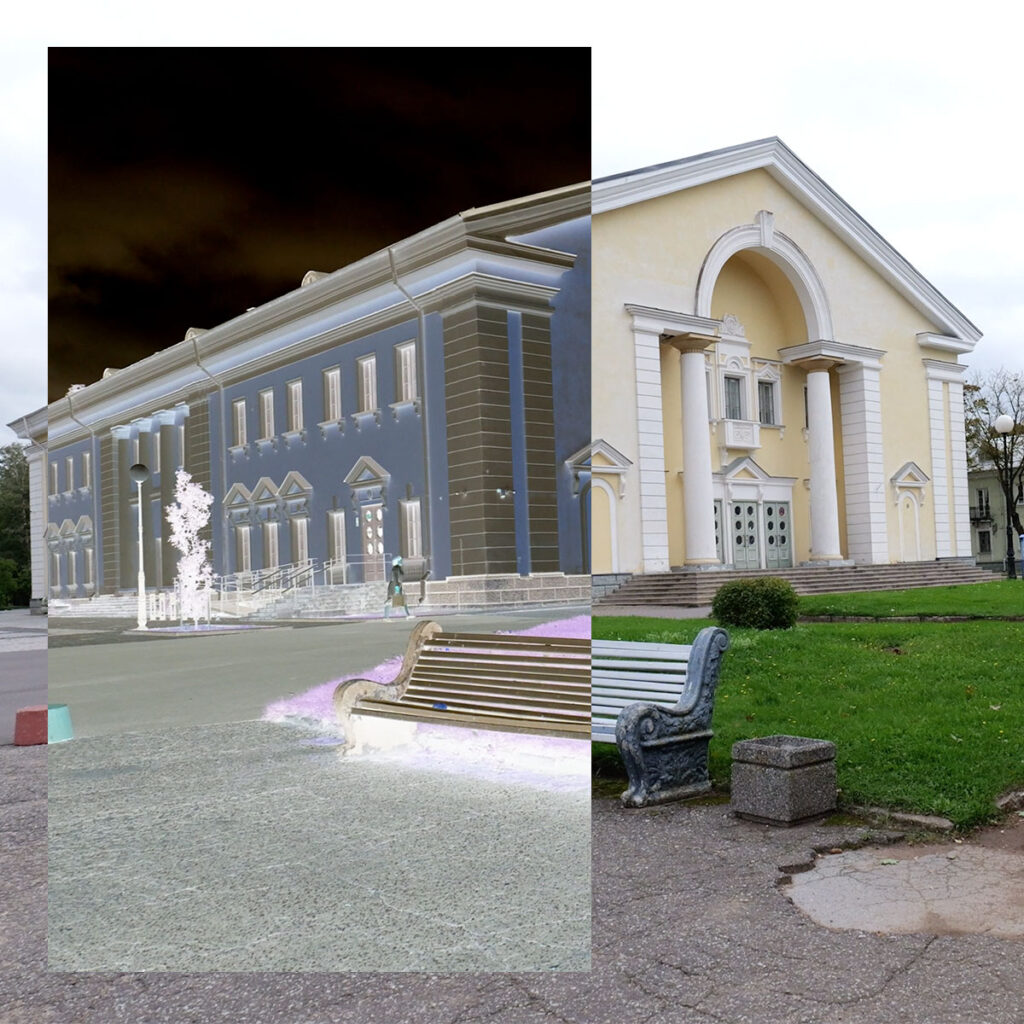
Image 2 – The House of Culture
The House of Culture in Sillamäe, a common sight in Soviet cities, built in 1949, includes a bomb shelter, apparently contaminated by radium.
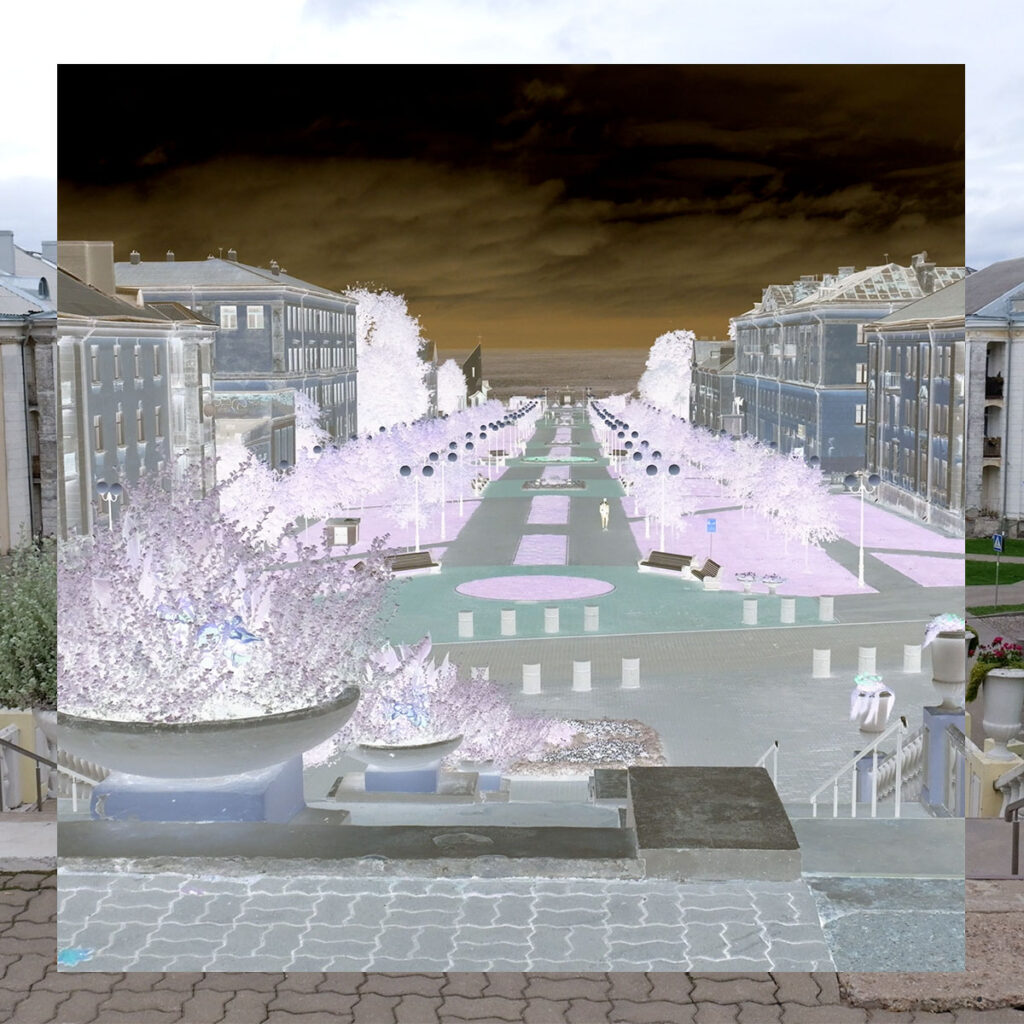
Image 3 – Sillamäe Mere puiestee (Sea Boulevard) and promenade
Compared to other communities throughout Soviet Russia, Sillamäe had a higher standard of living, meant to provide favourable working conditions for the brightest minds of the nuclear industry. And even though it didn’t exist on any map, it was given an architectural award by the Estonian Soviet Socialist Party’s Board of Ministers.
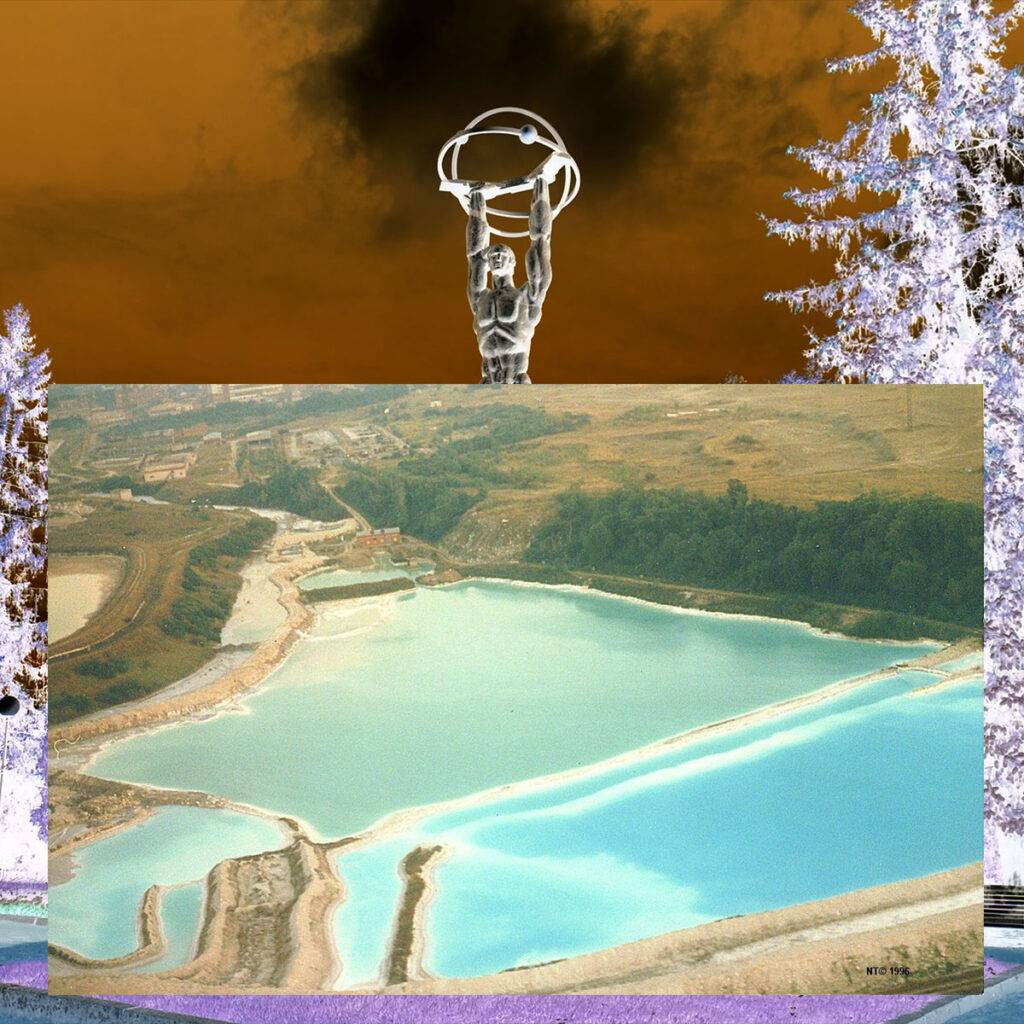
Image 4 – Ruins of privatization, Sillamäe Industrial Zone
After the Soviet Union dissolved in 1990 and Sillamäe’s uranium industry was shut down, the city had to undergo a difficult transition into the newly independent Estonia. The Kombinat No. 7 plant, which was once used to generate uranium for Soviet nuclear missiles was privatized in 1997 under the name “Silmet,” ironically being acquired by an American company.
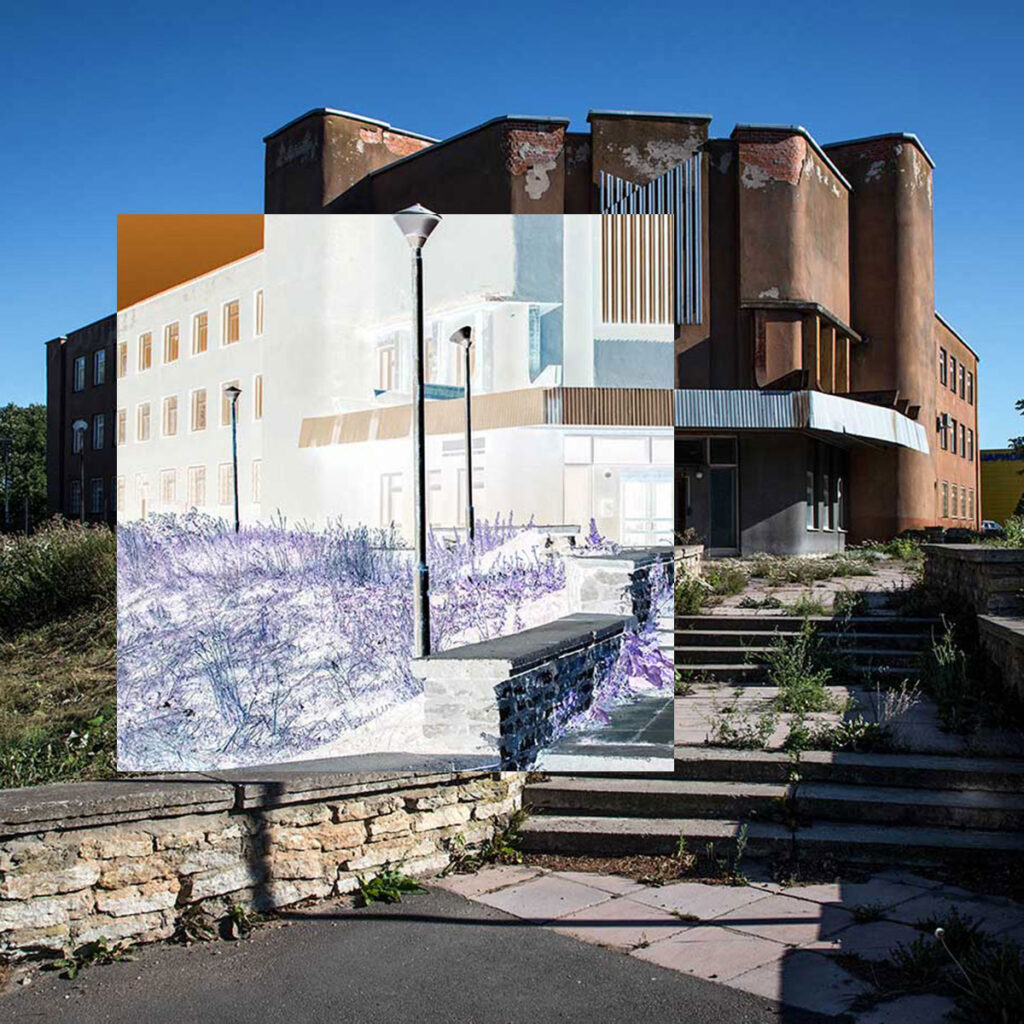
Image 5 – “Miru – mir!” (Peace to the World!)
Kombinat No. 7 is thought to have produced about one hundred thousand tons of uranium to be used in nuclear weapons. Today, the ruins of the former uranium processing facility buildings are still standing. One can read on the facade of a warehouse wall “Miru – mir!” (Peace to the World!) Since 2011, in the same area of the industrial port, the US mining company Molycorp has been processing rare earth elements.
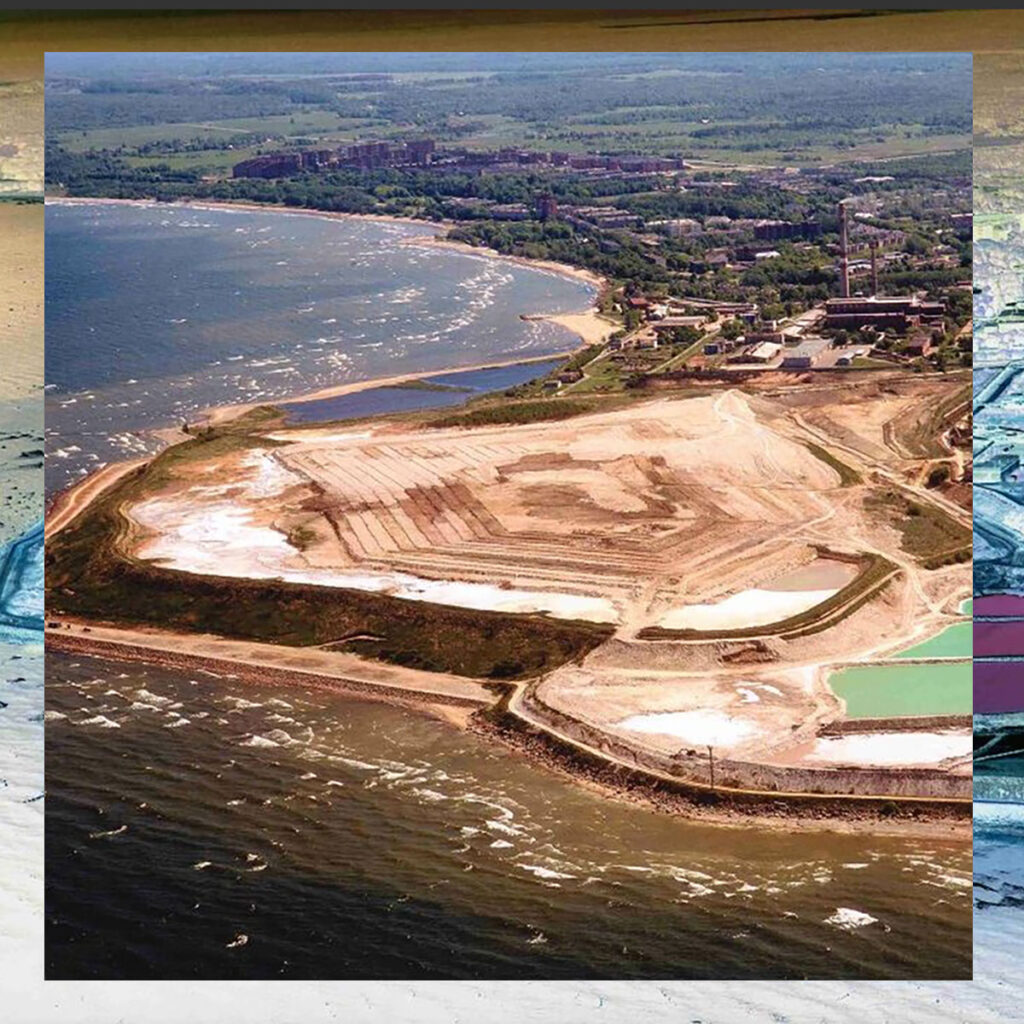
Image 6 – Nuclear Time Capsule
The waste left from the uranium processing was buried under a man-made hill known as the uranium pond, in the open air, just out onto the Baltic shore. Since 1959, twelve million tons of sludge containing uranium, heavy metals, and oil shale ashes have been discharged into a 25-meter-high tailing pond, covering about 40 hectares. In 1993 the International Atomic Energy Agency labeled the site a serious radioactive risk. The clean-up was completed in 2008.
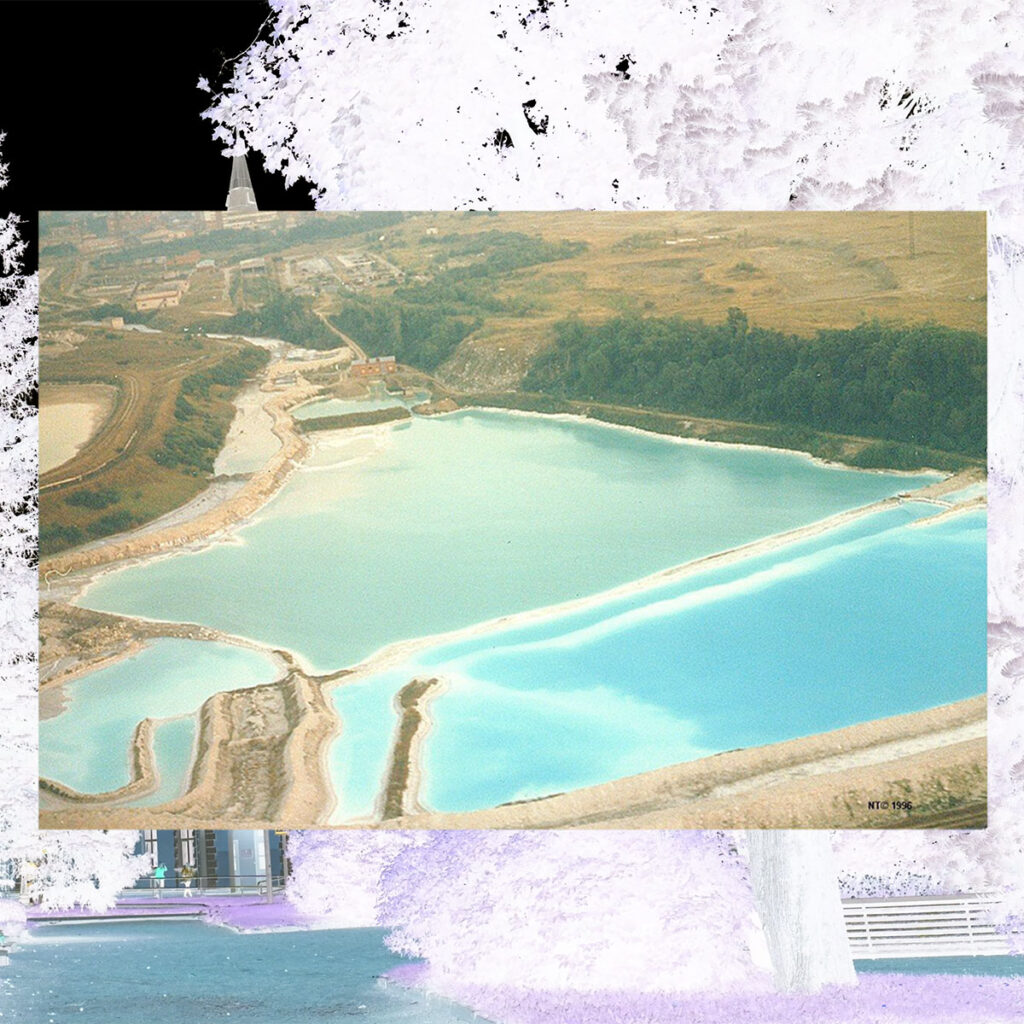
Image 6a – Nuclear Time Capsule (detail)
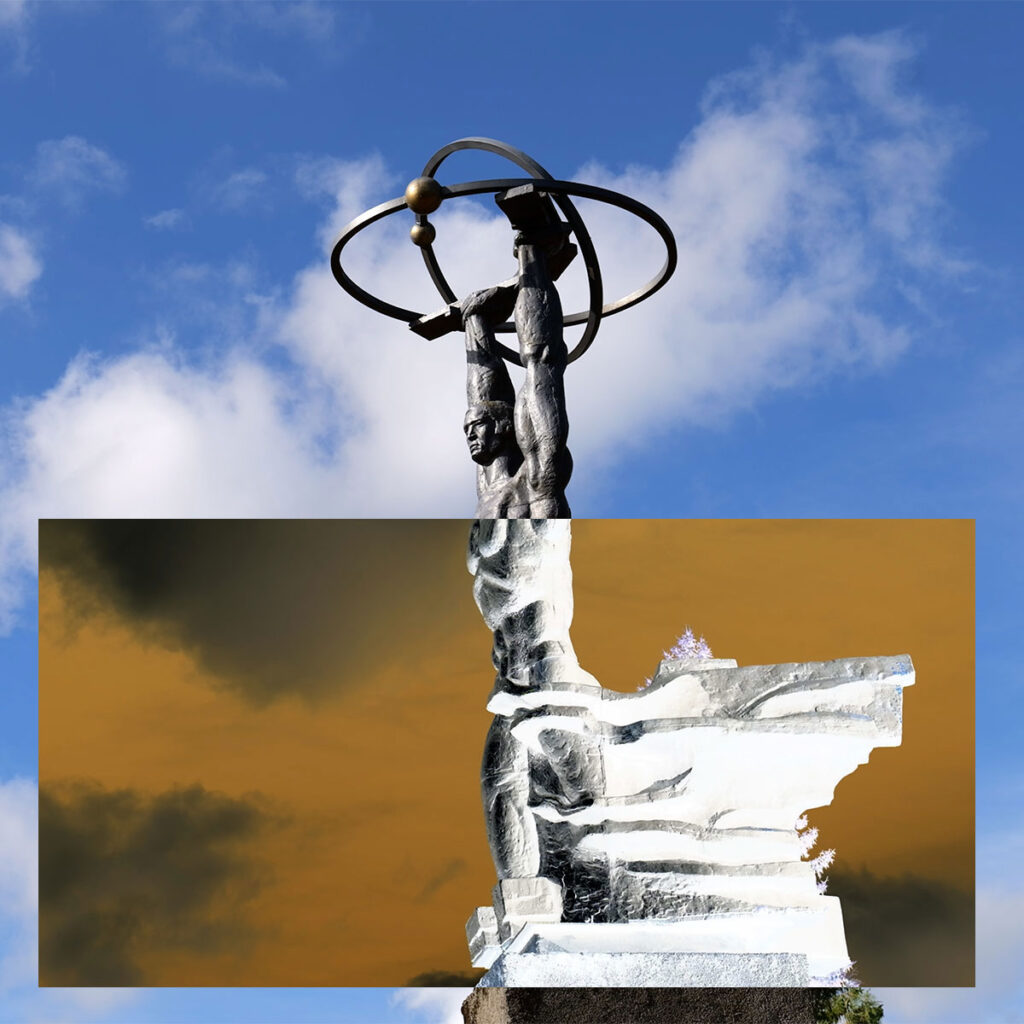
Image 7 – The Peaceful Atom
In 1987, on the occasion of the October Revolution’s 70th anniversary, a new monument was built in the park, outside the House of Culture. It featured the figure of Prometheus—who in Greek mythology stole fire from Mount Olympus and gave it to humans —holding up, in a heroic gesture, the symbol of an atom.