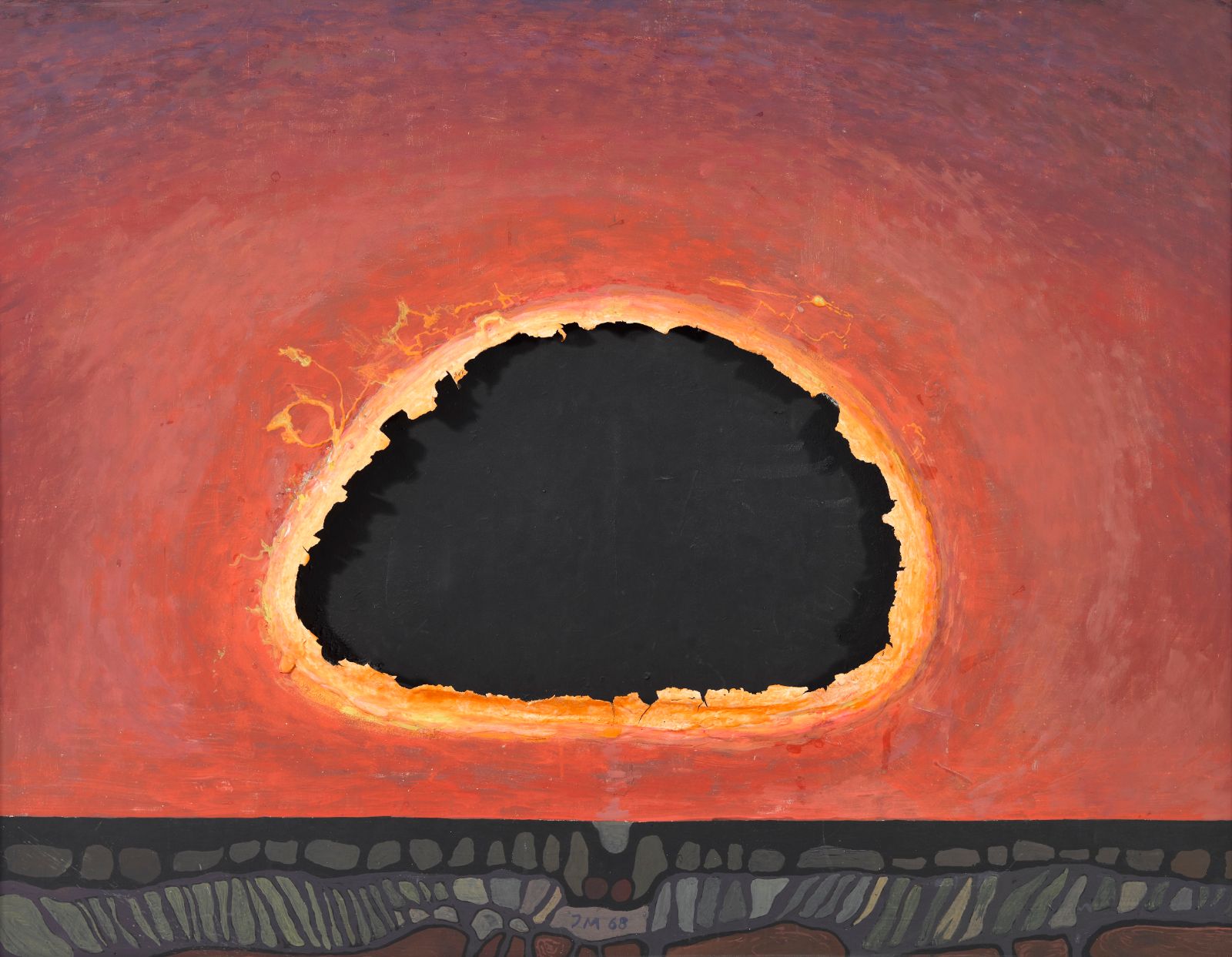
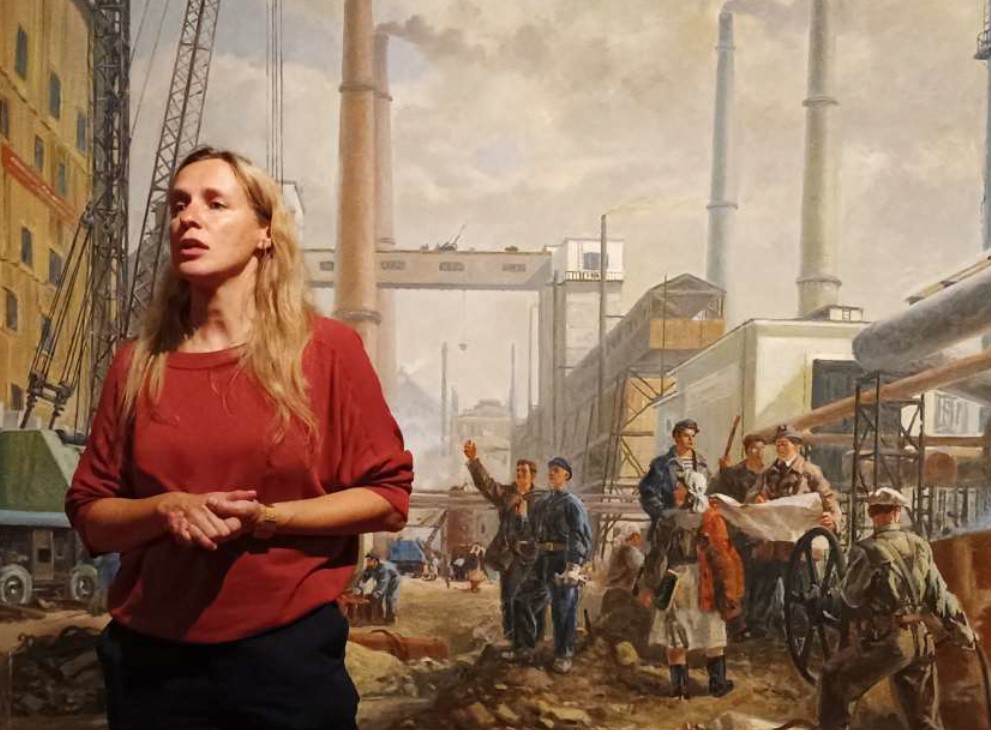
In episode 6 of Left to be Desired, Linda Kaljundi talks to Maja and Reuben Fowkes about the exhibition Art in the Age of the Anthropocene at KUMU Art Museum in Tallinn. The recording was made during a special tour of the exhibition for members of the SAVA Research Team who were visiting Estonia as part of the SAVA Research Trip to the Baltic region. Art historian Linda Kaljundi, who is both one of the curators of the exhibition and Professor of Cultural History at the Estonian Academy of Arts, began her walk through by pointing to the variety of approaches to Soviet Estonian ecological art. As an emblematic example of the diversity such environmental engagements, Ilmar Malin’s Fading Sun (1968) brought together dystopian visions, reflected fading faith in third wave socialism, growing fears of nuclear Armageddon and concerns over soil pollution. Extractivism and the history of the Estonian shale gas industry as a motor of Stalin era industrialization is also addressed, embodied in socialist realist works such as the Rise of Industry in the Estonian SSR. Further points of discussion included how and when environmental concerns appeared in official art of the Soviet era, the relation between the visibility of Indigenous communities in art and the velocity of resource extraction in Siberia, and the intersection of gender and ecology in representations of agricultural work. The transformation of the countryside emerges as a key site of environmental contestation, with Olga Terri’s individualized portraits of cows countering their resourcification in industrial farming and a greenhouse overflowing with cucumbers alluding to the chemical pollution that was a poisonous byproduct of monocultural agriculture.
Left to be Desired podcast explores the distinctiveness of the socialist path through the Anthropocene by bringing together artistic and scholarly insights into the ecologies of global Socialism. Maja & Reuben Fowkes will invite artists and researchers to talk about their practice and exchange ideas at the intersection of ecology, climate change, art and the Socialist Anthropocene.
Left to be Desired is available to listen to on Apple Podcasts, Spotify, Amazon Music/Audible and Audacy. You can also access it via the podcast website:
Linda Kaljundi is a professor of cultural history at the Estonian Academy of Arts and a senior research fellow at Tallinn University. Specializing in Baltic history, historiography, and cultural memory, as well as in environmental history, she is first and foremost interested in finding new, transnational, and entangled perspectives on the region’s history and heritage. Kaljundi has published and edited collections on history and history writing, historical fiction, and images. At the Kumu Art Museum, Tallinn, she co-curated the exhibitions History in Image—Image in History: The National and Transnational Past in Estonian Art (2018), The Conqueror’s Eye: Lisa Reihana’s In Pursuit of Venus (2019–20), and the new permanent exhibition Landscapes of Identity: Estonian Art, 1700–1945 (2021).