Paper by Maja and Reuben Fowkes at the conference on Global and Forgotten Connections: the Circulation of Visual arts between Socialist European Countries and Asia, Latin America and Africa during the Cold War, at Zachęta – National Gallery of Art.
Warsaw, 5–6 February 2026.
Monumental Alignments with Revolutionary Ethiopia: Collaborative, Decolonial and Ecological Practices of Socialist Memorialization
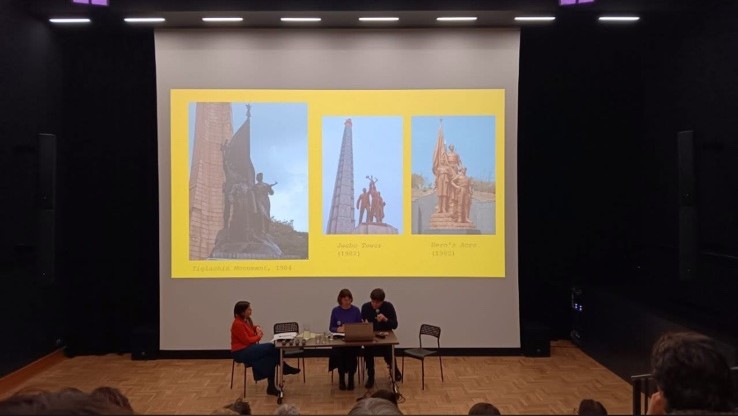
This paper considers the role of sculptors from socialist countries in the building of public monuments in Ethiopia, in order to illuminate the multidirectional and interdependent artistic exchanges that took place within the framework of socialist internationalism. It focuses on four major memorials erected in Addis Ababa with comradely assistance from the mid-1950s to the mid-1980s: the Monument to the Victims of Fascism, the Statue of Lenin, the Tiglachin Monument and the Karl Marx Statue. It explores the diplomatic and artistic alignments that saw the Emperor Haille Selaisse commission public monuments from Tito’s Yugoslavia in the early 1950s, with leading Ethiopian artist Afewerk Tekle consulting with Croatian socialist realist sculptor Antun Augustinčić. In the 1980s, the North Korean Mansudae Studio was commissioned to build a prominent memorial to fallen Cuban and Ethiopian soldiers, while an East German team designed a Marx monument inflected with Ethiopian characteristics. How did socialist artists negotiate sensitivities around monument-building as gesture of internationalist solidarity, to turn ideological exports into collaborative exchanges? What forms of decolonialization were at stake in memorial sites of imperial anti-fascism, the Soviet leader cult, Cuban military intervention and the founder of socialist thought, in the only African country that was never colonized? Finally, to what extent were eco-socialist imaginings a factor in the construction of revolutionary monuments, and how have contemporary artists engaged with the legacies of socialist memorialization in Ethiopia?
.