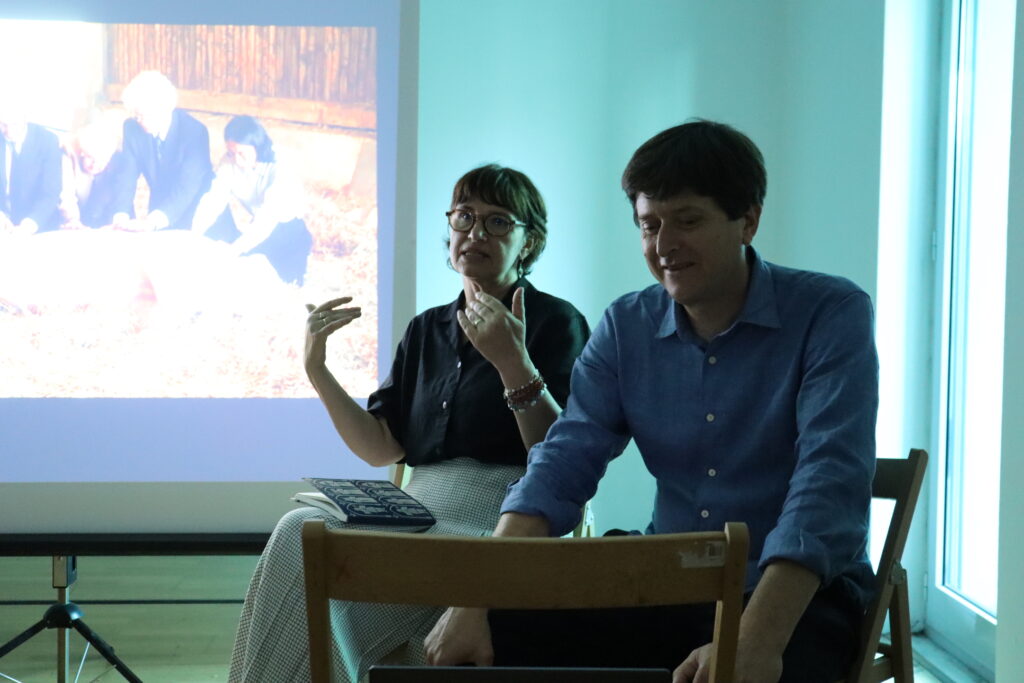
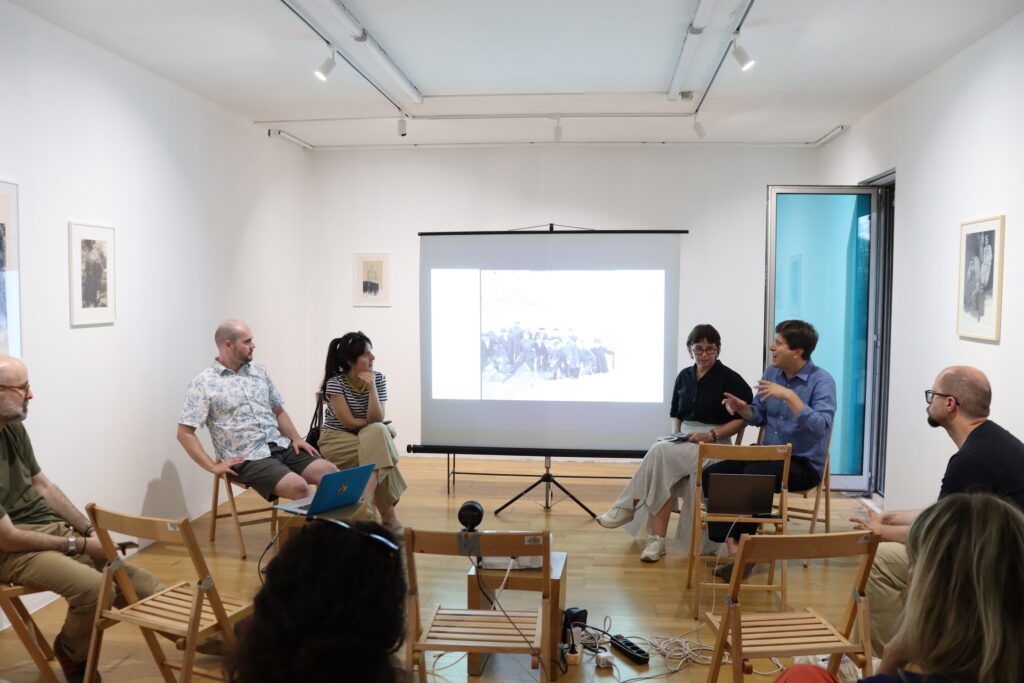
The SAVA Panel Discussion: Landscapes of the Socialist Anthropocene, emerging from a collaboration with Zeta Contemporary Art Centre in Tirana, will feature an introduction to the Socialist Anthropocene in the Visual Arts project by Maja and Reuben Fowkes (SAVA UCL), along with presentations by Raino Isto (University of Maryland) and Jonida Gashi (Academy of Sciences of Albania).
Programme
Introduction to the Socialist Anthropocene in the Visual Arts
Maja and Reuben Fowkes (SAVA UCL)
An introduction to the Socialist Anthropocene in the Visual Arts (SAVA), a visual arts led interdisciplinary research project that challenges the West-centric discourses of the Anthropocene by asserting the constitutive role of the environmental histories of Socialism in the formation of new geological times.
“The Onrush of Socialist Realism”: The Ideological and Cultural Revolution and the Transformations of Albanian Socialist Art in the late 1960s and early 1970s
Raino Isto (University of Maryland)
This talk explores the new methods that emerged and critical discussions that took place in Albanian Socialist Realist art during the final years of the 1960s decade and the first years of the 1970s.
The representation of nature as part of the class struggle in Vitet e para (Kristaq Dhamo, 1965)
Jonida Gashi (Academy of Sciences of Albania)
Released in 1965, on the eve of Albania’s Ideological and Cultural Revolution, Kristaq Dhamo’s film Vitet e para (The First Years) is a fictionalized account of one of the most ambitious industrialization projects undertaken by the Albanian Communist Party after it seized power at the end of World War II.
Abstracts
‘The Onrush of Socialist Realism’: The Ideological and Cultural Revolution and the Transformations of Albanian Socialist Art in the late 1960s and early 1970s
Raino Isto (University of Maryland)
This talk explores the new methods that emerged and critical discussions that took place in Albanian Socialist Realist art during the final years of the 1960s decade and the first years of the 1970s. During the years that roughly coincided with Albania’s Ideological and Cultural Revolution (1967 onwards), the visual arts in state socialist Albania underwent a series of transformation discursive shifts—some of these related to the perceived role of monumental sculpture and others that were part of the attempt to bring Albanian art into dialogue with changes in Thaw-era Soviet painting and the forms of socialist modernism that were being pursued elsewhere in the socialist world.
The 1971 National Figurative Arts Exhibition and the Spring exhibition of 1972 were important events for debates about the field of painting, while the Vlora Independence Monument was a touchstone for dicussion of the role of public art and sculpture. The critical disagreements over works by artists such as Edison Gjergo and Edi Hila, demonstrate the complexities of debates over pictorial references to historical modernist styles (such as Cubism and Expressionism).
While many accounts of Albanian art remember the substantial crackdown on artistic freedom later in the 1970s as the constitutive cultural event of the socialist period, I suggest that the richness—and multiplicity—of debates that took place before the infamous Fourth Plenum in 1973 indicate that Albanian socialist artists and critics undertook nuanced efforts to chart a path for a credible socialist figurative art that would mirror the country’s unique geopolitical commitments while still allowing for methodological and stylistic development. Finally, I present some of the stakes of Albanian dictator Enver Hoxha’s proclamations in his Fourth Plenum speech, and sketch a picture of how Albanian socialist art would develop later in the 1970s.
The representation of nature as part of the class struggle in Vitet e para (Kristaq Dhamo, 1965)
Jonida Gashi (Academy of Sciences of Albania)
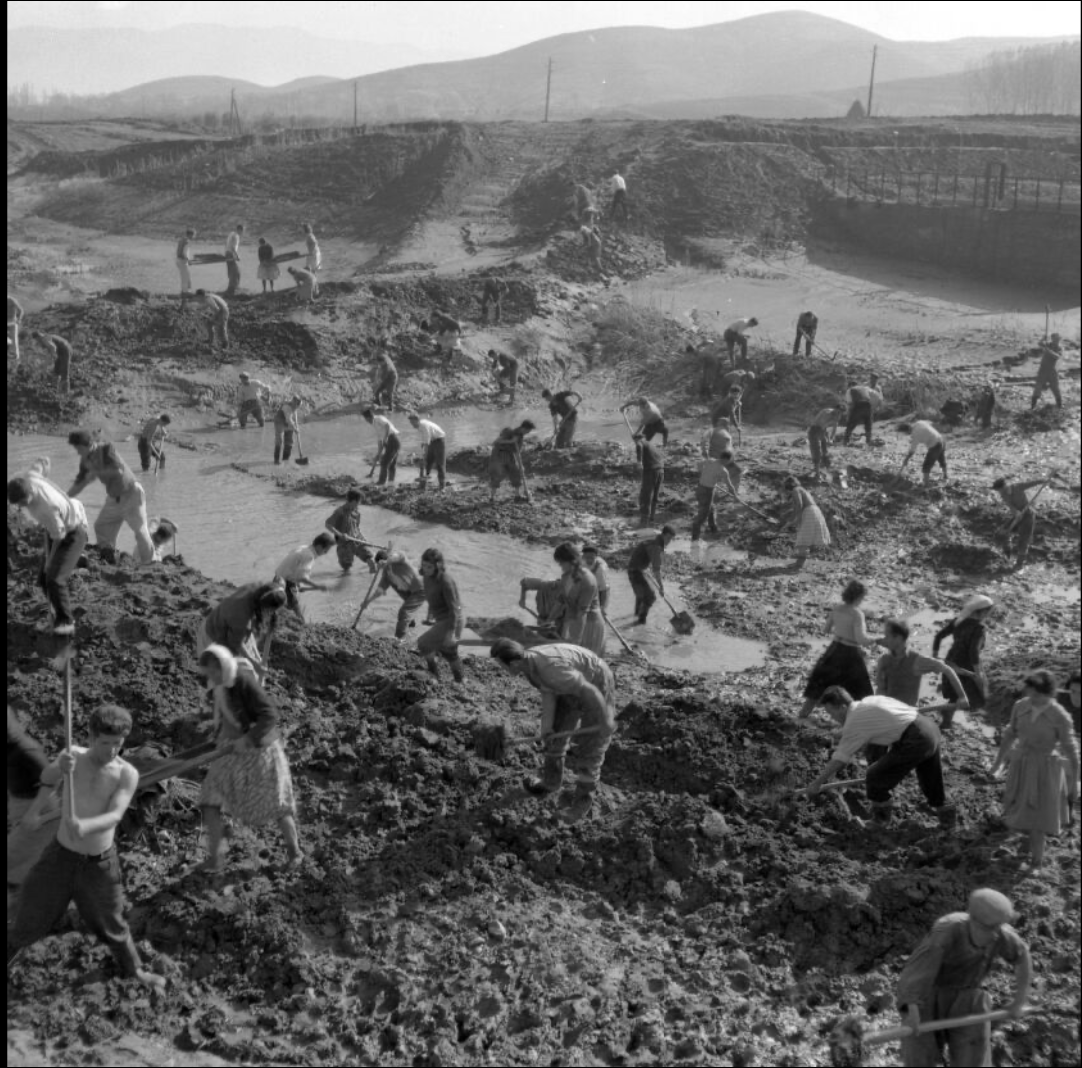
Released in 1965, on the eve of Albania’s Ideological and Cultural Revolution, Kristaq Dhamo’s film Vitet e para (The First Years) is a fictionalized account of one of the most ambitious industrialization projects undertaken by the Albanian Communist Party (renamed the Albanian Party of Labour in 1948) after it seized power at the end of World War II. The project, which entailed the draining of the Maliq wetlands in the South-eastern part of the country in order to turn them into arable land and build a sugar processing factory there, began in the spring of 1946. Its implementation was marred by constant setbacks, however, which the authorities needed to find suitable scapegoats for. They found them in the Western educated engineers and technicians in charge of the project, branding them as saboteurs and spies and putting them on trial in November of that same year.
Vitet e para depicts the efforts of Party Secretary Stavri Lara to uncover this enemy group with the help of the local authorities and volunteers participating in the transformation of the landscape in Maliq, in order to put it – like everything else – in the service of the socialist project. I will discuss the ambivalent representation of nature in this film, and how it might be read within the framework of class struggle, both in the immediate postwar period and at the time when the film came out. Thus, the mosquito infested swamp – historically a harbinger of disease and death, is associated with backwardness and the past that the country was trying to leave behind after its liberation. Because of this, the swamp is also associated with the figure of the enemy, who does everything in their power to sabotage the country’s progress towards socialist modernity. At the same time, nature’s unpredictable and indomitable character is also used positively to connote the superhuman strength of the New Man, a figure that would increasingly come to be seen as the key factor in the building of socialism, especially during the Ideological and Cultural Revolution years.
Speaker biographies
Raino Isto is an art historian, critic, and curator who works on the relationship between art, politics, activism, and community memory. They are currently the editor-in-chief of ARTMargins Online and member of the ARTMargins print journal editorial team. Raino is based in Alexandria, VA, and teaches at the University of Maryland, College Park, and American University. Their work has been published in Art History, Third Text, the Journal of Contemporary Chinese Art, Science Fiction Studies, Extrapolation, International Labor and Working Class History, ARTMargins, RACAR, and The Getty Research Journal.
Jonida Gashi is senior researcher at the Centre for Art Studies at the Academy of Sciences of Albania. Her research interests include contemporary art theory and criticism, film theory and the history of the cinema, and the artistic experience of post-socialism in contemporary Albania. Her first monograph on the newsreels and documentary films of the Albanian communist show trials and their influence on Albanian socialist realist cinema was published by Pika pa sipërfaqe in 2025. Gashi is editor-in-chief of the journal Art Studies (https://albanica.al/index.php/studime_arti/index), published annually by the Academy of of Sciences of Albania, and one of the founders of DebatikCenter of Contemporary Art (www.debatikcenter.net).
Maja and Reuben Fowkes are art historians, curators and directors of the Postsocialist Art Centre (PACT) at the Institute of Advanced Studies, University College London. They work on the twentieth-century art history of socialism from Eastern Europe to Central Asia and contemporary artistic engagements with ecology, climate and the Anthropocene. Their publications include Art and Climate Change (Thames & Hudson, 2022), Central and East European Art Since 1950 (Thames & Hudson, 2020), a special issue of Third Text guest-edited by Reuben on the “Actually Existing Artworlds of Socialism” (2018) and Maja’s monograph The Green Bloc: Neo-avant-garde Art and Ecology under Socialism (CEU Press, 2015). Maja is Principal Investigator of the European Research Council (ERC) and UK Research and Innovation (UKRI) Consolidator Grant project on the Socialist Anthropocene in the Visual Arts (SAVA) (2022-27). Their curated exhibitions include “Colliding Epistemes” at Bozar Brussels (2022) and “Potential Agrarianisms” at Kunsthalle Bratislava (2021), and they led the Getty Foundation project Confrontations: Sessions in East European Art History (2018-22). They publish extensively in peer-reviewed journals, edited books, exhibition catalogues and on contemporary art platforms including Art Monthly, Texte zur Kunst and Springerin, and they co-host the SAVA podcast Left to be Desired.
Documentation