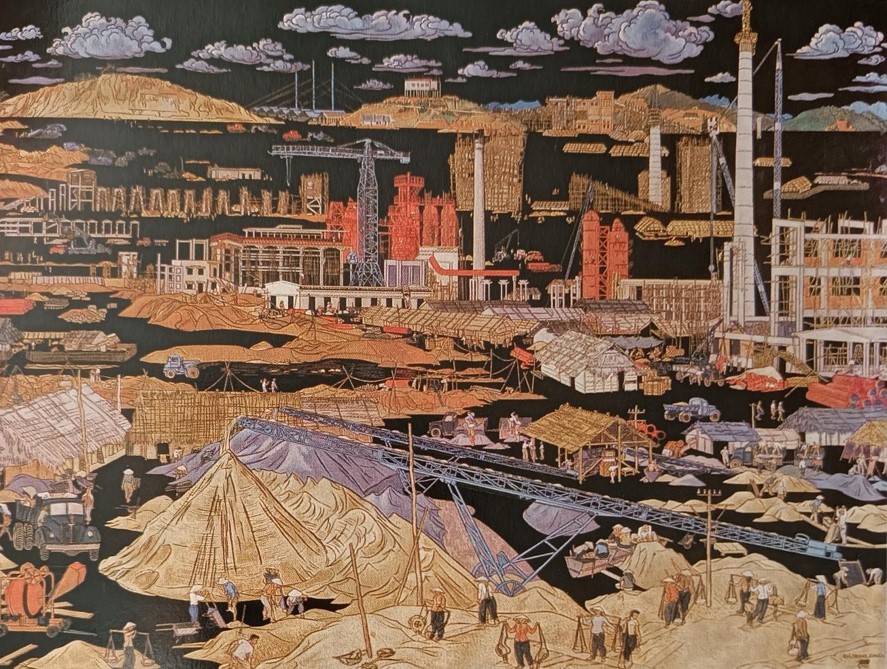
It was on the initiative of a meeting of ministers of culture from the socialist bloc that an International Exhibition of Engaged Realist Painting was organized in Sofia in 1973, bringing together 473 artworks by 257 artists from the Democratic Republic of Vietnam, the GDR, Cuba, Mongolia, Poland, Romania, the Soviet Union, Hungary, Czechoslovakia and the host country. Remade for the anniversary year of 1975 under the new title Thirty Victorious Years, the exhibition dealing with the themes of “labour, humanity, revolution, family, peace struggle, youth, the modern world, man and nature” opened in the Moscow Manege, before travelling on to the capitals of the other participating countries. Remarkably this large-scale diplomatic exhibition of socialist art barely made an imprint on the art history of the 1970s. Nevertheless delving into its complex histories raises some pertinent methodological questions: firstly, through its decentred, circular and diffuse structure, exemplifying the internationalist praxis of the socialist artworld that operated in an expanded geographical landscape, how does the exhibition contribute to the reassessment of East European art, away from narrow national or regional frameworks towards the art of global socialisms? In terms of style, while we have art historical tools to analyse the art of high socialist realism, how should the engaged realist art of late socialism be approached? What do the selected works reveal about the intercultural sensibilities of socialist art, in terms of the portrayal of minorities and indigenous peoples, illuminating the colonial subcurrents of the socialist project? And finally, to what degree does the show offer a window on the concerns of the second world, as reflected in the exhibition themes, most notably in expressions of environmental awareness that constitute a seminal chapter in the narrative of the socialist Anthropocene?