SAVA Research Week 8: Eco-Socialist Utopias

Programme
Public events
Tuesday 17 November 2026
16.00 Martin Aidnik (Independent scholar, Estonia)
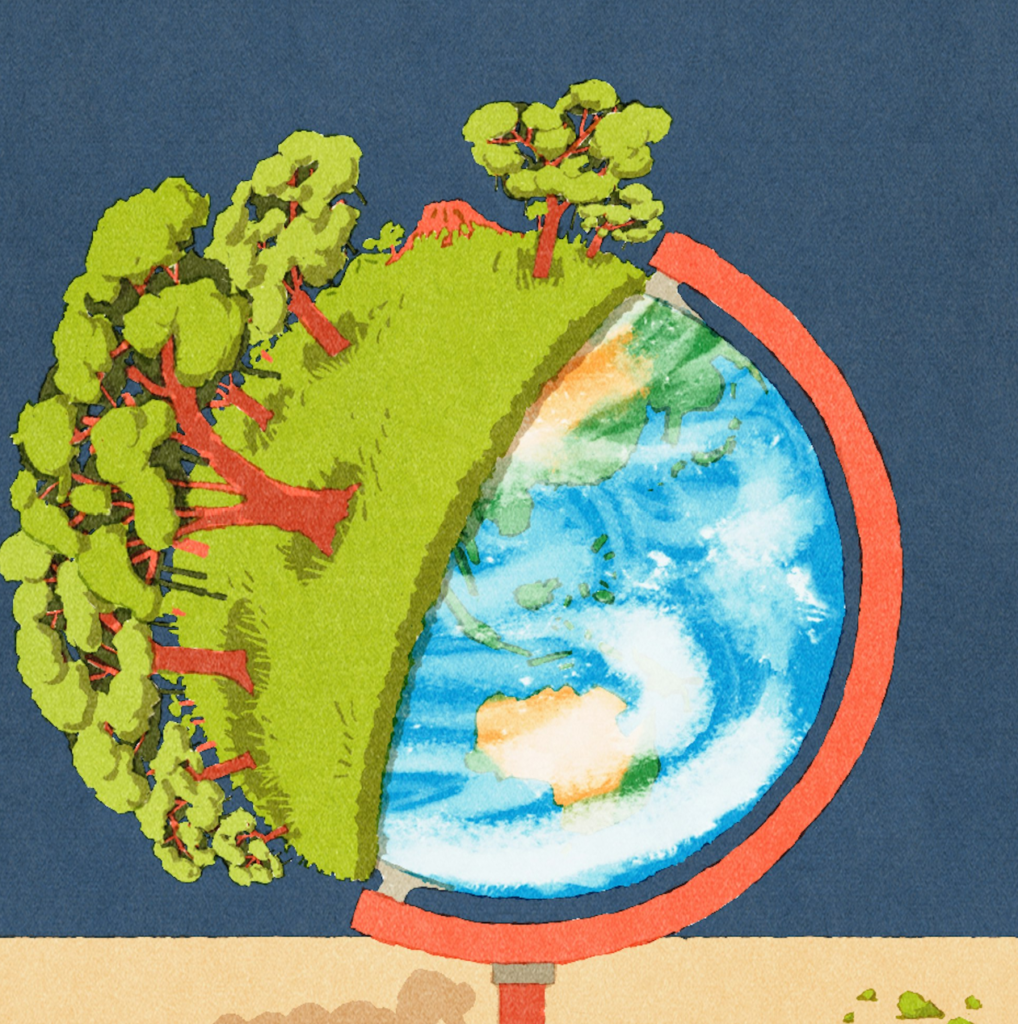
Is Eco-Socialist Utopia Humanity’s Last Chance?
Respondent: Matthew Taunton (School of Literature, Drama and Creative Writing UEA)
Earlham Hall (building 40), EH 0.12
Eco-socialism endeavors to rncile human society with Nature, thereby healing the wounds inflicted by capitalism. The impact of such a transformation would be – analogously to 19th century utopian socialist aspirations – a re-integration of the economy into the ecological and the social world. Nature has value in itself and human society co-exists with the natural world, rather than outside it. Eco-socialism contains a spiritual dimension: human, non-material interaction with Nature is elevated to an integral part of human being-in-the-world. Eco-socialism does not posit that humans are inherently a “surplus” on this planet or guilty of hubris, greed, aggression or other such savageries. There is no immutable genetic inheritance or corruption as in original sin. The capitalist status quo, with its socialisation, is the cause behind a variety of “ill-judged” forms of behaviour that eco-socialism identifies and intends to exorcise.
17.00 Ádám Ulbert (artist and researcher, Budapest)
AŠAR ONGOD: Hunting for spirit tents
Respondent: Ed Krčma (School of History and Art History, UEA)
Earlham Hall (building 40), EH 0.12
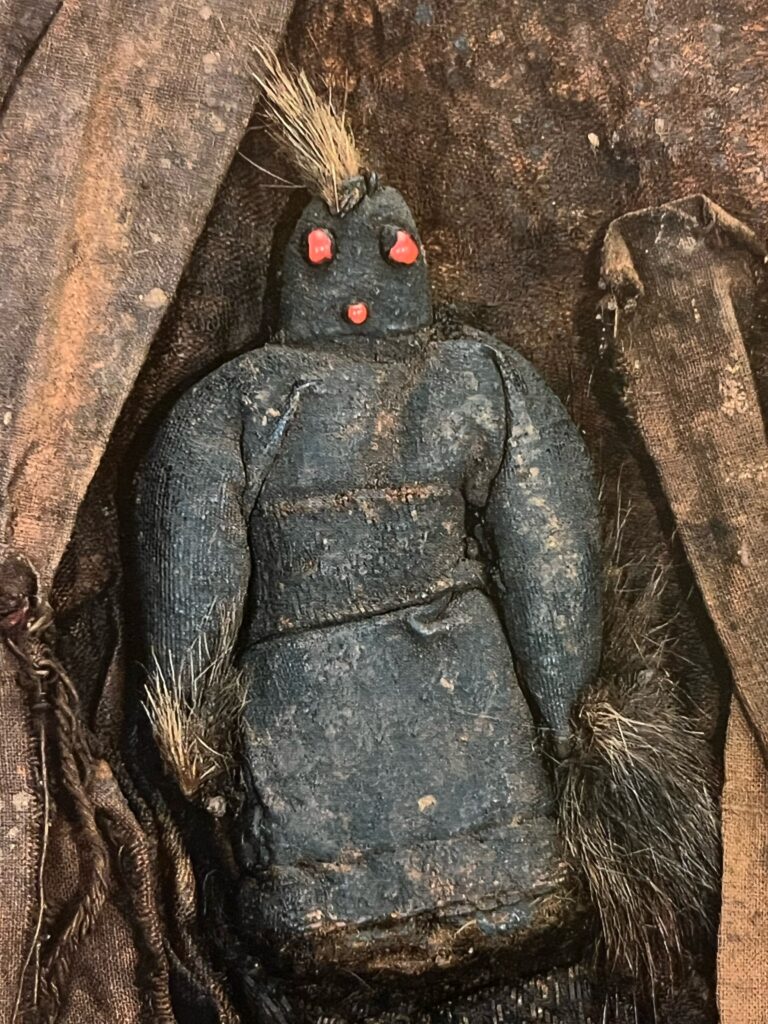
Ádám’s presentation outlines a recently initiated research project focusing on a specific quality within shamanic worldviews: the dynamics of energy circulation. The lecture examines three phenomena, exploring the study of Eastern European and North Asian shamanism through a distinct interpretive lens. It addresses the following questions: Can Vilmos Diószegi (1923–1972)—an ethnographer, orientalist, and a pivotal figure in Hungarian ethnography—truly be considered a grave robber? How did speculations regarding the proto-Hungarian shamanic worldview, give rise to the Galloping Coroners, one of the most influential punk bands of the 1980s Budapest underground scene? And, furthermore, how did a form of ecofeminist healing in the West Siberian region inadvertently become part of the practice of linguist and ethnographer Éva Schmidt (1948–2002)?
Wednesday 18 November 2026
13.30 Sabina Kuangaliyeva (Quańǵalı) (artist and researcher, Kazakhstan)
On Rocks (Tas), Dreams (Tüs), and Waters (Su)
Respondent: Zoja Vukmanovic (School of Environmental Sciences, UEA)
Sainsbury Museum and Art Centre, Lecture Theatre

On Rocks, Dreams, and Waters is an ongoing artistic research project unfolding in three parts, exploring technogenic catastrophes and anthropogenic minerals in Western Kazakhstan. Its first chapter, On Rocks, moves between the Tengiz oil-field blowout of 1985, which produced the glass-like mineral tengizite, the underground Sufi mosque of Aqmeshit, and the sites of Soviet underground nuclear tests at Sai-Utyos. Through photography, moving image, installation, and field research, the project approaches altered matter and landscapes as records of industrial catastrophe, imperial ambition, spiritual histories, and collective memory, leaving space for speculation, play, and alternative ways of reading the land. Sabina is currently developing the first chapter, On Rocks, during her residency at Delfina Foundation in London (September–December 2026), exploring archival and geological collections to expand its material and historical references.
14.45 Tatiana Fiodorova-Lefter (artist and researcher, Moldova)
From Socialist Utopias to Gardens Beyond Convention
Sainsbury Museum and Art Centre, Lecture Theatre
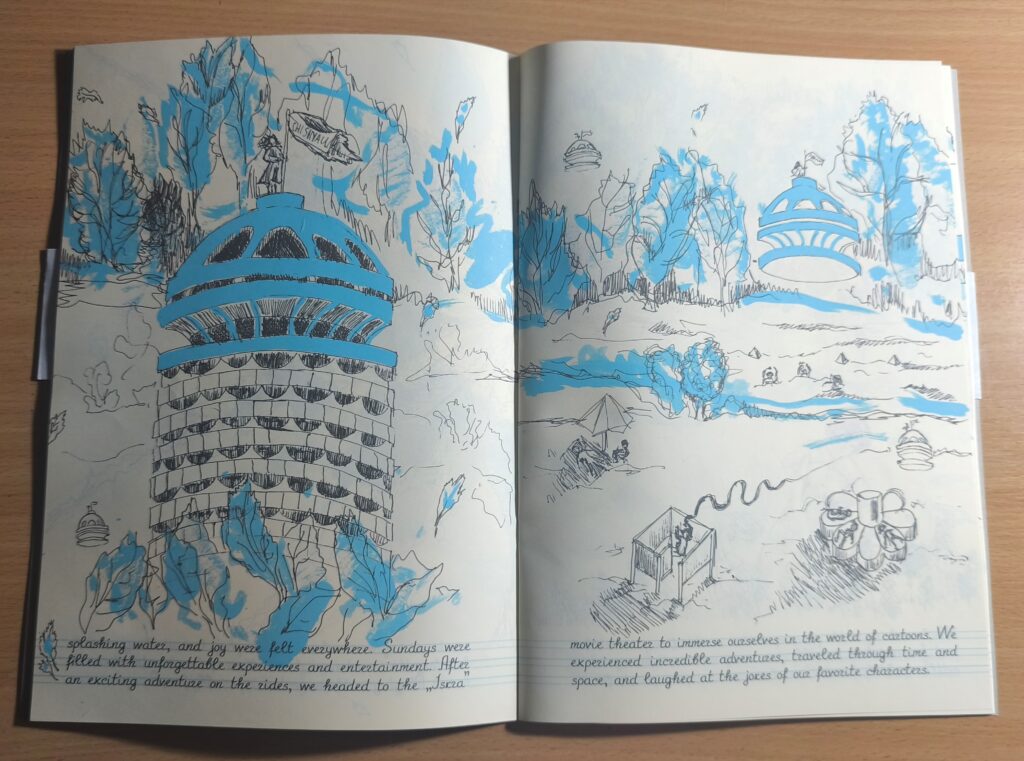
What happens to shared spaces when the political and social projects that gave rise to them disappear? And how can we imagine other forms of living together today? Drawing on her artistic research into socialist architecture, parks, and sculptures in Chișinău and Bucharest, Tatiana traces the transformation of public space and the disappearance of places that once sustained collective life. Continuing to explore the possibilities of creating the commons, the artist turns to territories that lie beyond the boundaries of the formally organised urban environment. Together with other artists and participants, she takes part in creating a non-conventional collective garden in Bucharest, exploring whether such a space can emerge through the interactions of humans, plants, animals, soil, and other nonhuman agents. Can these interactions open up possibilities for non-hierarchical forms of coexistence beyond an anthropocentric understanding of the world?
Dominic Bradbury (writer and researcher)
The Lasdun Campus: Architecture & Landscape at the UEA
Sainsbury Museum and Art Centre, Lecture Theatre
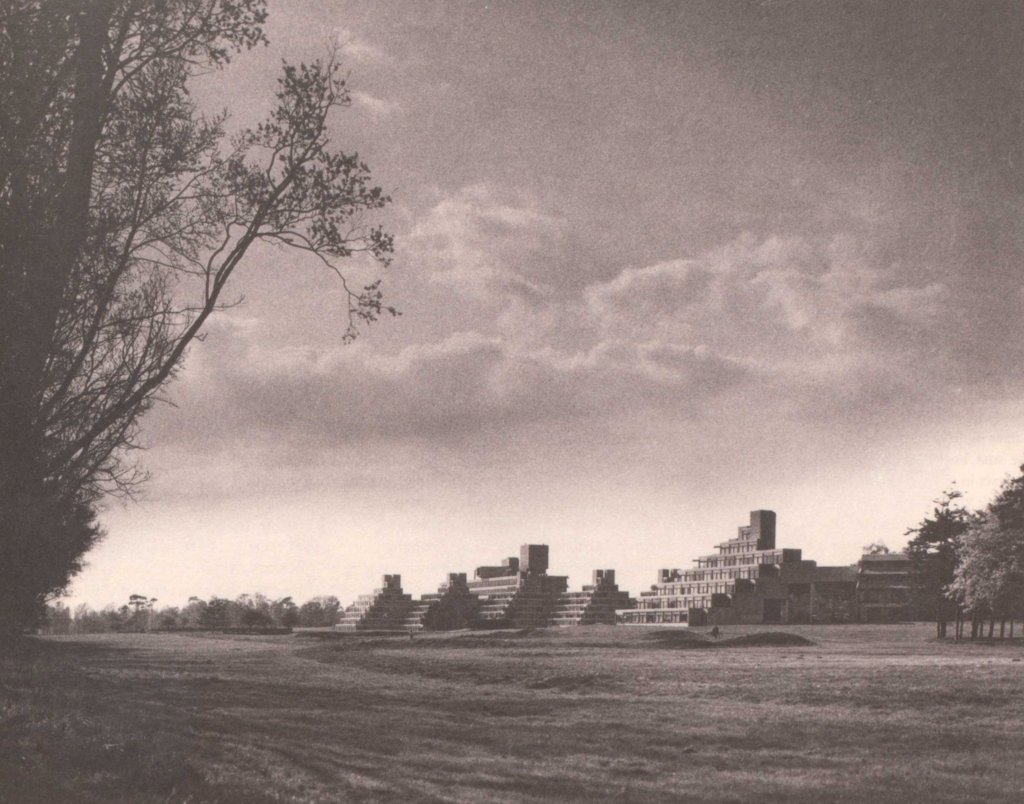
The presentation explores the original campus of the University of East Anglia, designed by the pioneering British brutalist architect Sir Denys Lasdun during the late 1960s. After briefly setting out the context of this hugely ambitious and innovative project, the presentation argues that the UEA was the most successful and comprehensive expression of Lasdun’s commitment to meaningful synergy between architecture and landscape. The campus can be seen as a new town in its own right, with utopian ingredients threaded throughout, as seen within its ‘organic’ architectural design and the way that it prioritises pedestrians, students, staff and learning over cars, services and infrastructure.
17.00 Amy Tobin (University of Cambridge)
“Paradise is one of my main concerns”: Cecilia Vicuña’s Revolutionary Art
Lecture co-organised with WARS seminar series
Elizabeth Fry Building, 1.02
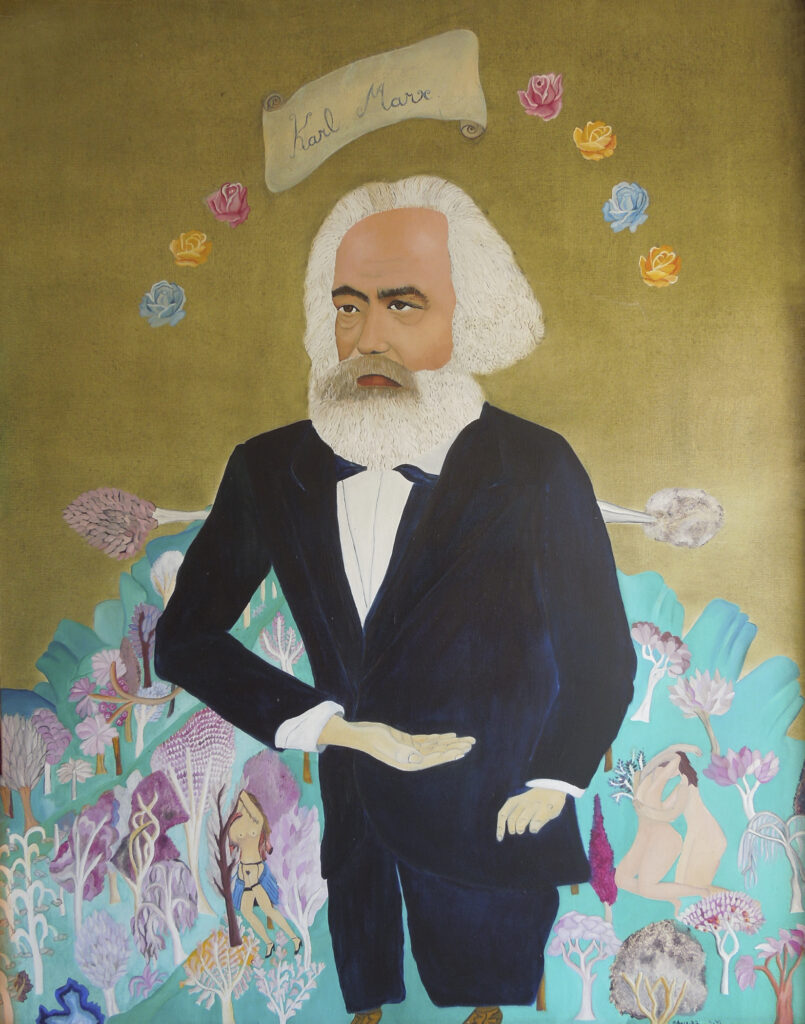
Before moving to London in 1972, Cecilia Vicuña committed her artistic and literary experiments to the revolutionary transformation of her native Chile. Addressing the legacies of colonialism on art, language, social life and ecology these works were ambitious, if not utopian, in their demands, while taking shape as temporary interventions, contingent structures and in minor forms. While Vicuña’s investments in indigenous epistemologies – rooted in this moment but evident across her practice through the quipu – are well established, in this talk, Amy will return to the leftist and feminist threads that were braided into her project at this moment, emphasising the interdependencies between ecology, decoloniality and revolutionary liberation projects in the imagination of paradise.
Workshops
If you would like to participate in one of the workshops, please contact sava@uea.ac.uk.
Tuesday 17 November 2026
11.00 Introduction to RW8 Eco-Socialist Utopias
An introduction to the Research Week with Maja and Reuben Fowkes and the SAVA Team.
11.30 Workshop on Planting Utopia: Ecological Futures of Arid Environments
Led by SAVA Research Fellow Makar Tereshin
Biology Building (building 6), BIO 0.59
14.00 Workshop From Liberated Zones to Socialist State Building: Looking for Eco-Socialist Utopias in the Tricontinental Archive
Led by SAVA Research Fellow Sorcha Thomson
Earlham Hall (building 40), EH 1.26
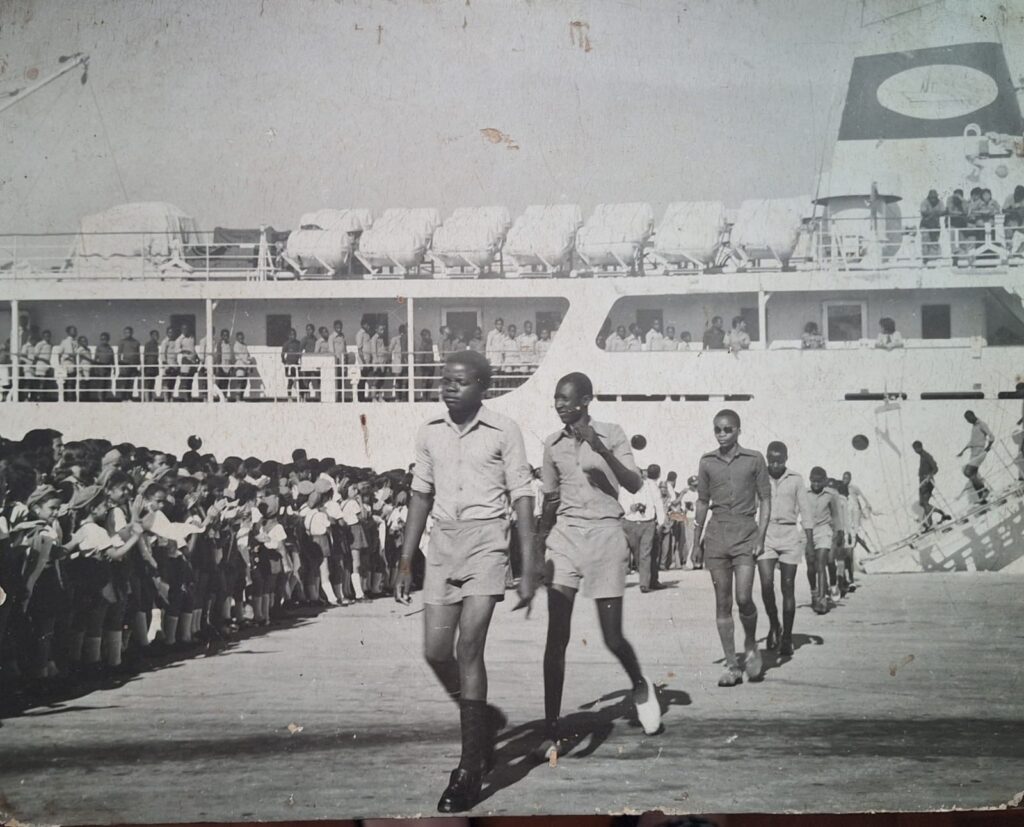
This workshop presents materials gathered from the scattered archive of tricontinentalism. With posters and magazines, diplomatic documents and the biographies of the people who travelled tricontinental networks, we reflect on what it means to treat this archive as a source of eco-socialist imagination.
Wednesday 18 November 2026
11.00 Workshop on Educational Utopias
Led by Maja and Reuben Fowkes with Martin Aidnik
Sainsbury Museum and Art Centre, SCVA: 0.21
Speaker biographies
Amy Tobin is Professor of Modern and Contemporary Art in the Department of History of Art, University of Cambridge, and Curator of Contemporary Programmes at Kettle’s Yard. Her work has focused on art and feminism, as well as collectivity, friendship and political struggle. Her monograph Women Artists Together: Art in the Age of Women’s Liberation was published by Yale University Press in 2023. In the same year she published a major article on the artist Candace Hill-Montgomery in Art History. She is also the co-editor of the 2024 reissue of Cecilia Vicuña’s Saborami with Luke Roberts and Grassroots Artmaking: Political Struggle and Activist Art in the UK, 1960–Present (2026) with Maryam Ohadi-Hamadani and Catherine Spencer. A Co-I on the AHRC-IRC funded project Feminist Art Making Histories, she is also one of the presenters of the Feminist Art Lives podcast.
Tatiana Fiodorova-Lefter is a Moldovan artist who positions herself as a post-socialist subject, reflecting on socialist legacies, post-socialist memory, and human–nature relations through a critical engagement with modernity. Her recent work investigates how material, vegetal, and other-than-human agents participate in social, political, and cultural processes, proposing alternative ways of understanding history, ecology, and nature. In 2023–2024, she was a fellow at the Künstler*innenhaus Büchsenhausen Fellowship Program for Art and Theory in Innsbruck, Austria. Her work has been presented at The Listening Biennial, Berlin, Germany (2025); Nature After Nature, Timișoara, Romania (2025); Grey Is a Cube, Blue Is an Ellipse, Amiens, France (2025); Contemporary Art Week, Plovdiv, Bulgaria (2024); and The Secret Life of Plants and Trees, Kunstpavillon, Innsbruck, Austria (2024).
Martin Aidnik is an Estonian sociologist and scholar of higher education. He has been a postdoctoral fellow in the UK and a researcher in Lithuania. He has published one monograph: The Public University as a Real Utopia: Towards a Renewal of Higher Education (2024) and over a dozen academic articles.
Sabina Kuangaliyeva is an interdisciplinary artist whose practice is built on a critical engagement with photography as a tool of looking: decoding landscapes, reading material traces, and questioning spectatorship itself. Working across installation and artistic research, she extends this practice into other dimensions through theory and collective practices. Sabina studies the technogenic catastrophes of Kazakhstan, engaging with the material remnants of these events as a way to access the structure of collective trauma and the mythology that grows from it. Working with anthropogenic minerals and the intersection of personal and collective memory, she studies what persists in landscape, matter, and in the body after ecological and historical rupture. Member of the ORTA Collective (2018–2024), she co-authored publications and co-curated projects including the inaugural Kazakhstani Pavilion at the 59th Venice Biennale (2022). Her research has been featured in Cosmic Bulletin 2022 by The Institute of the Cosmos (IOTC) and in The GABR Project, premiered at New York Spectacular Experiments (2024). Recent exhibitions include Everything is Lost & Therefore Safe, Atelier Cauchemar, Almaty (2025), New York Spectacular Experiments (2024), Here, There, Nowhere, Tselinny Center of Contemporary Culture (2021).
Ádám Ulbert is an artist and researcher based in Budapest. He obtained a doctorate degree at the Hungarian University of Fine Arts Budapest. He participated in a postgraduate residency program at the Rijksakademie van Beeldende Kunsten Amsterdam, as well as programs such as: MQ Art and Ecology residency, Vienna, TAAK Summer School / Chinati Foundation Marfa, Texas, Asian Culture Center – Rjksakademie van Beeldende Kunsten, Dialogue and Exchange Programme, Gwangju. His exhibitions included, among others: Hungarian National Gallery, Budapest, Karlin Studios, Prague, Stedelijk Museum Bureau, Amsterdam, Klíma Biennale Wien 2026, EKO 9 Triennial of Art and Environment, Maribor 2024, Villa Du Parc Contemporary Art Center, Annemasse, Halle Für Kunst, Steiermark, Graz.
Zoja Vukmanovic is an igneous petrologist with a strong interest in magmatic ore deposits. Her research is focused on understanding the processes that occur before and after the solidification of rocks. She is particularly interested in the role of fluid dynamics in the formation of crystal-rich systems, and the concentration of ore minerals. To understand fluid mechanical and thermodynamic processes in mineralised igneous systems, she relies on field observations, detailed microstructural/textural measurements and state-of-the-art mineral geochemistry. In 2014, Zoja completed her PhD at the University of Western Australia. In 2016, she was awarded the Marie Curie Individual Fellowship for the project “EFOX – The formation and evolution of monomineralic oxide layers in mafic intrusions”.
Dominic Bradbury is a writer, journalist, researcher and lecturer. His many books include the Atlas of Mid-Century Modern Masterpieces (Phaidon), South Bank: Architecture & Design (Batsford) and The Iconic Housecollection of books published by Thames & Hudson. Dominic’s research interests include modernist architecture, mid-century modern design and brutalism, while his PhD thesis was a comparative study looking at the work of post-war British architects Denys Lasdun and Richard Seifert. He has a number of new books in development and is a visiting researcher at the University of East Anglia.
Matthew Taunton is an Associate Professor in Literature at the University of East Anglia, specialising in modern and contemporary writing. He is the author of Red Britain: the Russian Revolution in Mid-Century Culture (2019) and Fictions of the City: Class, Culture and Mass Housing in London and Paris (2009) and co-editor (with Benjamin Kohlmann) A History of 1930s British Literature (2019).
Ed Krčma is an Associate Professor of Art History at the University of East Anglia. He works on art since 1945, focusing especially on that made in Europe and the United States in the 1950s and 1960s, and on contemporary practice. Ideas of particularly interest concern questions about art’s involvement with the conditions of everyday life; the image/text dialogue; the relationship of contemporary art to medieval and early modern art and thought; and in the history and theory of drawing. His first monograph, published by Yale University Press in 2017, explored the extraordinary solvent transfer drawings that Robert Rauschenberg made after Dante’s Inferno, 1958-60. His scholarly essays – on artists such as Wols, Eva Hesse, Robert Rauschenberg, Tacita Dean – have been pubished in Art History, Oxford Art Journal, The Burlington Magazine, Master Drawings, and in exhibition catalogues for institutions including the MoMA (New York), Tate Modern (London), the National Gallery of Ireland (Dublin), and the Fruitmarket Gallery (Edinburgh).
Sorcha Thomson (SAVA UEA) is an interdisciplinary historian of twentieth century anti-colonial and socialist movements. She is particularly interested in the role of tricontinental movements and their solidarity networks in shaping global political agendas and imaginations. As SAVA Research Fellow in Global Socialisms, her current project investigates the transnationalism of Cuban agrarian reform between 1959 and the 1970s, a program of land redistribution that transformed the island and its socio-ecological relations.
Makar Tereshin (SAVA UEA) is a social anthropologist and documentary photographer. He holds a PhD in Social Anthropology from University College London. His research interests concern material culture studies, environmental and visual anthropology. Makar specialises in the ethnographic study of large-scale technological and industrial infrastructures, with a focus on the social, political, and environmental transformations they generate in Russia and Kazakhstan.